
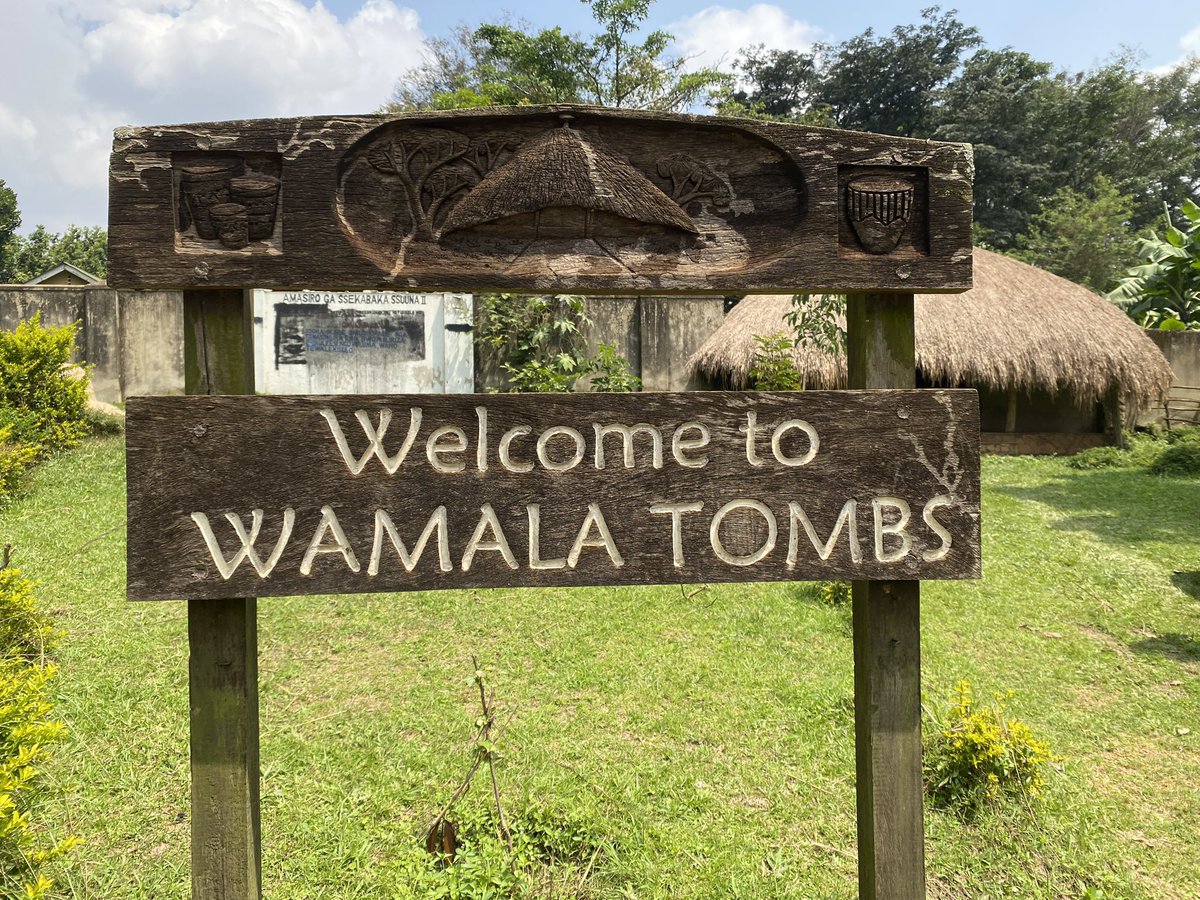
There's a theory, passed down through Buganda oral tradition, that the very word "Kabaka" — the title given to every Buganda king — traces back to a single, unsettling ritual question. When a king died, his jawbone would traditionally be removed from his body, believed to be the vessel of his spirit, and his widows would be asked to identify it: "Kano kaba kani?" — "Whose jaw is this?" Some Baganda historians argue that's where "Kabaka" itself originates. Ssekabaka Suuna II, buried at the Wamala Tombs outside Kampala, was the last king in Buganda's history to have this ritual performed on him — making his tomb, in a very literal sense, the last physical link to a tradition that may explain the kingdom's most fundamental title.
The Second of Only Two Surviving Royal Tomb Complexes
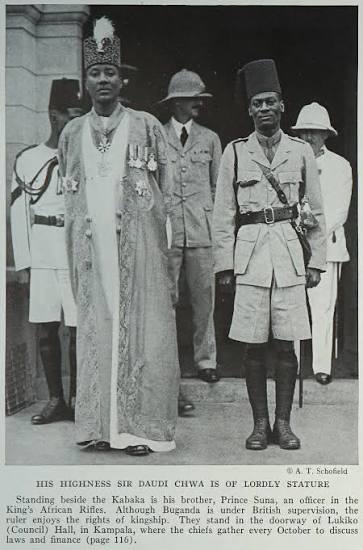
Wamala Tombs, located in Nabweru sub-county, Wakiso District, roughly 30 minutes from central Kampala, is one of just two remaining Buganda royal tomb complexes in the country — the other being Kasubi. Where Kasubi holds the more recent kabakas, Wamala reaches back a generation earlier: it's the burial site of Ssekabaka Suuna II, the 29th king of Buganda, who ruled from around 1832 (some sources cite 1836) until 1856, and whose son, Muteesa I, would go on to found Kasubi as his own palace-turned-tomb a generation later.
Suuna was, by most accounts, a genuinely complicated figure. He's remembered by some historians as tyrannical, with rumors — widely repeated in oral history, though impossible to fully verify — that he killed as many as 58 of his 60 brothers to secure his position, and that he handed out brutal punishments to his subjects. He's also remembered as strikingly handsome, a trait attributed to his mother, Nnamasole Kanyange, for whom he built a dedicated royal sanctuary on nearby Kagoma Hill, visible from the Wamala site today and an easy addition to the same visit. Suuna reportedly maintained 148 wives and fathered 218 children — numbers so large they're frequently cited as evidence of the sheer scale of royal households in 19th-century Buganda.
The Arabs, the Mirror, and a Kingdom's First Contact
Suuna's reign marks a genuine historical hinge point for Buganda: he was the first Kabaka to admit foreign traders into the kingdom, opening the door to Arab traders who arrived around 1844 seeking ivory and, in the process, introducing Islam to Buganda for the first time. The oral history around this first contact is vivid and specific — the traders are said to have bribed Suuna with guns and a mirror, an object so unfamiliar to him that seeing his own reflection reportedly left him astonished, since mirrors had never before existed in the kingdom. According to the same tradition, one of Suuna's wives became involved with the Arab visitors and was given to them; pregnant at the time, she was taken to Abyssinia (modern Ethiopia), where she is said to have given birth. Whatever the precise accuracy of these specific details after nearly two centuries of retelling, they mark Suuna's reign as the moment Buganda's isolation from the wider trading world of the Indian Ocean and Red Sea first broke open — with consequences that would shape the kingdom's relationship with outside powers for the rest of the century.
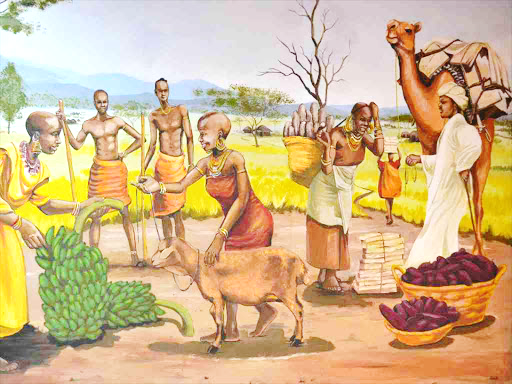
Suuna is also credited as the first Kabaka to wear a kanzu, the long white robe later adopted as standard formal dress across much of Uganda — another small but lasting cultural import from that same era of first contact.
The Last King Buried Whole
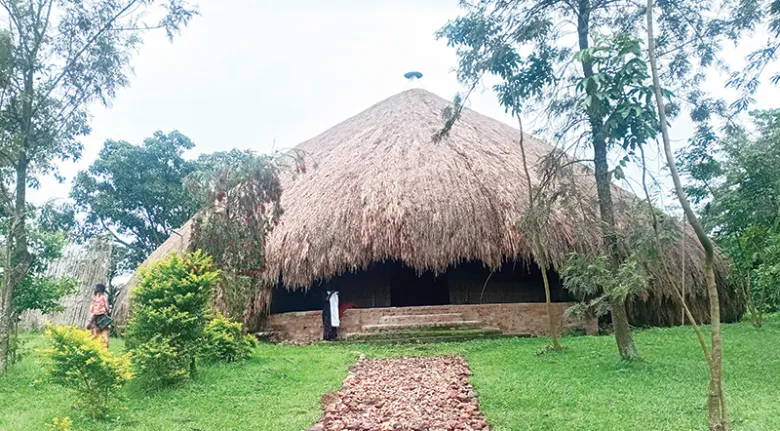
Upon his death, Buganda tradition converted Suuna's palace at Wamala into his tomb, following the same custom later observed at Kasubi — the tomb was given the name Batanda Bezaala. But Suuna holds a distinct place in that lineage: he was the last Kabaka to have his jawbone left intact and buried with the rest of his body, rather than removed and enshrined separately in a royal sanctum staffed by descendants, as had been custom before him and briefly continued in variant forms after. The large, round, grass-thatched tomb structure at Wamala today houses traditional royal regalia — spears, shields, drums, and other ceremonial objects — alongside a detail few other Buganda sites can claim: the preserved umbilical cords of the king's twin children, kept as part of the site's sacred inventory.
Still an Active Royal Shrine
Like Kasubi, Wamala isn't treated as a closed historical site. The Buganda royal family and their representatives continue to visit for traditional religious practices and rituals understood as ways of communicating with royal ancestors, making the tombs an active spiritual site rather than a purely archaeological one. The hill on which the tombs sit was originally known as Wamunyenye before taking the name Wamala.
Visiting Wamala Tombs: What to Know
- Location: Nabweru sub-county, Wakiso District, roughly 30 minutes' drive from central Kampala, along the Kampala–Hoima Road area near Nansana.
- What's on site: The main thatched tomb structure housing Suuna II's remains, traditional royal artifacts, and views toward Kagoma Hill, where Suuna built a residence for his mother.
- Good to pair with: Kasubi Tombs, for a direct comparison between Buganda's two surviving royal tomb complexes and the two generations of kings they represent.
- Respect on site: As an active royal shrine, dress modestly and follow guide instructions, particularly around the main tomb structure.
- Best time to visit: Any day of the year; a local guide is recommended to properly navigate the oral history, which varies in detail depending on the source.
Plan Your Visit to Wamala Tombs
For travelers who want to go a generation deeper into Buganda royal history than Kasubi alone offers, Wamala Tombs is an easy and rewarding addition to a Kampala-area cultural itinerary. Let us help you plan it.
Contact us at info@ugandasafaribookings.com or call +256-700135510 to start planning your visit.