
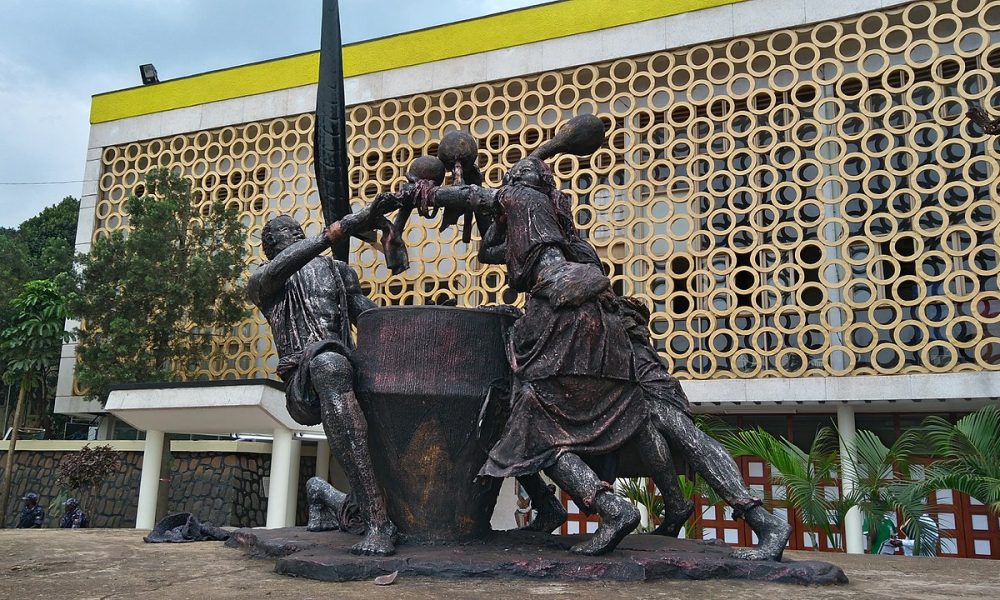
Long before it had display cases, curators, or a name most visitors would recognize, the Uganda Museum was known to the Baganda people by a very different title: "Enyumba ya Mayembe" — the House of Fetishes. That's what locals called the modest Sikh temple at Fort Lugard on Old Kampala Hill in the early 1900s, where a British colonial administrator had begun quietly gathering objects he thought captured something essential about the territory's cultures. The name says a lot about how strange and unfamiliar the whole idea of a "museum" was to Uganda at the time — and how far the institution has traveled since, both physically and in what it now represents.
Today, the Uganda Museum on Kitante Hill in Kampala is East Africa's oldest museum, and arguably still its most complete single-stop introduction to the country's human story — from fossils millions of years old to the printing press that produced Uganda's first newspapers.
Three Buildings, One Idea
The museum's founding traces back to 1902, when Deputy Governor George Wilson called for the systematic collection of culturally significant objects from across the protectorate. That collection was formalized in 1908, making the Uganda Museum older than the modern state it now documents. Its first home was cramped and improvised — that same Sikh temple at Fort Lugard — but as excavation work expanded through the 1920s, 30s, and 40s under figures like Bishop J. Wilson and archaeologist E. Lanning, the collection quickly outgrew the space.
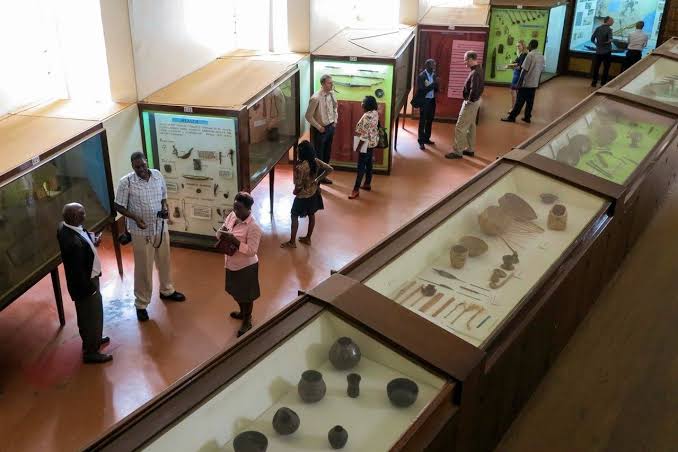
In 1941, it moved to the Margaret Trowell School of Fine Art at Makerere University. It wasn't until 1954, after a public fundraising campaign, that the museum found its permanent home on Kitante Hill — a purpose-built structure designed by German modernist architect Ernst May, who prioritized natural light and airflow in a design still considered a Kampala architectural landmark in its own right. The museum marked its centenary in 2008 and, after 1908, remains East Africa's longest continuously operating museum.
What's Actually Inside
The Uganda Museum's collection spans an almost absurd range of time — from paleontological fossils estimated at roughly 20 million years old to objects from Uganda's post-independence 20th century — organized loosely into a handful of thematic galleries:
- Archaeology: Stone Age and Iron Age tools, some estimated at around a million years old, alongside finds from important pre-colonial sites like Bigo bya Mugenyi and Ntusi.
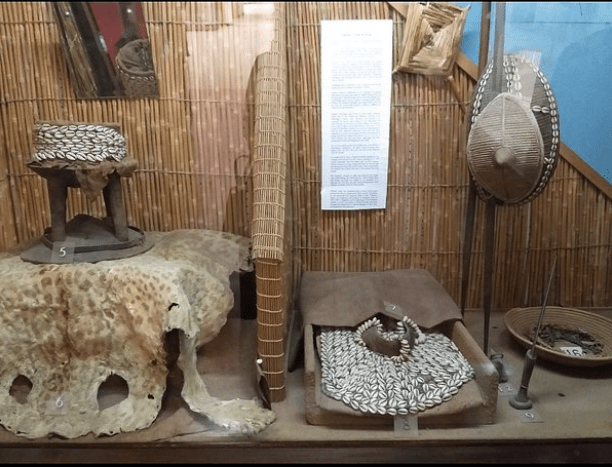
- Ethnography: Bark cloth, hunting equipment, household tools, ceremonial regalia, and everyday objects representing Uganda's major ethnic groups — the Baganda, Basoga, Banyankole, Bakiga, and others — offering a side-by-side view of the country's cultural diversity rather than a single national narrative.
- Traditional music: A dedicated hall of traditional instruments from across Uganda, several of which visitors are invited to actually play, alongside live traditional music performances offered on-site.
- Science, industry, and history: A more eclectic pavilion covering Uganda's early technological and political milestones — reportedly including the seventh car ever brought into Uganda, a model of the first telephone in East Africa, and the country's first printing press.
- Idi Amin-era exhibition: A more sobering section addressing Uganda's turbulent 1970s, offering context that visitors won't find at most of the country's other cultural or historic sites.
- Outdoor cultural village: A cluster of full-scale traditional huts representing different Ugandan ethnic groups' architectural styles, giving a tactile, walk-through sense of how various communities actually lived, rather than a flat display case.
Tucked inside is also the Uganda Society library, a research collection of roughly 3,000 volumes, maps, and photographs on African history and culture — a resource more academic visitors sometimes don't expect to find inside a public museum.
Why It's Worth More Than a Quick Stop
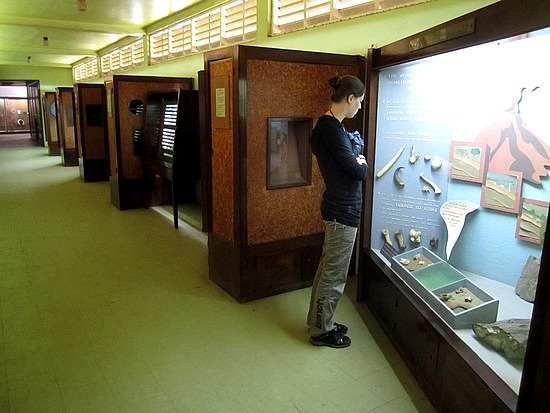
Because Uganda's tourism identity leans so heavily on wildlife and landscape, the Uganda Museum is easy to underrate — treated as a rainy-day filler rather than a destination in its own right. That undersells what it actually offers: it's the one place in the country where you can walk from a 20-million-year-old fossil to a 1970s political exhibition to a working traditional instrument in the space of an hour, gaining context that makes every other historic site in Uganda — Kasubi Tombs, Rubaga Cathedral, the royal palaces — click into a clearer bigger picture. Travelers who visit early in their trip, before heading out to Uganda's kingdoms, shrines, and national parks, tend to get noticeably more out of everything that follows.
Visiting the Uganda Museum: What to Know
- Location: Plot 5, Kira Road, Kitante Hill, Kampala — a short drive from the city center.
- Opening hours: Generally open daily, though it's worth confirming current hours before your visit, as the museum has periodically undergone renovation work.
- Entry fee: A modest entrance fee applies, with different rates for foreign visitors, residents, and children — small enough that it's easy to pair with other city-center stops.
- On-site facilities: Guided tours, a souvenir and craft shop, a small canteen, and a children's play area.
- Best paired with: Namirembe Cathedral, Rubaga Cathedral, and the Buganda Parliament, all within a reasonably short drive, for a half- or full-day Kampala heritage circuit.
Plan Your Visit to the Uganda Museum
Whether you're spending a single day in Kampala before a safari or building out a full cultural itinerary, the Uganda Museum is one of the most efficient ways to understand the country you're about to explore. We can build it into a custom Kampala city tour alongside the royal tombs, cathedrals, and palaces.
Contact us at info@ugandasafaribookings.com or call +256-700135510 to start planning your visit.