
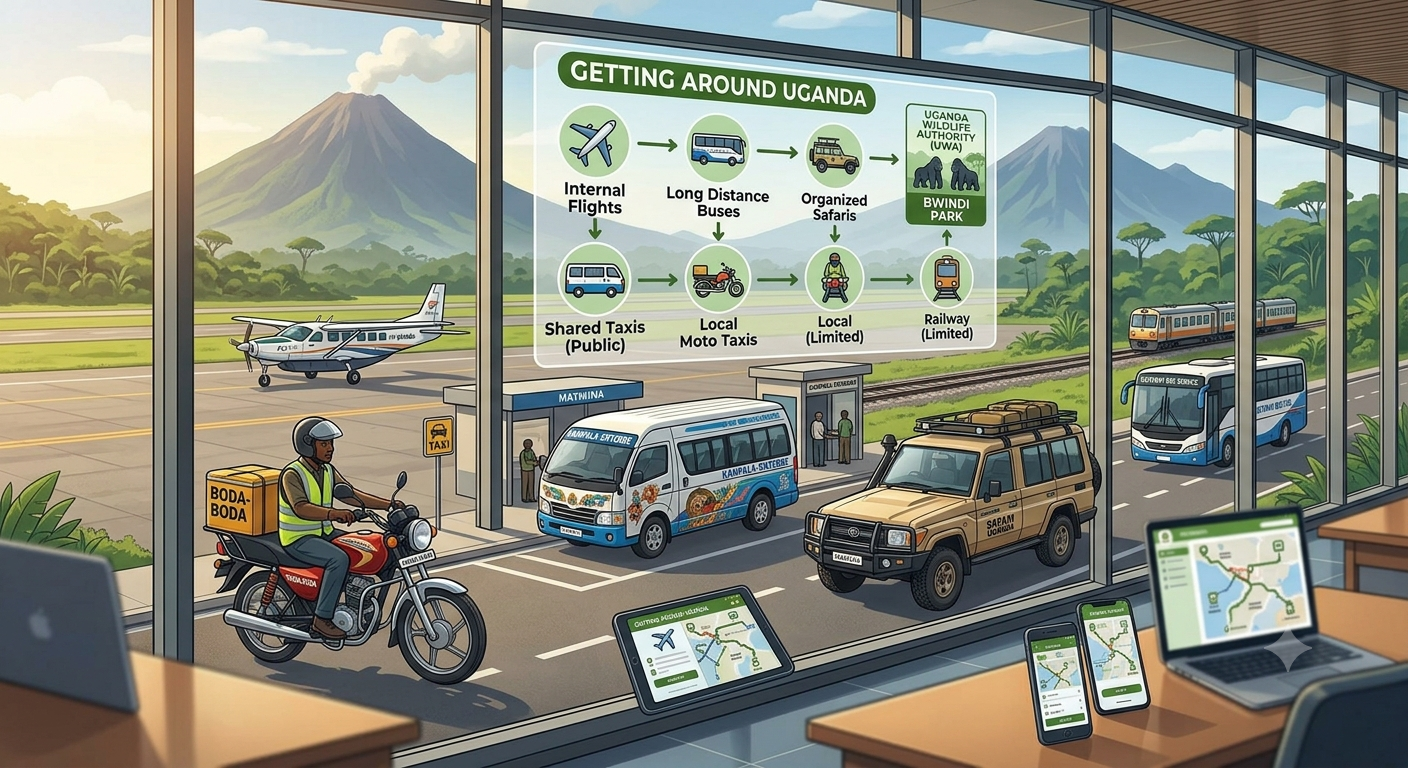
Uganda doesn't have a metro system, and its passenger rail network is limited, so almost all movement around the country — from a five-minute hop across Kampala to a full day's drive out to Bwindi — happens on the road. Road transport handles the vast majority of passenger movement nationwide, and the range of options is wide: motorcycle taxis, shared minibuses, intercity coaches, ride-hailing apps, self-drive rentals, chauffeur-driven cars, and a handful of domestic flights for those covering long distances quickly. Which option makes sense depends entirely on where you're going, how much time you have, and how much comfort and flexibility matter to you. Here's a full breakdown of how to get around Uganda, and how to choose the right option for your trip.
Arriving in Uganda: Entebbe Airport
Almost all international visitors arrive through Entebbe International Airport, roughly 40 kilometers south of Kampala. From here, you have a few options to reach the capital or your first destination:
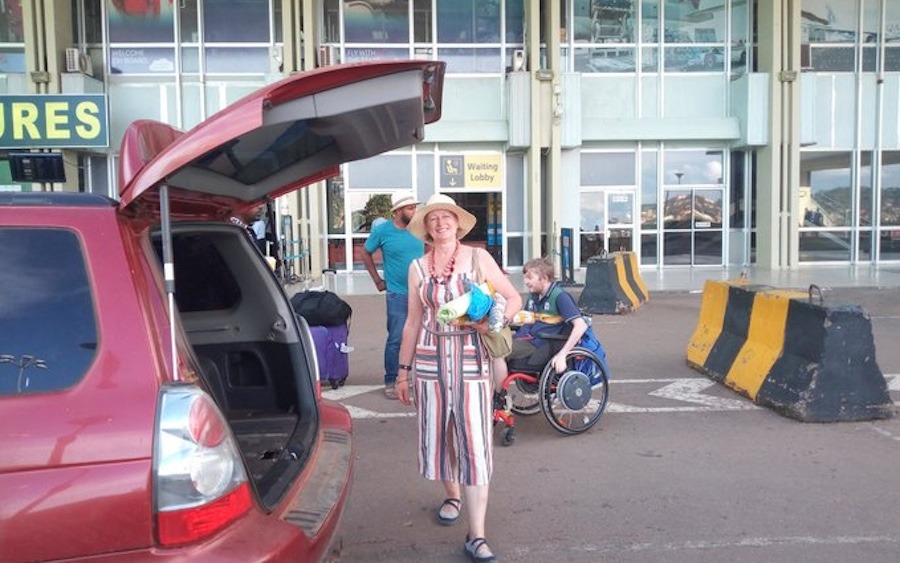
- Private airport transfer: Pre-arranged pickup by a tour operator or driver, typically the smoothest and most comfortable option after a long flight, especially if you're heading straight into a multi-day itinerary.
- Taxi: Available at the airport for those without a pre-arranged pickup, though it's worth agreeing on the fare before you get in.
- Ride-hailing apps: Uber and Bolt both operate in the greater Kampala/Entebbe area and can be ordered from the airport.
Given that Entebbe to Kampala can take anywhere from 45 minutes to well over two hours depending on traffic, most visitors — especially those arriving late at night or heading straight out to the parks the next morning — prefer to arrange a private transfer in advance rather than negotiate transport on arrival.
Boda-Bodas (Motorcycle Taxis)
Boda-bodas are motorcycle taxis, and they're everywhere — weaving through Kampala's notoriously congested traffic, reaching rural trading centres, and covering the "last mile" to guesthouses and park gates that larger vehicles can't easily access. They're fast, cheap, and genuinely useful for short hops, but they come with real safety trade-offs: helmets aren't always provided by drivers, traffic behaviour can be unpredictable, and injury rates are a genuine concern, which is why many organisations working in Uganda actively discourage staff from using them.
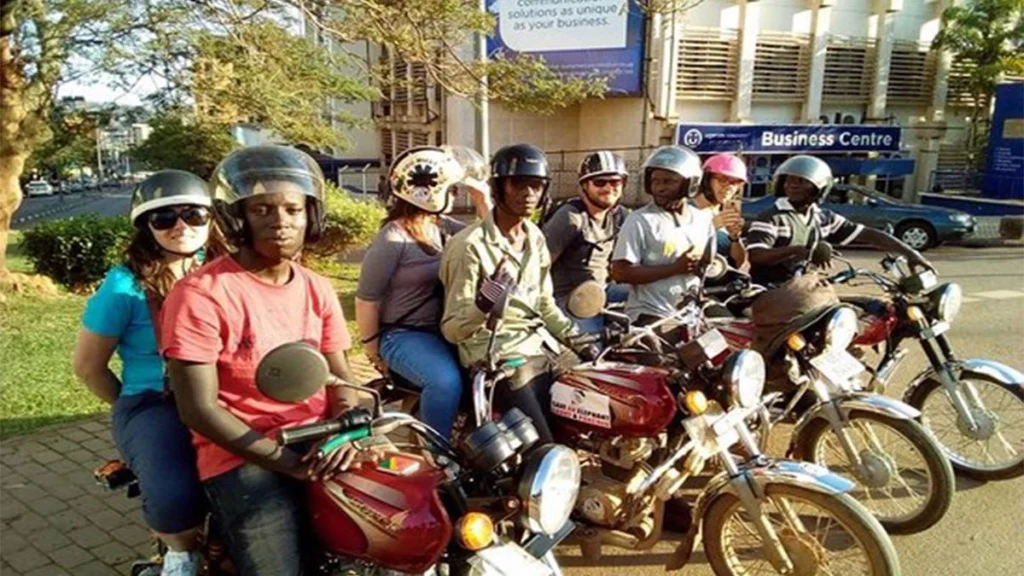
If you do use a boda-boda, a few practical tips: always agree on the fare before you get on, ask specifically for a helmet if the driver doesn't offer one, and consider using an app-based service like SafeBoda rather than flagging one down on the street — app-based rides come with a tracked route, an upfront fare, and a helmet as standard, which meaningfully reduces the risk compared to an unregulated ride.
Matatus (Shared Minibuses)
Matatus — sometimes just called "taxis" locally, which can confuse first-time visitors — are shared minibuses that run both fixed routes within cities and longer routes between towns. In Kampala, they operate out of designated taxi parks (the New Taxi Park, Old Taxi Park, USAFI Park, and Namayiba Park are among the main hubs), each serving different destinations, usually marked on a sign or poster at the relevant stage.
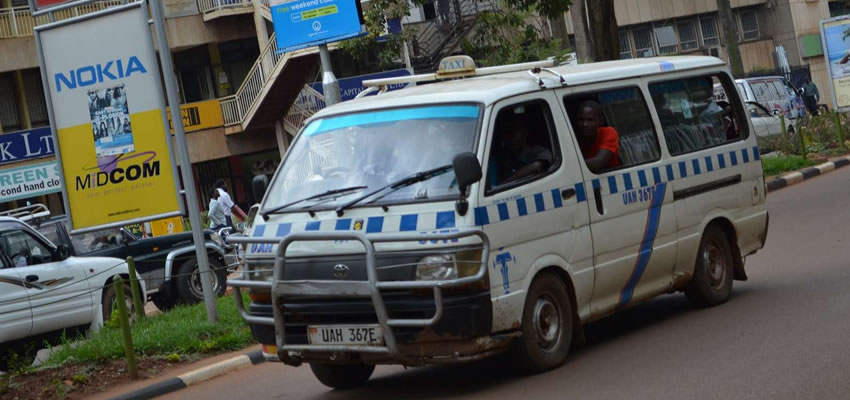
Matatus are the backbone of everyday transport in Uganda and by far the cheapest way to get around — short in-city rides typically cost under a dollar, and longer intercity routes scale up from there. The trade-off is comfort and flexibility: minibuses often wait until they're full before departing, seating can be tight, and schedules are informal rather than fixed. They're a genuinely good way to experience everyday Ugandan life, but they're not the fastest or most predictable option if you're working around flights, permits, or a tight itinerary.
Intercity Buses
For longer journeys between major towns — Kampala to Jinja, Mbarara, Gulu, Fort Portal, and beyond — a wide range of bus companies (Uganda has close to a hundred operators) run coaches of varying size and quality from terminals clustered around Kampala's taxi parks. Buses are considerably more affordable than private transport and reach virtually every part of the country, including cross-border routes into Kenya, Rwanda, and South Sudan. Comfort levels vary a lot by operator, so it's worth asking locally or checking reviews for a specific route, and booking ahead is wise for popular routes and travel dates, since operators do work on a schedule and seats can fill up.
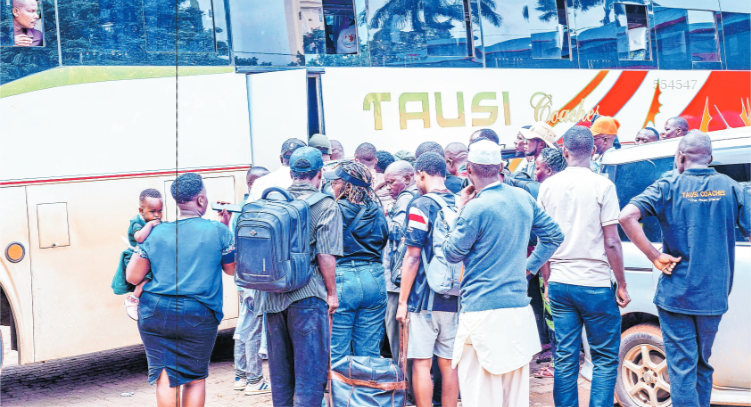
The main downside for visitors on a tight schedule is time: road journeys that a private vehicle might cover in a few hours can take considerably longer by bus once stops, loading, and traffic are factored in.
Ride-Hailing Apps
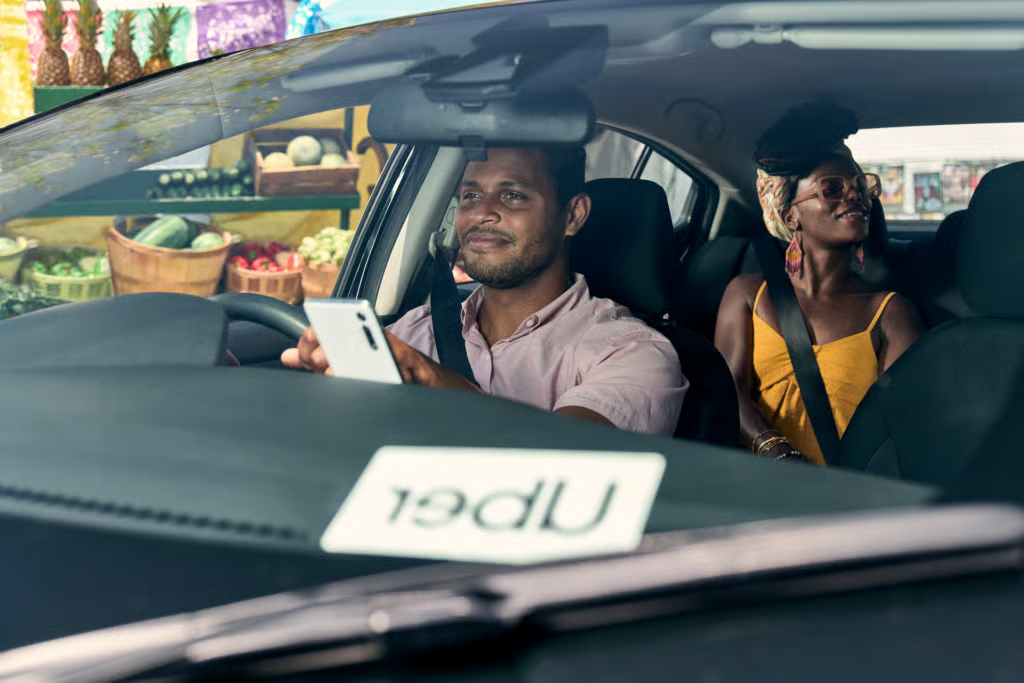
Uber and Bolt both operate in Kampala and the greater Entebbe area, offering a more predictable and comfortable alternative to matatus and street-hailed boda-bodas, with upfront pricing and app-based tracking. This works well for city-based trips but has real limits once you're outside the main urban centres — coverage drops off quickly once you head toward the national parks and rural areas, which make up most of a typical Uganda itinerary.
Self-Drive Car Rental
Renting a car and driving yourself is possible in Uganda, and some visitors — particularly those with off-road driving experience — choose this route for the flexibility it offers. That said, it comes with real challenges worth weighing carefully:
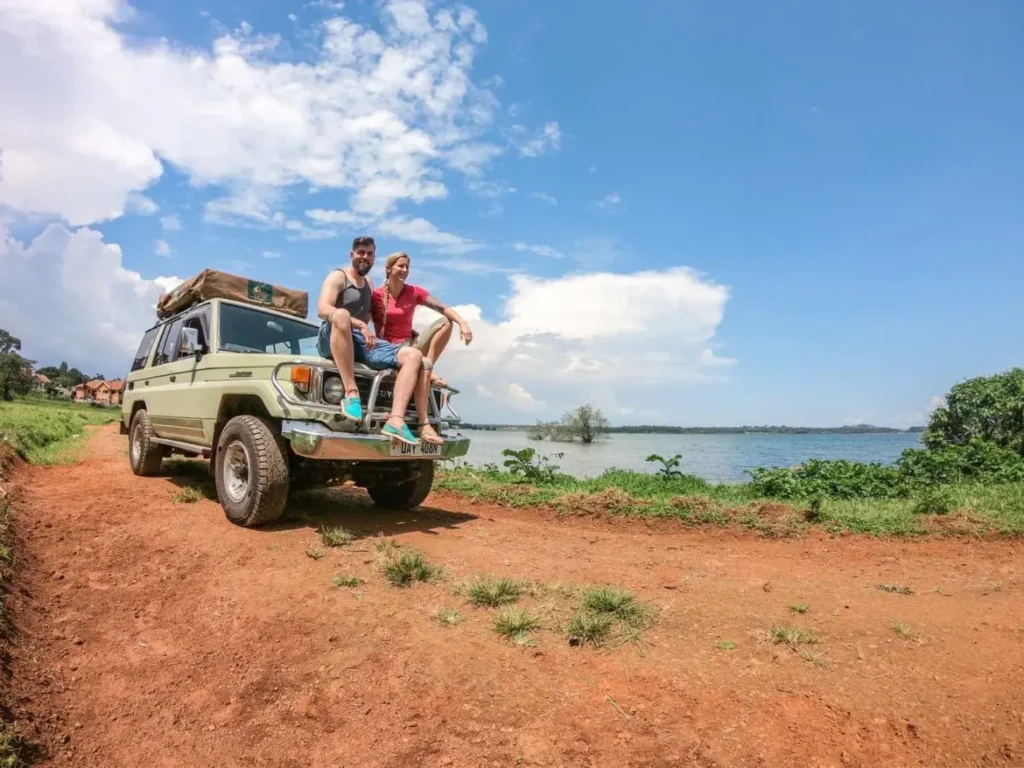
- Road conditions vary dramatically. Roads within Kampala and between major towns are generally paved, but routes to several national parks, including sections en route to Bwindi and Kidepo, involve hours on rough, unpaved tracks that demand real off-road driving skill.
- Traffic in Kampala is intense, with heavy congestion, inconsistent adherence to road rules, and a mix of vehicles, boda-bodas, and pedestrians sharing the same space.
- Driving is on the left-hand side of the road, which catches out visitors used to right-hand driving.
- Signage can be inconsistent in rural areas, and GPS coverage, while generally workable, isn't always reliable on the more remote park access roads.
Self-driving can work well for confident, experienced drivers sticking to major routes, but for multi-park safari itineraries covering long distances on mixed road conditions, most visitors — including many repeat travelers to East Africa — find it far less stressful to hire a car with a professional local driver instead.
Car Rental with a Driver
For most visitors, particularly those planning to cover multiple national parks, gorilla trekking sites, or a mix of cities and rural areas, hiring a car with a driver is the most practical way to get around Uganda. A local driver brings route knowledge that's hard to replicate with a map or GPS alone — which roads are currently in poor condition, how to navigate Kampala's traffic patterns, where the best stops are along a long drive, and how to handle the informal negotiations (police checkpoints, parking, local guidance) that come up along the way.
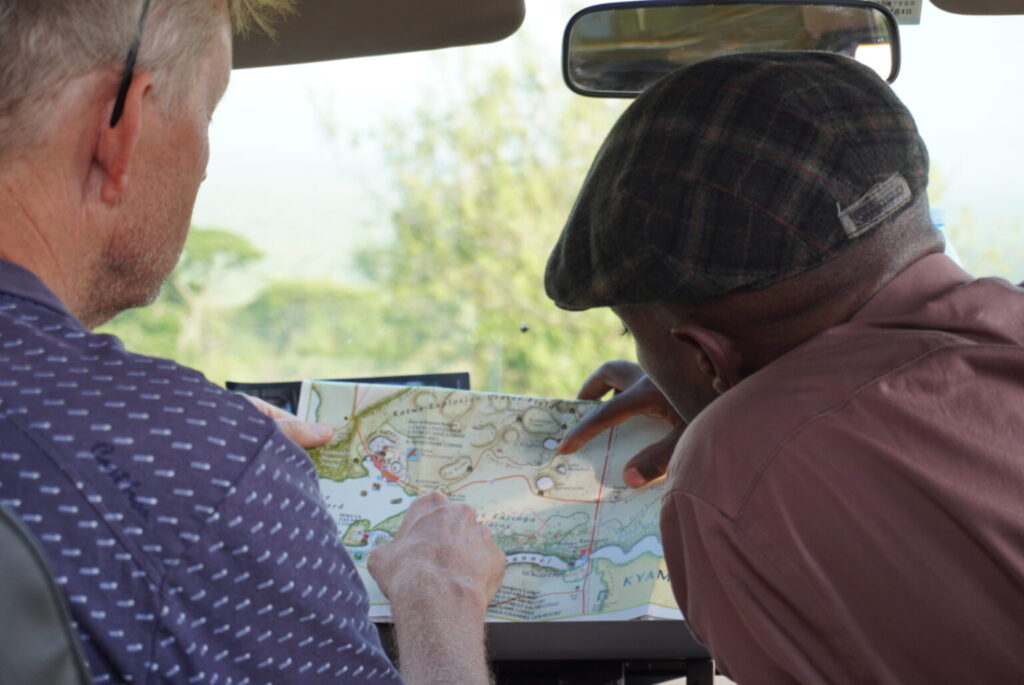
This option also removes the two biggest stressors of Ugandan roads for visitors: adjusting to left-hand traffic in heavy, unfamiliar congestion, and tackling unpaved, pothole-heavy stretches without local experience. It's typically priced by vehicle type and trip length, with options ranging from compact cars for city use up to 4x4 Land Cruisers and safari vans built for rougher terrain and larger groups.
Domestic Flights
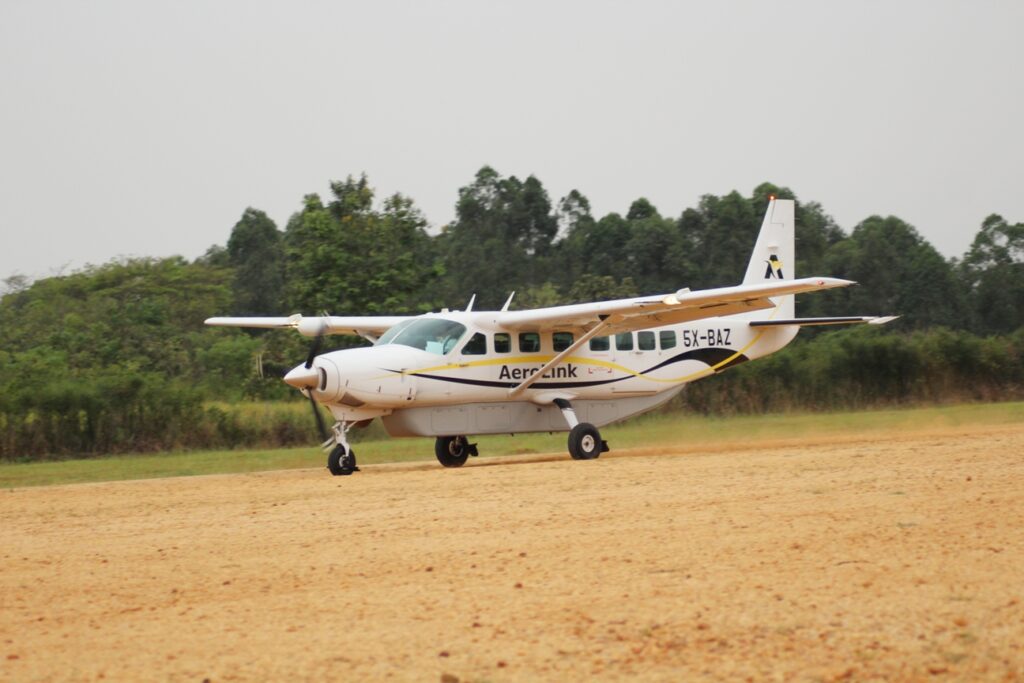
For travelers short on time or covering long distances between regions — for example, connecting Kampala/Entebbe with a remote park like Kidepo Valley in the far north — domestic flights are an option worth considering. A handful of airlines operate scheduled flights to airstrips near major parks, cutting what could be a full day's drive down to under an hour in the air. This convenience comes at a real cost premium compared to road transport, and luggage allowances on smaller aircraft are typically limited, so it suits travelers prioritising time over budget, or those adding a remote park to an otherwise road-based itinerary.
Choosing the Right Option for Your Trip
- Short hops within Kampala or another city: Boda-boda (ideally app-based) or ride-hailing app for comfort and safety.
- Budget travel between towns, flexible schedule: Matatus or intercity buses.
- Multi-park safari itinerary, gorilla trekking, or longer trips: Car rental with a driver — by far the most comfortable and lowest-stress option for covering Uganda's mix of paved and unpaved roads.
- Confident, experienced drivers sticking to main routes and comfortable with left-hand traffic: Self-drive rental.
- Long distances, limited time, remote parks: Domestic flights, often combined with a driver for the road sections of the trip.
A Few General Tips

- Carry cash. Cards are not widely accepted for everyday local transport — matatus, boda-bodas, and many small vendors operate on cash only, in Ugandan shillings.
- Agree on fares upfront for boda-bodas and non-metered taxis, since prices aren't always fixed or displayed.
- Build in extra time for road journeys to the parks, particularly during the wet seasons (March to May and October to November), when unpaved roads can slow travel considerably.
- Ask locally or through your accommodation for recommended, trusted transport options if you're traveling independently — recommendations from lodges and guesthouses tend to be reliable.
Let Us Handle the Logistics
Getting around Uganda is very manageable once you know your options — and for multi-day itineraries covering national parks, gorilla trekking, and cross-country distances, a private car and driver is by far the easiest way to see the country without the stress of navigating unfamiliar roads yourself. If you'd like help arranging reliable transport for your trip, get in touch and we'll match you with the right vehicle and driver for your itinerary.
You can book a full Uganda safari package or rental car with a driver or self drive, simply contact us now by emailing to info@ugandasafaribookings.com or calling +256-700135510.