
Uganda's reputation as the "Pearl of Africa" isn't just about the density of its wildlife — it's about how much of it exists almost nowhere else on earth. Sitting at the meeting point of the East African savannah, the Congo Basin rainforest and the Albertine Rift highlands, the country holds an unusually high concentration of species that are rare globally, not just locally: primates found in a handful of forest patches, birds that draw dedicated travellers from across the world for a single sighting, and mammals that have been pulled back from the edge of local extinction through decades of patient conservation work.
This list moves beyond the "Big Five" to focus specifically on rarity — species that are genuinely hard to see, restricted to small ranges, or classified as threatened by international conservation bodies. For each one, we've covered where in Uganda to look, why it's rare, and what makes an encounter worth the effort.
1. Mountain Gorilla
The mountain gorilla is Uganda's single most famous rare species, and for good reason. Roughly 1,000 individuals remain in the wild worldwide, and Uganda holds close to half of that population, concentrated almost entirely in Bwindi Impenetrable National Park, with a smaller population in Mgahinga Gorilla National Park as part of the wider Virunga Massif group shared with Rwanda and the Democratic Republic of Congo. Mountain gorillas cannot survive in captivity, which makes protecting their forest habitat the only viable path to their survival — a fact that has shaped the entire model of high-value, low-impact gorilla tourism in the region.
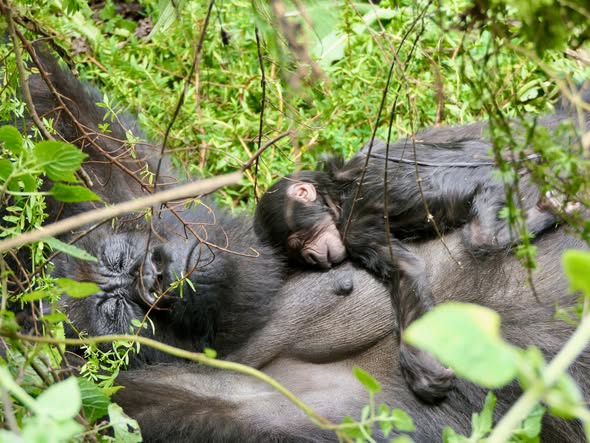
Conservation efforts across the three range countries have moved the mountain gorilla's IUCN status from Critically Endangered to Endangered, one of the rare genuine conservation success stories in Africa, though the population remains small enough that any disruption to habitat or health could reverse those gains quickly. Trekking permits are limited by design, both to protect the gorillas and to preserve the quality of the experience for visitors.
2. Shoebill Stork
If mountain gorillas are Uganda's rarest mammal draw, the shoebill stork is its rarest bird one. Standing up to five feet tall with an enormous, prehistoric-looking bill, the shoebill has become something close to a mascot for Ugandan birding — a species serious birdwatchers will build an entire trip around. It's an unusually still hunter, capable of standing motionless in papyrus swamps for long stretches while waiting for lungfish and other prey, which makes locating one as much a test of patience as skill.
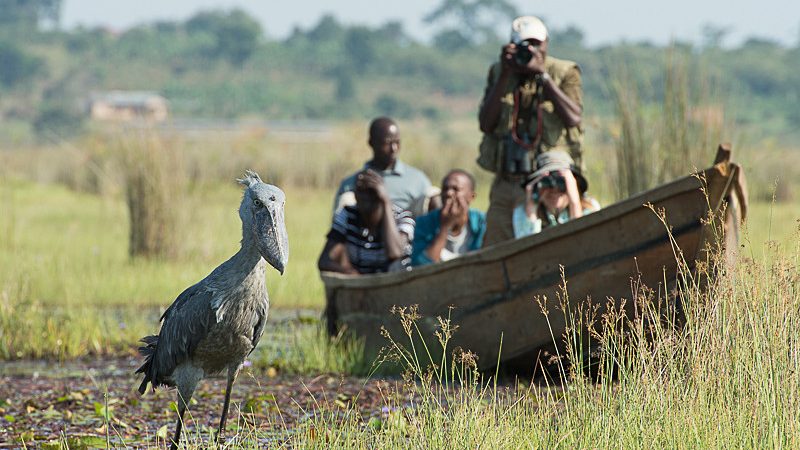
Uganda's papyrus wetlands, particularly Mabamba Bay near Lake Victoria and the swamps along the Nile in and around Murchison Falls, are among the most reliable places in East Africa to find one. The species is classified as Vulnerable globally, with wetland drainage and disturbance the primary long-term threats to its population.
3. Golden Monkey
The golden monkey is one of Africa's most visually striking and geographically restricted primates, found only in the bamboo forests of the Virunga volcanoes on the Uganda–Rwanda–DRC border. In Uganda, that means Mgahinga Gorilla National Park is essentially the only place to see them. Their bright golden-orange fur on the body, tail and cheeks contrasts sharply with black limbs, and troops move through the bamboo in noisy, energetic groups that are considerably easier to follow — and photograph — than the more solitary gorillas sharing the same forest.
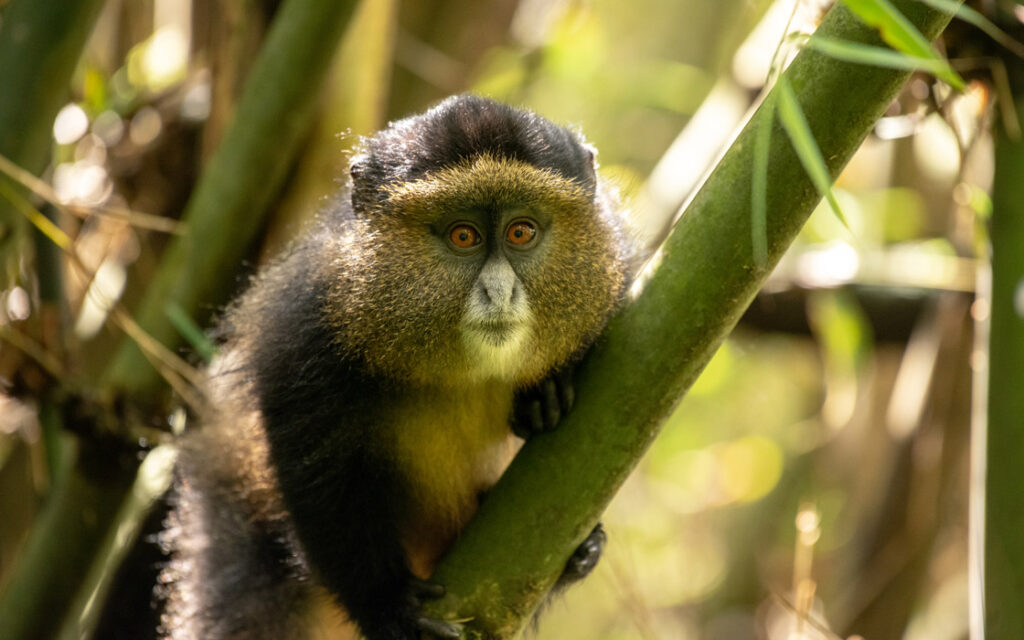
Golden monkey trekking has become a popular, lower-cost alternative or add-on to gorilla trekking in Mgahinga, offering a different kind of primate encounter within the same small pocket of forest.
4. Southern White Rhino
Uganda's rhino story is a genuine conservation comeback. Both black and white rhinos were wiped out from the country's parks by the early 1980s through a combination of poaching and civil conflict, leaving Uganda with no wild rhino population at all for over two decades. Ziwa Rhino and Wildlife Ranch in Nakasongola District was established in 2005 with just six founder animals, and through a sustained breeding programme the population has grown into the dozens — recent counts put the number in the mid-to-high 40s, making Ziwa the only place in Uganda to see rhinos in a semi-wild setting today.
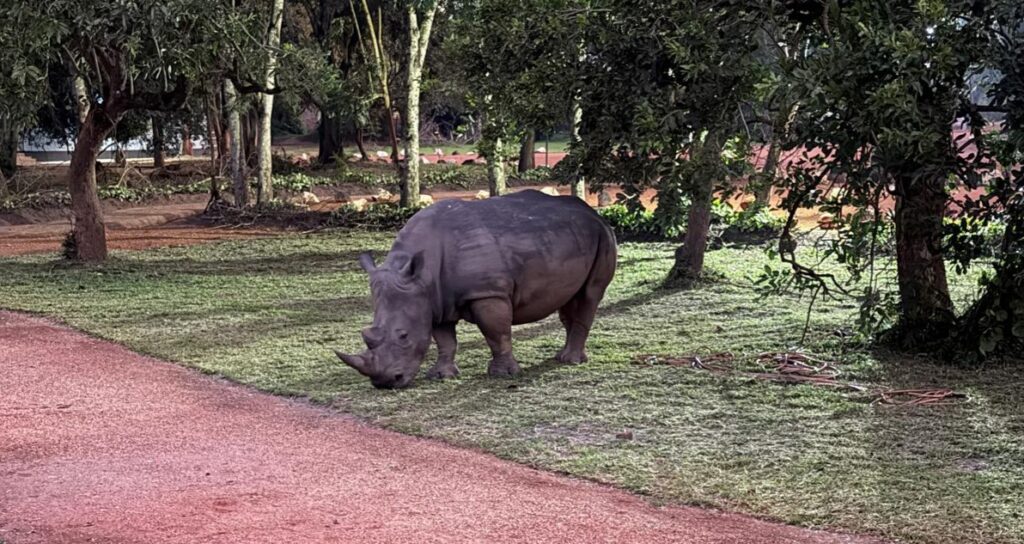
In a significant step for the species' recovery, 2026 saw the beginning of a phased reintroduction of Southern white rhinos from Ziwa into Kidepo Valley National Park, restoring a species that has been absent from Uganda's protected savannah ecosystems for more than forty years. Rhino trekking at Ziwa — approaching the animals on foot with armed rangers rather than from a vehicle — remains one of the most distinctive wildlife encounters in the country.
5. African Wild Dog
Also known as the painted wolf, the African wild dog is one of the continent's most endangered large carnivores, with only a few thousand remaining across all of Africa and a historically fragile presence in Uganda. Their large territorial ranges, sensitivity to human disturbance, and vulnerability to disease transmitted from domestic dogs have made them one of the hardest large mammals to maintain viable populations of, even in well-protected parks.
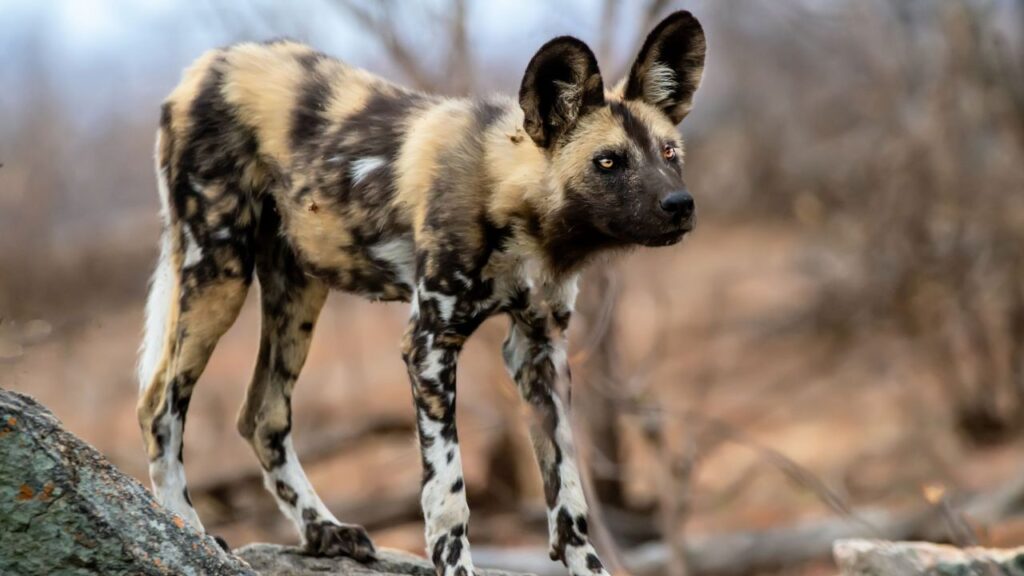
Sightings in Uganda are opportunistic rather than reliable, with occasional records from Kidepo Valley and areas bordering Murchison Falls and Queen Elizabeth. Anyone who spots a pack on a Uganda safari should consider it one of the rarest wildlife encounters the country can offer — considerably rarer, in practice, than a lion or leopard sighting.
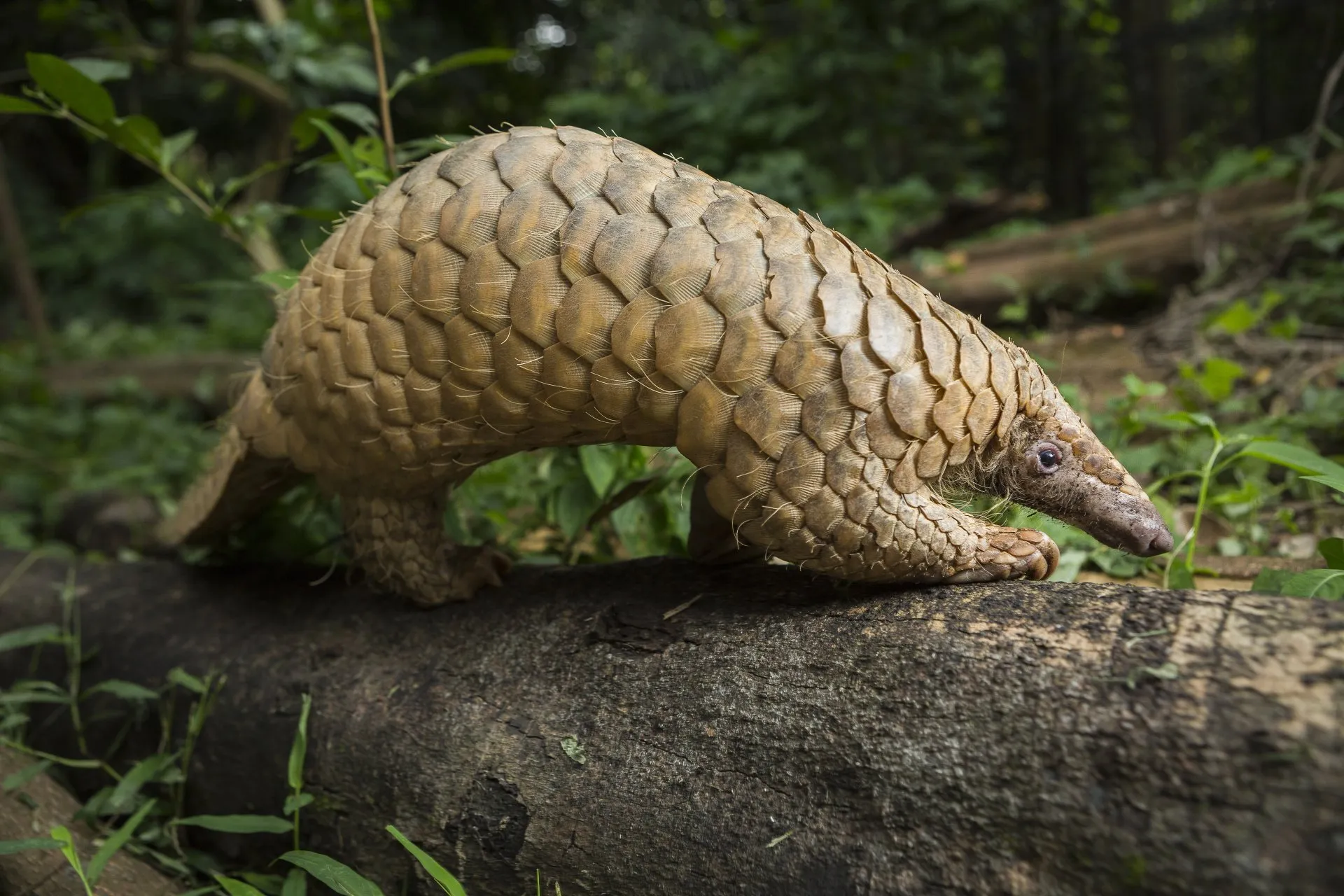
6. Giant Pangolin
Pangolins are the world's most trafficked mammal, and Uganda's giant pangolin — the largest of the eight pangolin species globally — is correspondingly hard to find. Nocturnal, solitary and armour-plated, giant pangolins spend much of their time underground or in dense cover, emerging mainly at night to feed on ants and termites. Their scales, in high demand in illegal wildlife trade markets, have made poaching a serious threat on top of their naturally elusive behaviour.
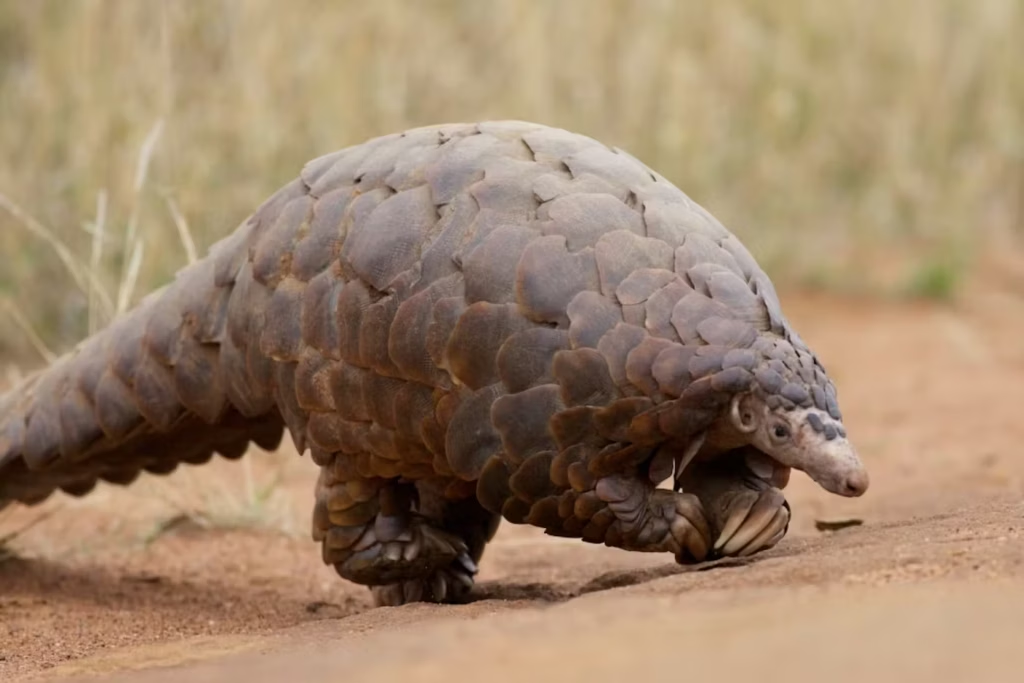
They occur in forested parks including Queen Elizabeth and areas of western Uganda, but sightings remain genuinely rare even for guides who spend years in these parks. Where pangolin encounters do happen, they tend to be brief, nocturnal, and unforgettable for exactly that reason.
7. Sitatunga
The sitatunga is a swamp-specialist antelope built almost entirely for wetland life — long, splayed hooves spread its weight across floating papyrus and marsh vegetation, letting it move through terrain that would swallow most other antelope. This adaptation also makes it one of the more difficult species to observe well, since sitatunga rarely venture onto firm, open ground where sightings would be easier.
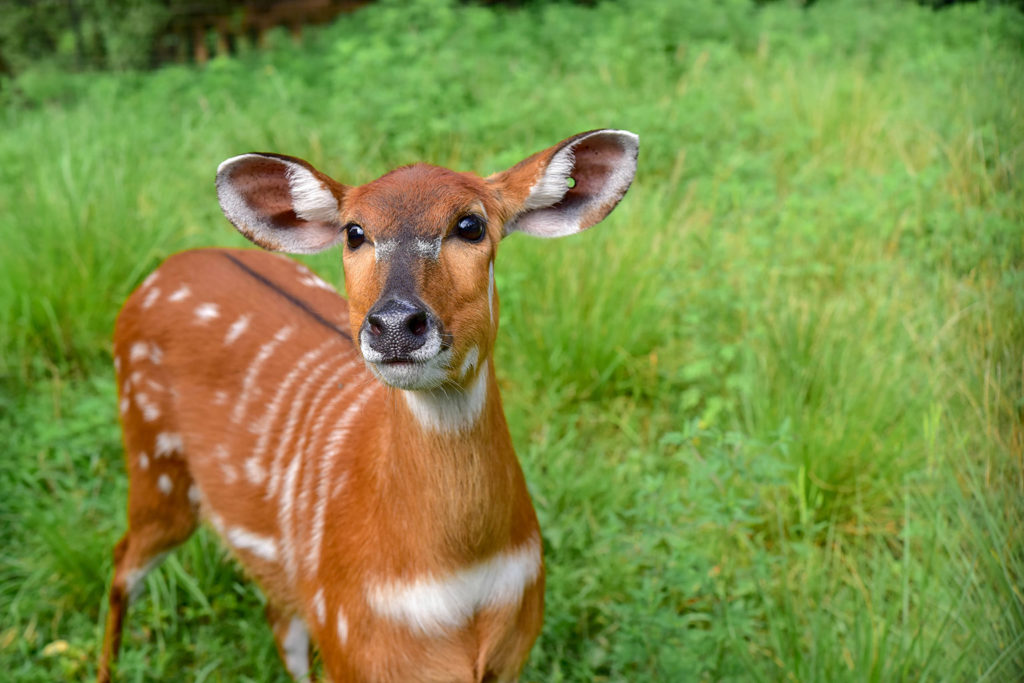
Lake Mburo National Park and the wetlands around Queen Elizabeth and Murchison Falls hold Uganda's main sitatunga populations, with early morning or late afternoon boat trips generally offering the best chance of a clear view as the animals feed along the swamp edges.
8. Giant Forest Hog
Africa's largest wild pig species, the giant forest hog is a genuinely imposing animal — bulky, dark-coated, and armed with prominent facial warts and curved tusks — but it's also shy, primarily nocturnal to crepuscular, and tied closely to dense forest and forest-edge habitat, which keeps sightings infrequent. It's easy to overlook on a checklist dominated by more famous savannah species, but a good sighting is genuinely rare even within its known range.
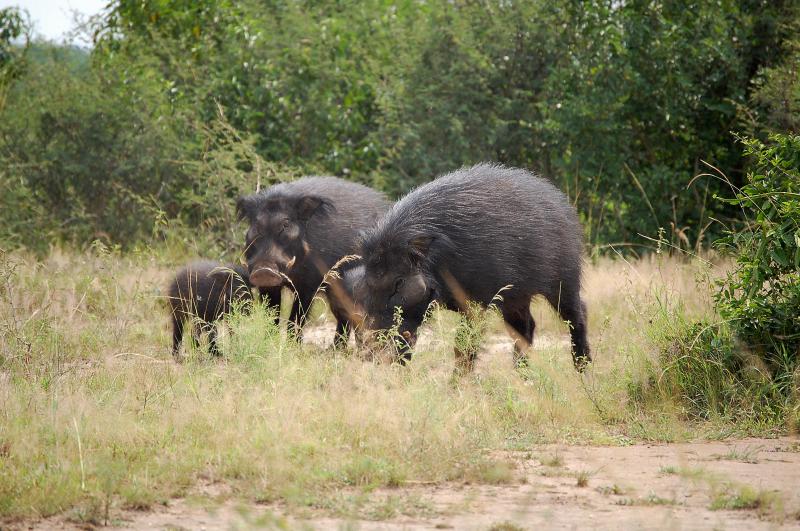
Bwindi Impenetrable National Park and the forested areas around Mgahinga and the Rwenzori foothills offer the best chances, usually early or late in the day when the hogs move to forage at the forest edge.
9. Tree-Climbing Lions of Ishasha
Uganda's tree-climbing lions aren't a separate subspecies, but their behaviour is rare enough globally to justify a place on this list. In the Ishasha sector of Queen Elizabeth National Park, lions have developed the unusual habit of climbing into the branches of large fig trees during the heat of the day — a behaviour recorded reliably in only a handful of locations worldwide, most famously here and in Tanzania's Lake Manyara. Theories for the behaviour range from escaping biting insects at ground level to simply taking advantage of the cooler breeze and a good vantage point.
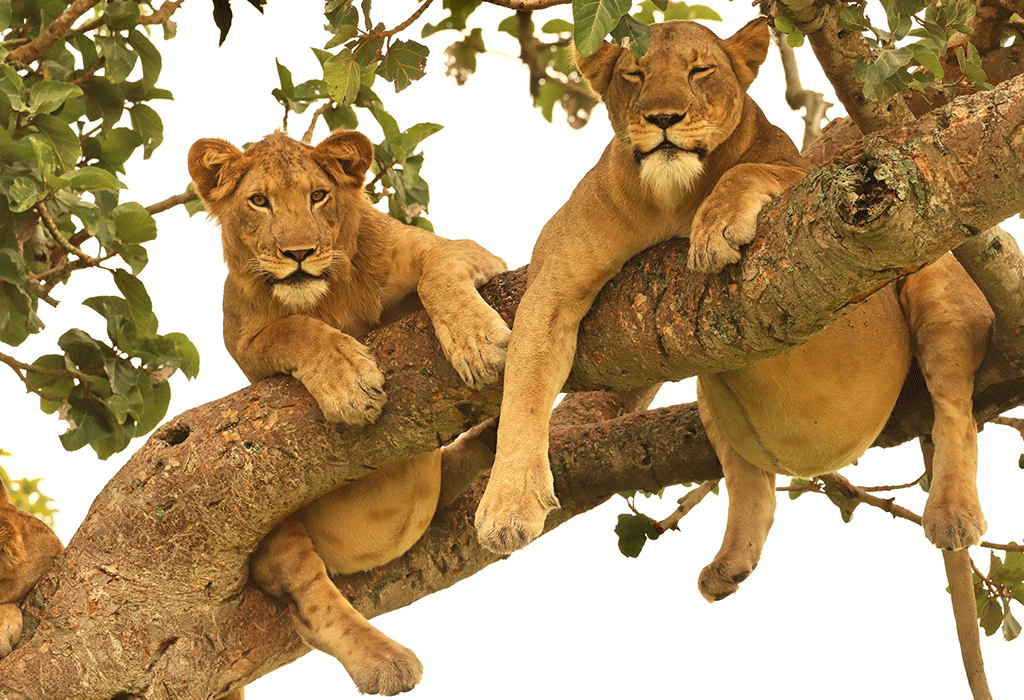
Finding a pride draped across the branches of a fig tree, sometimes with cubs tucked in alongside adults, is one of the more surreal wildlife sights available on a Uganda safari, and one of the main reasons travellers add Ishasha to an already packed Queen Elizabeth itinerary.
10. Rothschild's Giraffe
Rothschild's giraffe is one of the most endangered giraffe subspecies in Africa, distinguished from other giraffe populations by its lighter, more clearly defined patches and the near-total absence of markings below the knee, giving the impression it's wearing white socks. Habitat loss and historical population fragmentation across its range in Uganda and Kenya pushed numbers down sharply over recent decades, and it now survives in only a small number of protected areas.
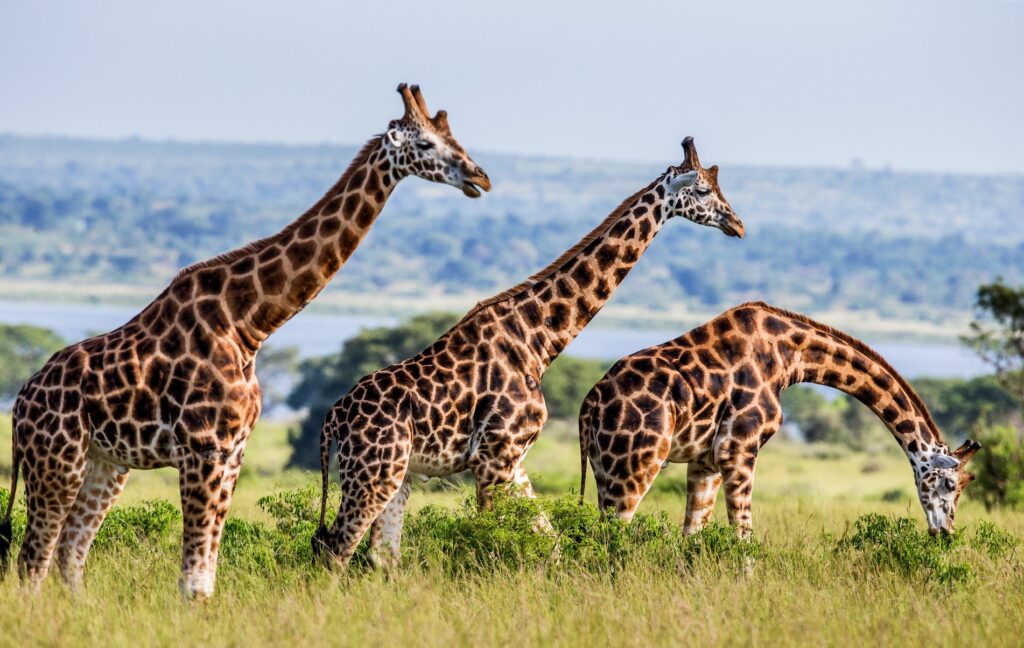
Murchison Falls National Park holds Uganda's principal population and is by far the most reliable place in the country — and one of the more reliable places in Africa — to see this subspecies, often in loose herds moving across the park's open savannah alongside elephant and buffalo.
11. African Golden Cat
Little-studied and rarely photographed even by researchers, the African golden cat is one of Africa's least-known wild cat species — a medium-sized, solitary forest predator whose coat can range from reddish-gold to grey, adding to the difficulty of reliably identifying sightings. Camera-trap studies remain one of the main sources of information on its behaviour precisely because direct sightings are so infrequent, even in areas known to support a population.
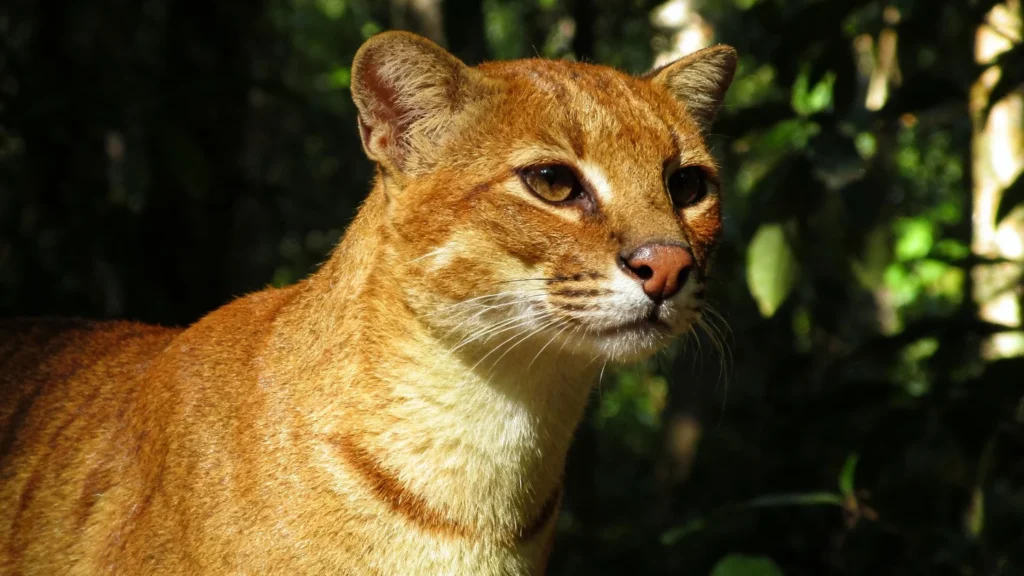
Uganda's forested parks, including sections of Bwindi and Semuliki, are within its known range, but a live sighting on a standard safari itinerary would be exceptional rather than expected — this is very much a species for patient, forest-focused wildlife watchers rather than a checklist tick on a standard game drive.
12. Eastern Chimpanzee
Chimpanzees are more commonly seen than most species on this list, but they remain classified as Endangered globally, with habitat fragmentation across their African range placing sustained pressure on wild populations. Uganda holds some of the continent's most important chimpanzee strongholds, and Kibale National Park in particular is considered one of the best places in Africa to track and observe them, home to one of the richest and most extensively studied primate communities on the continent.
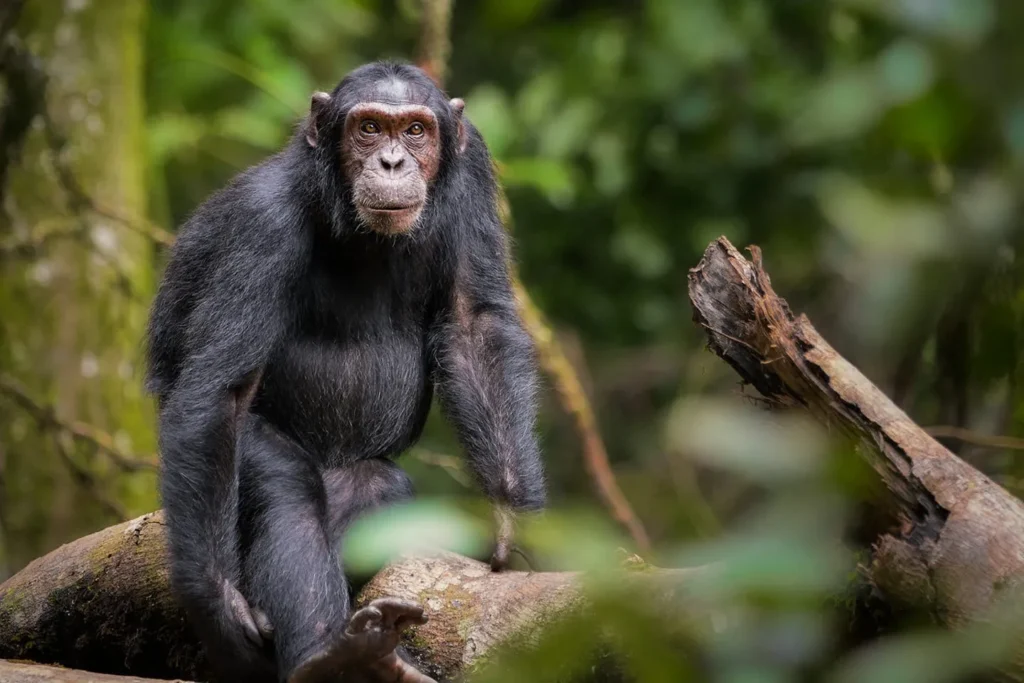
What keeps chimpanzees on a "rare" list despite being trackable is the broader context — wild chimpanzee numbers have fallen sharply across Africa over the past century, and protected forests like Kibale, Budongo and Kyambura Gorge represent an increasingly small fraction of the habitat the species once occupied.
13. Aardvark
The aardvark is one of the most bizarre-looking mammals in Uganda and also one of the hardest to see, thanks to a combination of strictly nocturnal habits, a solitary lifestyle, and a preference for spending daylight hours deep in burrows. Built for digging into termite mounds with powerful claws and a long, sticky tongue, aardvarks are found across much of Uganda's savannah country but are recorded far less often than their range would suggest.
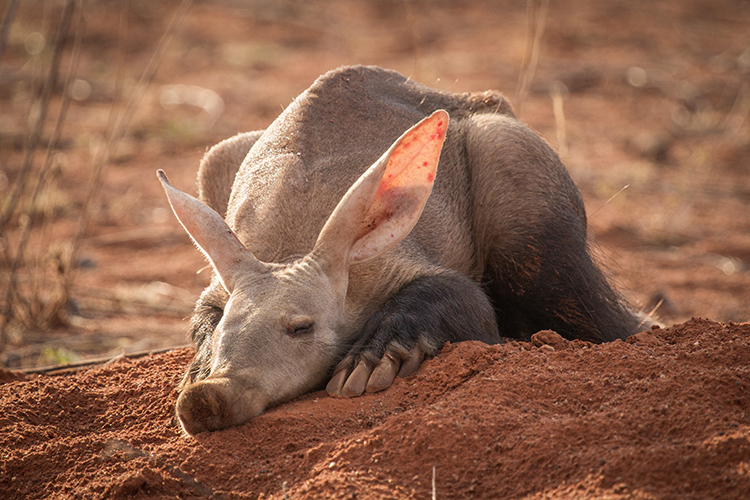
Night drives in parks that permit them offer the best — and in most cases only realistic — chance of a sighting, and even then, a clear view of an aardvark in the open is considered a genuine stroke of luck among experienced guides.
14. Nahan's Francolin
Nahan's francolin is a ground-dwelling forest bird restricted to a narrow band of lowland forest in the Albertine Rift region, and it's classified as Endangered due to ongoing forest loss across its already limited range. Secretive, quiet-moving and superbly camouflaged against the forest floor, it's a bird that specialist birders specifically travel to Uganda to find, rather than one that turns up incidentally on a general wildlife itinerary.
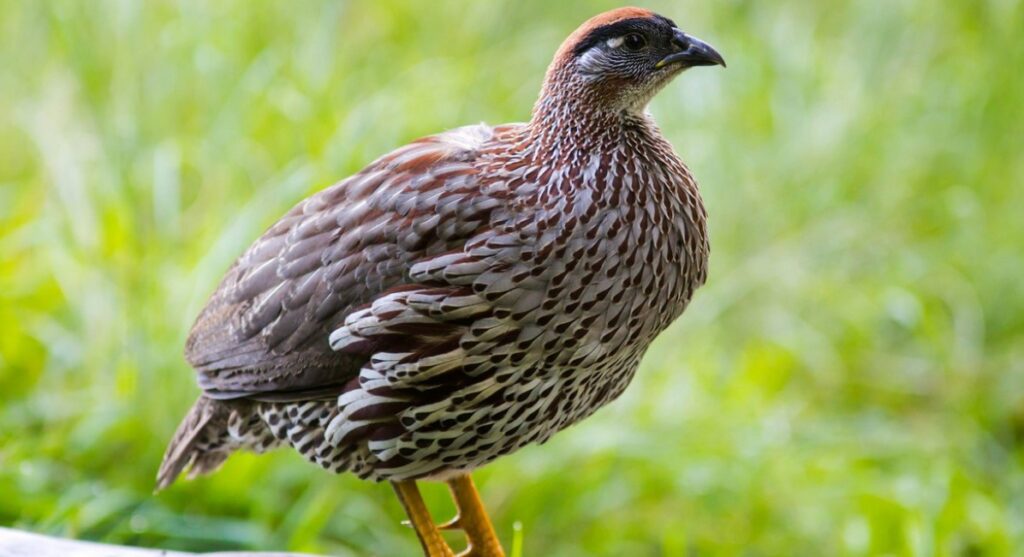
Semuliki National Park, with its lowland Congo Basin-affinity forest, is the most consistent site in Uganda for this species, and finding one typically requires an early start, an experienced local guide, and a fair amount of quiet, careful walking.
15. L'Hoest's Monkey
L'Hoest's monkey is an Albertine Rift endemic — found only in the forests along the region where Uganda, Rwanda and the DRC meet — and it's considerably less frequently seen by casual visitors than the country's more famous primates. Distinguished by a strikingly grizzled grey-brown coat, a dark face fringed with white, and a habit of moving in small troops through dense undergrowth rather than the forest canopy, it behaves more like a forest-floor specialist than a typical monkey, adding to how easily it's overlooked.
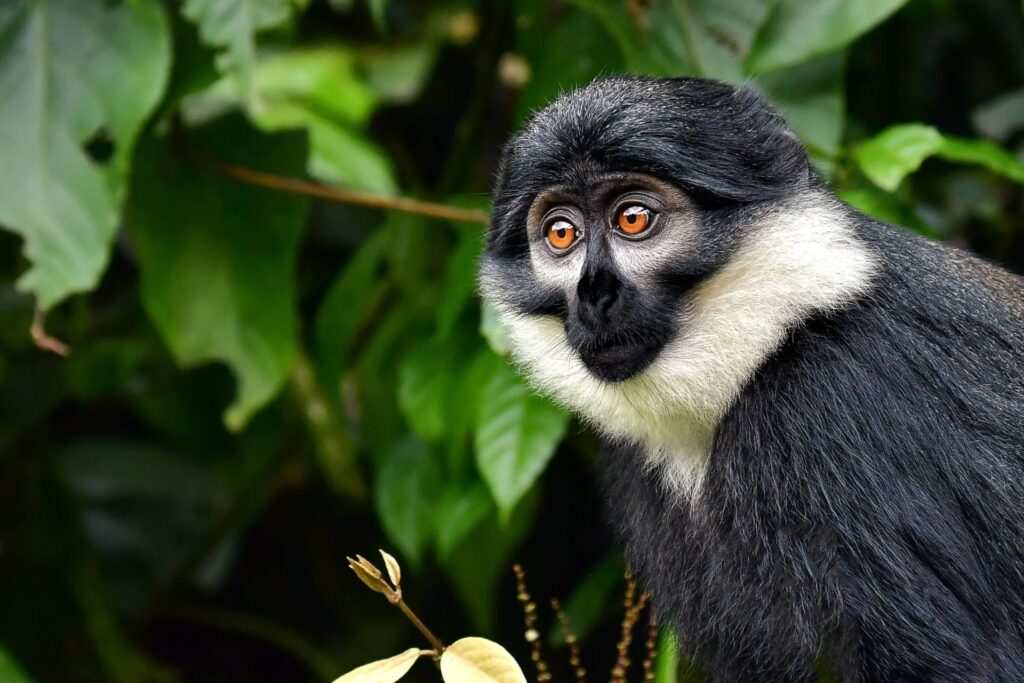
Bwindi Impenetrable National Park and forest patches around the Rwenzori foothills hold Uganda's main populations, and sightings often come as a bonus during gorilla trekking or general forest walks rather than as the target of a dedicated activity.
Why Uganda Holds So Much Rare Wildlife
Uganda's disproportionate share of rare and endemic species comes down to geography as much as conservation policy. The country sits directly across the boundary between the East African savannah biome and the Congo Basin rainforest, with the Albertine Rift's highland forests adding a third, highly localised ecosystem into the mix within a relatively small national territory. That overlap is why a single country can hold species as different as tree-climbing savannah lions, swamp-dependent sitatunga, and Albertine Rift-endemic primates found almost nowhere else.
Decades of targeted conservation work have also played a direct role. The mountain gorilla and Southern white rhino stories in particular show what sustained investment in anti-poaching, habitat protection and community-linked tourism can achieve even after a species has been pushed to the brink of local extinction — both are now considered among Africa's clearest conservation recovery stories, even as their populations remain small enough to stay vulnerable.
Best Parks for Rare Wildlife Sightings In Uganda
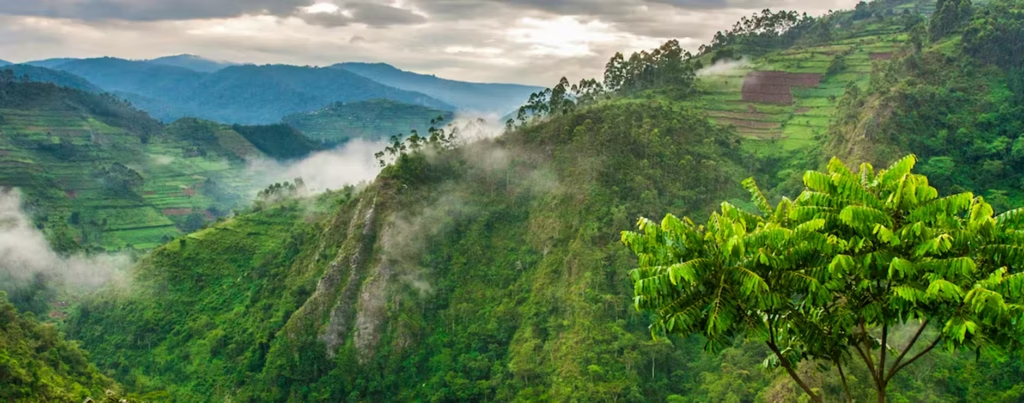
Bwindi Impenetrable National Park is the single best base for rare wildlife in Uganda, holding mountain gorillas, L'Hoest's monkey and giant forest hog within the same forest block. Murchison Falls National Park pairs classic savannah wildlife with Rothschild's giraffe and reliable shoebill habitat along its Nile wetlands, while Queen Elizabeth National Park is the place to look specifically for the tree-climbing lions of Ishasha alongside a broader mix of savannah and wetland species. For the most concentrated rare-species itinerary, Mgahinga Gorilla National Park offers both mountain gorillas and golden monkeys within a single small park, and Semuliki National Park remains the best option for travellers specifically chasing Albertine Rift forest specialists like Nahan's francolin.
Planning a Rare-Wildlife Focused Safari
A trip built around rarity rather than volume looks a little different from a standard highlights safari — it rewards slower pacing, a willingness to spend a full morning on a single species, and realistic expectations that some sightings, particularly nocturnal or forest-floor species, may not happen at all despite good effort. Booking gorilla and, where relevant, golden monkey permits well in advance is essential given the strict daily limits, and pairing a self-drive itinerary with a knowledgeable local guide for forest walks and night drives significantly improves the odds with the more elusive species on this list, such as the aardvark, African golden cat and giant pangolin.
Book a safari in Uganda with us for a chance to encounter the rare wildlife in Uganda today- simply contact us now by sending an email to info@ugandasafaribookings.com or calling +256-700135510.