
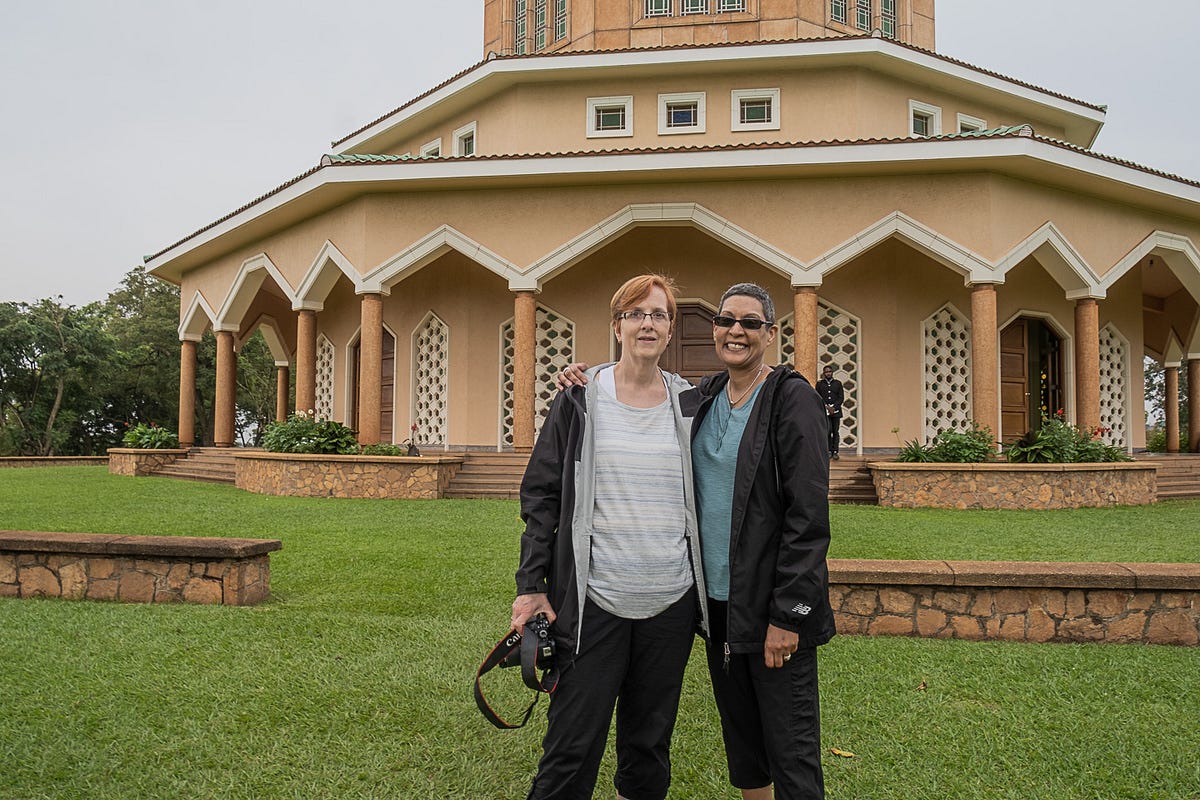
Somewhere on Kikaaya Hill, buried in the ground beneath a white domed temple overlooking Kampala, is a handful of soil carried from a prison fortress in northern Iran and from the innermost shrine of a 19th-century Persian prophet. It was placed there in 1958, at the temple's foundation-laying ceremony, by Musa Bánání, one of the Baha'i Faith's most senior religious figures — a small, largely unadvertised detail that connects a hilltop just outside Kampala directly back to the origins of a global religion born half a world away.
The Baha'i House of Worship in Kampala, known formally as the Mashriqu'l-Adhkar ("Dawning-Place of the Praise of God") and informally as the Mother Temple of Africa, is the only Baha'i temple on the entire continent — one of just a handful in the world, each representing an entire continent's community of believers.
Chosen by the Faith's Own Guardian
The Baha'i Faith reached Uganda in 1951, when English and Iranian believers arrived to introduce the religion locally. It spread with unusual speed: within about a year, over 100 Ugandans had converted, and by 1952 the country had elected its first Baha'i Spiritual Assembly. That rapid growth caught the attention of Shoghi Effendi, the Guardian of the Baha'i Faith at the time, who personally selected Uganda — and Kikaaya Hill specifically — as the site for the first Baha'i House of Worship on the African continent, purchasing the land himself through a trust held by three Ugandan believers: Joseph Mbogo, Max Kanyerezi, and Elisha Kiwanuka. It remains something of an open question, even among historians of the faith, why Uganda was chosen over neighboring countries like Kenya or Chad, which had larger Baha'i populations at the time — but the decision permanently placed Kampala at the center of Baha'i religious geography for the entire continent.
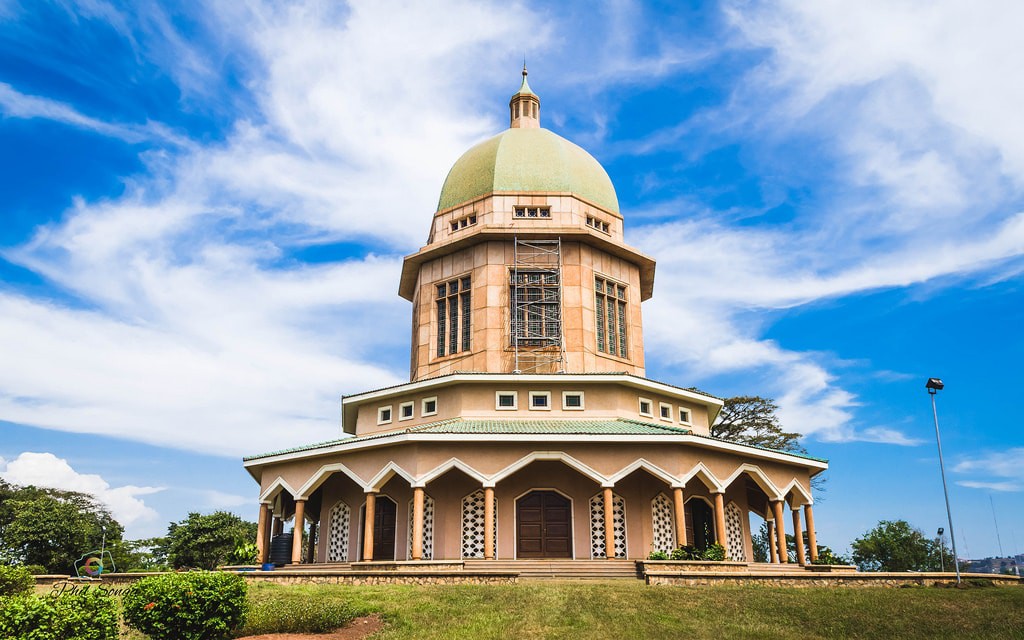
Construction ran from 1957 to 1961, and the temple was formally dedicated on January 13, 1961 — making it the first Baha'i House of Worship built in Africa and only the fourth completed anywhere in the world at that point. At 38 meters tall, with a dome roughly 44 feet in diameter and an interior spanning 84 feet, it was, for a time, the tallest building in East Africa — an extraordinary architectural claim for a religious minority that had existed in the country for barely a decade.
A Faith Tested by Violence, Still Standing
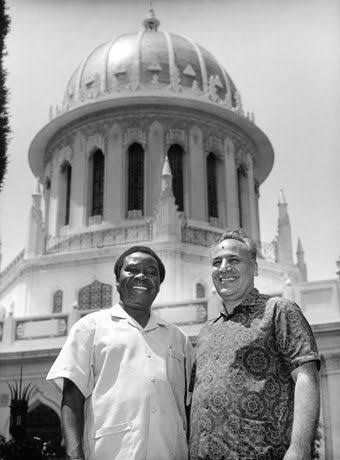
The temple's early decades weren't uneventful. During Idi Amin's regime in the 1970s, the Baha'i community suffered one of its most painful losses when Enoch Olinga — a Ugandan believer who had risen to become a Hand of the Cause, one of the highest distinguished ranks in the Baha'i Faith — was murdered along with members of his family. It was a devastating blow to a young faith community still finding its footing in the country. Yet the temple itself endured, surviving Uganda's subsequent decades of civil conflict and political upheaval largely unscathed, a physical constant through periods when much of the rest of the country was anything but stable. Today, Uganda's Baha'i community has grown to roughly 105,000 adherents nationwide, supported by more than ten additional Baha'i centers beyond the Mother Temple itself.
A Building Designed Around the Idea of Unity
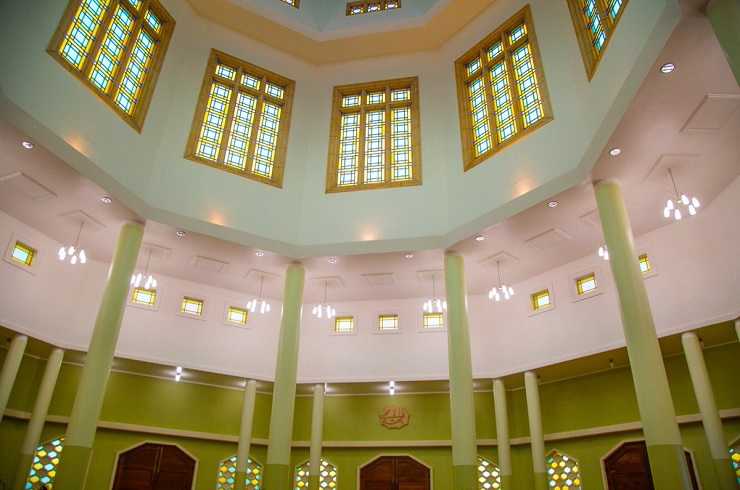
Architecturally, the temple embodies the Baha'i principle of unity in a fairly literal way: its structure opens through arched entrances facing nine different directions, a design echoed in nearly every Baha'i House of Worship worldwide, symbolizing the faith's core teaching that all people, faiths, and paths toward the divine deserve equal recognition and respect. There's no clergy, no ritual specific to a single tradition performed inside, and no restriction on who may enter to pray or simply sit in silence — the space is explicitly open to visitors and worshippers of any or no religious background.
Surrounding the temple, terraced gardens cascade down Kikaaya Hill, drawing local birdlife and offering sweeping views across northern Kampala toward Lake Victoria on a clear day — making the grounds a popular spot even for visitors with no particular interest in the religion itself, simply for the calm and the view.
Visiting the Baha'i Temple: What to Know
- Location: Kikaaya Hill, Kisasi, roughly 4 km along Gayaza Road from central Kampala (some sources cite closer to 9 km via the Southern Bypass, depending on route).
- Who can visit: Anyone — the temple is explicitly open to people of all faiths and backgrounds, not just Baha'is.
- Dress code: No strict requirement, though modest clothing is recommended when entering the worship space itself.
- Best time to visit: Regular Sunday gatherings offer a chance to see the temple in active use; the Twin Holy Birthdays (observed in October or November) draw the largest crowds if you want to experience a major communal occasion.
- What to expect: A quiet, contemplative visit — this is a working house of worship, not primarily a museum, and visitors are asked to respect the reflective atmosphere.
- Good to pair with: Namugongo Martyrs Shrine or the Uganda Museum for a broader look at Kampala's religious diversity in a single day.
Plan Your Visit to the Baha'i Temple
Whether you're drawn by its architecture, its gardens, or its unique place in Baha'i history, the Mother Temple of Africa is one of Kampala's most serene and least expected historic sites. Let us help you build it into your itinerary.
Planning to tour Kampala city and would love to visit the Bahai Temple, Contact us now by sending an email to info@ugandasafaribookings.com or call +256-700135510 to start planning your visit.