
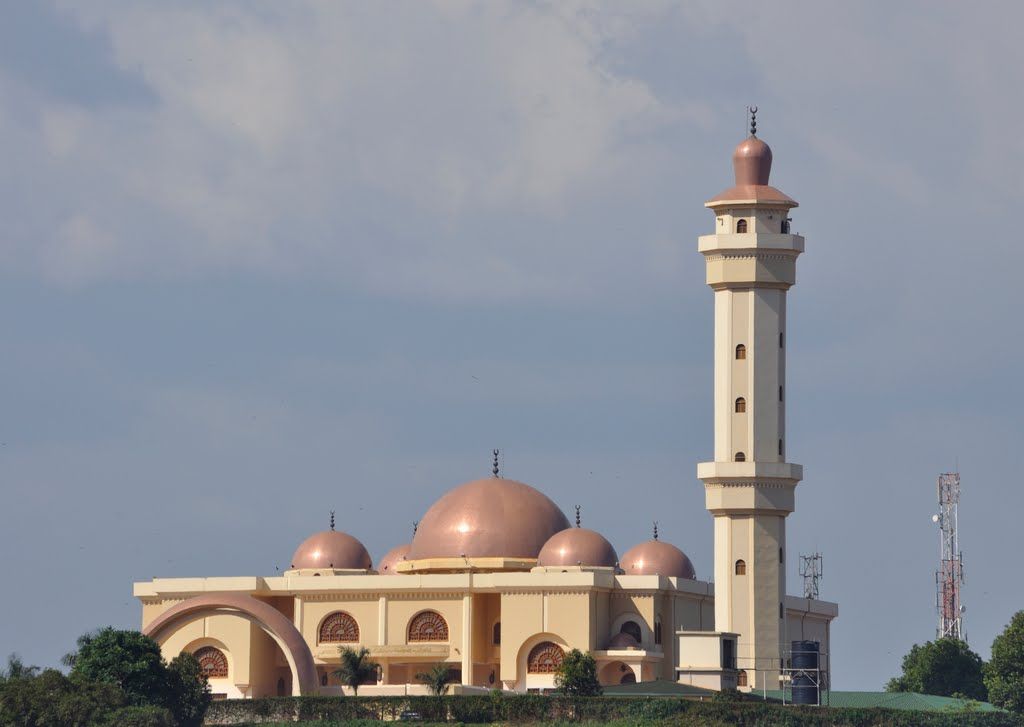
Two dictators, one abandoned construction site, and a chance late-night sightseeing favor — that's the improbable chain of events behind the building that now defines Kampala's skyline. The Uganda National Mosque, still widely known by its earlier name, the Gaddafi Mosque, isn't just East Africa's largest mosque. It's a monument to one of the stranger diplomatic backstories in the region's modern history.
An Idi Amin Project, Frozen for 25 Years
The mosque's story begins in 1972, when the newly formed Uganda Muslim Supreme Council, under President Idi Amin, broke ground on Old Kampala Hill — one of the city's seven original hills — for what was then called the Old Kampala National Mosque. Construction dragged through the mid-1970s before halting entirely in 1976 amid the political instability that defined Amin's regime. When Amin was overthrown in 1979, the half-built mosque was largely abandoned, its funds reportedly siphoned off before the project ever neared completion. For more than two decades, an unfinished tower sat on one of Kampala's most visible hilltops — a stalled monument to a fallen government.
The mosque's revival came down almost entirely to chance. In 2001, Libyan leader Muammar Gaddafi visited Kampala for President Museveni's swearing-in ceremony. That evening, an old friend arranged a low-key private tour of the city for him, which happened to pass near Makerere University Hill — close enough to see the derelict mosque tower at Old Kampala. When the story of the abandoned project came up, a small group of Muslim leaders was hastily assembled to make the case directly to Gaddafi that finishing it would be the most meaningful gift he could give Uganda's Muslim community. He agreed.
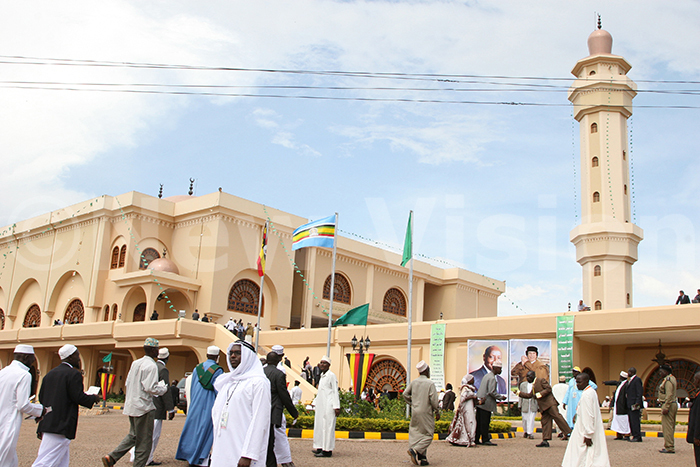
Construction resumed in earnest in the mid-2000s, funded through the World Islamic Call Society, and the completed mosque was officially opened in June 2007 under the name Gaddafi National Mosque — a building of reinforced concrete blending Arab, European, and African architectural influences, with a 50.5-meter minaret that instantly became one of the tallest structures on Kampala's skyline. After Gaddafi's death in 2011, the mosque was renamed the Uganda National Mosque in 2013 — reportedly a precondition for the post-Gaddafi Libyan government to continue supporting the site's upkeep, since it was reluctant to fund anything still carrying the former leader's name.
Scale That Still Surprises First-Time Visitors
Numbers alone make the case for why this building dominates Kampala's skyline. Sitting on roughly 12 acres, the mosque's main prayer hall accommodates around 15,000 worshippers, with room for another 1,100 in the upper gallery and as many as 3,500 more on the rooftop terrace during major occasions — figures that make it the largest mosque in East Africa and, by most accounts, the second largest on the continent after Morocco's Hassan II Mosque in Casablanca. The building is arranged over two levels: the mosque itself occupies the upper floor, while the Uganda Muslim Supreme Council's administrative offices operate out of the ground floor, keeping the site functioning as a working religious headquarters rather than a static monument.
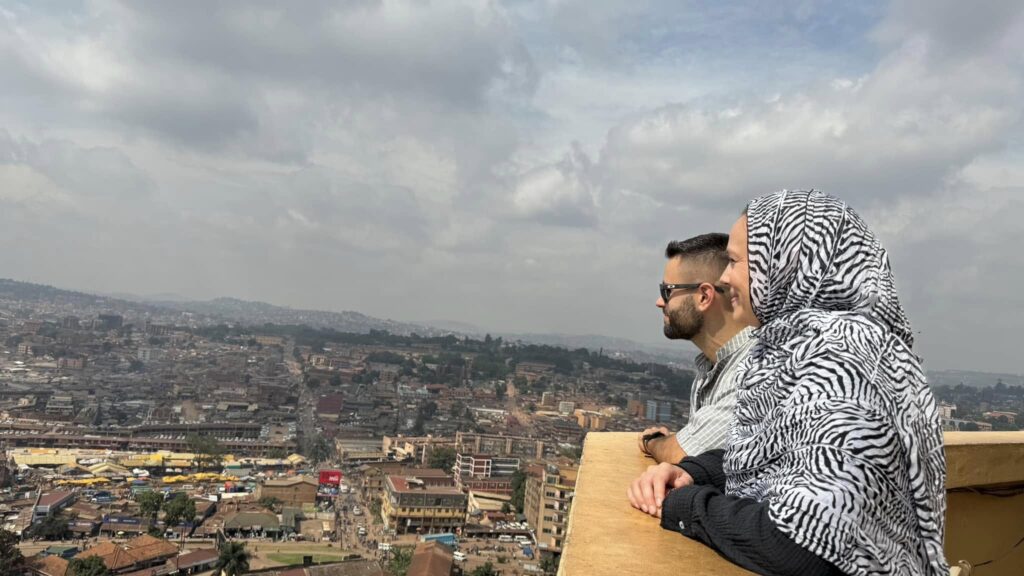
The signature experience for most visitors, however, isn't the prayer hall — it's the climb. A spiral staircase of 272 steps winds up the minaret to an observation platform that delivers arguably the single best panoramic view of Kampala available anywhere in the city, taking in all seven of the capital's hills at once. Guides frequently note that the early-morning light makes the climb worth the effort even for visitors who'd otherwise skip it.
A Landmark Open to Everyone
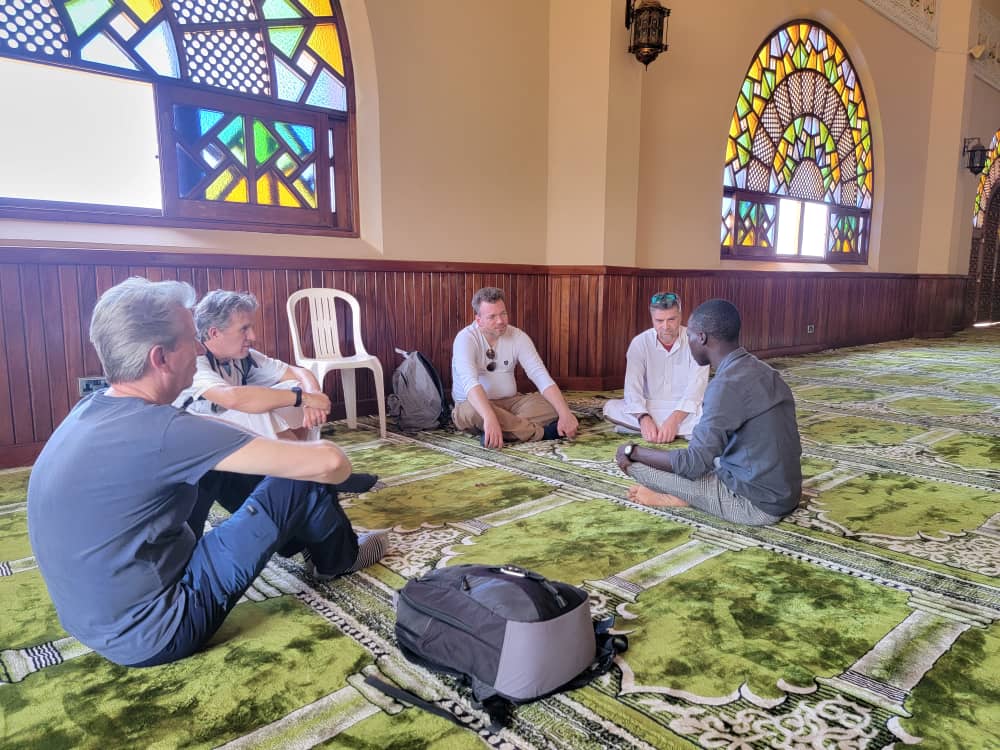
Unlike some of Kampala's more restricted religious sites, the Uganda National Mosque is explicitly open to visitors of any faith, nationality, or background, which has made it a standard stop on Kampala city tours regardless of a traveler's own religion. Guided visits typically include the prayer hall, a walk-through of the mosque's design and history, and access to the minaret climb — with respectful dress and, for the prayer hall itself, appropriate footwear removal expected of all visitors, as at any working mosque.
Visiting the Uganda National Mosque: What to Know
- Location: Old Kampala Hill, roughly 2–2.5 km from Kampala's city center.
- Opening hours: Open daily, including Fridays and special religious occasions; the mosque itself is primarily active for services and events like Eid, while the administrative offices run through the week.
- Entry fee: A modest fee applies for both international and domestic visitors (with international visitors paying somewhat more), typically covering a guided tour and minaret access.
- The minaret climb: 272 steps to the top; sunrise tours are available for visitors who want the clearest views and coolest climbing conditions.
- Dress code: Modest clothing is expected, and shoes are removed before entering the prayer hall.
- Good to pair with: Old Kampala's surrounding streets and markets, or as a stop en route to Namirembe or Rubaga Cathedrals, both visible from the minaret itself.
Plan Your Visit to the Uganda National Mosque
Few buildings in Kampala combine political history, architectural scale, and the best skyline view in the city quite like this one. Let us build a visit to the Uganda National Mosque into your Kampala city tour.
Contact us at info@ugandasafaribookings.com or call +256-700135510 to start planning your visit.