
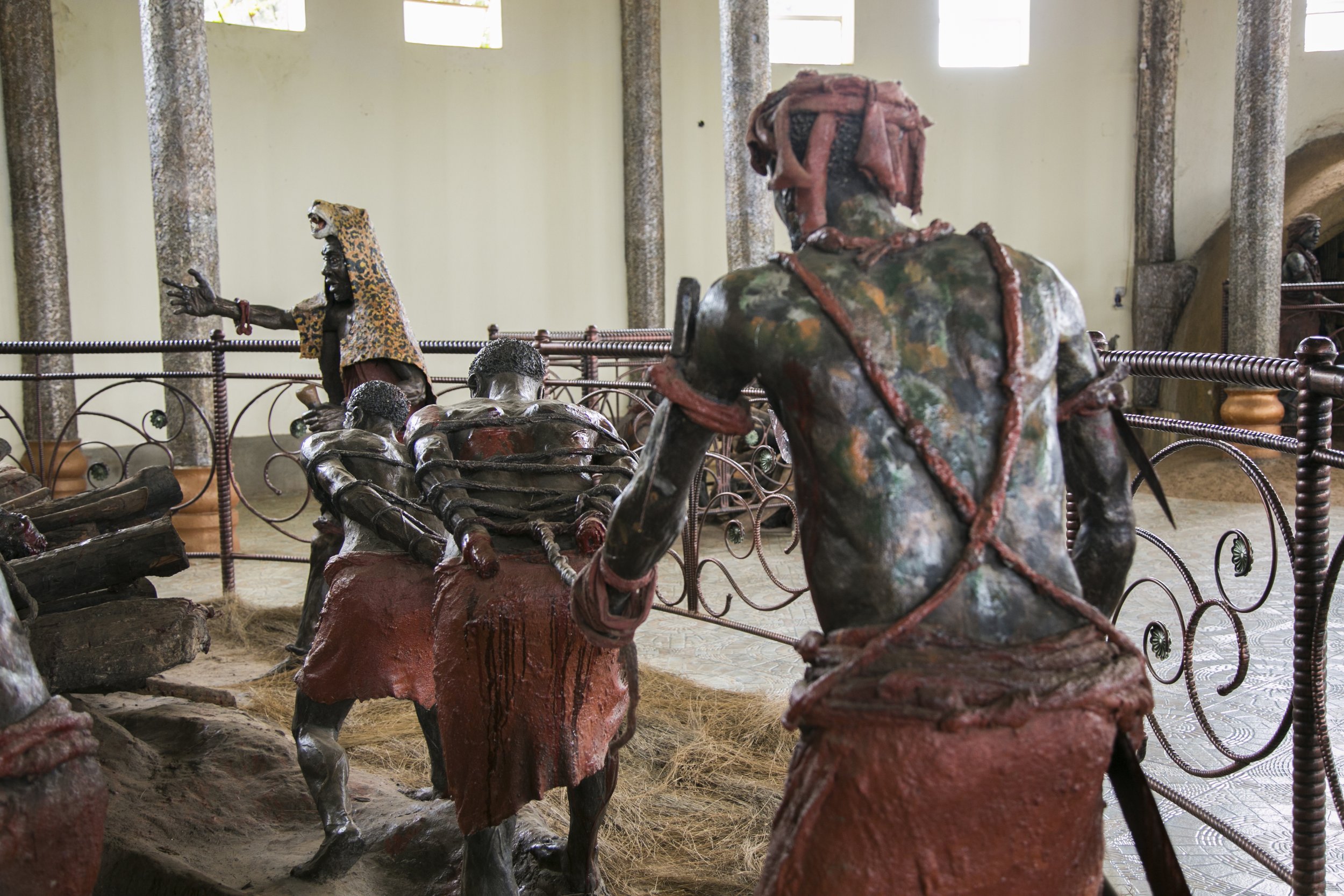
Every June 3rd, a stretch of road in Wakiso District, roughly 15 kilometers northeast of Kampala, becomes one of the largest pilgrimage routes in Africa. In some years, crowds estimated at up to two million people — clergy walking barefoot among them as an act of penance — converge on a single patch of ground where, in 1886, a group of young men were burned alive for refusing to renounce their Christian faith. That ground is Namugongo, and what happened there in the space of a few weeks in 1885–1887 still shapes how millions of Ugandans, and visitors from across the region, understand the country's religious identity today.
A Kingdom, a King, and a Collision of Faiths
By the 1880s, Buganda's royal court had become an unusual crossroads: Islam had arrived decades earlier via Arab traders, and both Catholic and Anglican missionaries had established footholds among the Kabaka's pages — young men serving in the royal household. Kabaka Mwanga II, who came to power in 1884, saw the growing influence of these foreign faiths, particularly their pull on his own court, as a direct threat to his authority. What followed between 1885 and 1887 was a systematic persecution of Christian converts within the royal household — 45 men and boys in total, both Catholic and Anglican, executed for refusing to abandon their new faith.
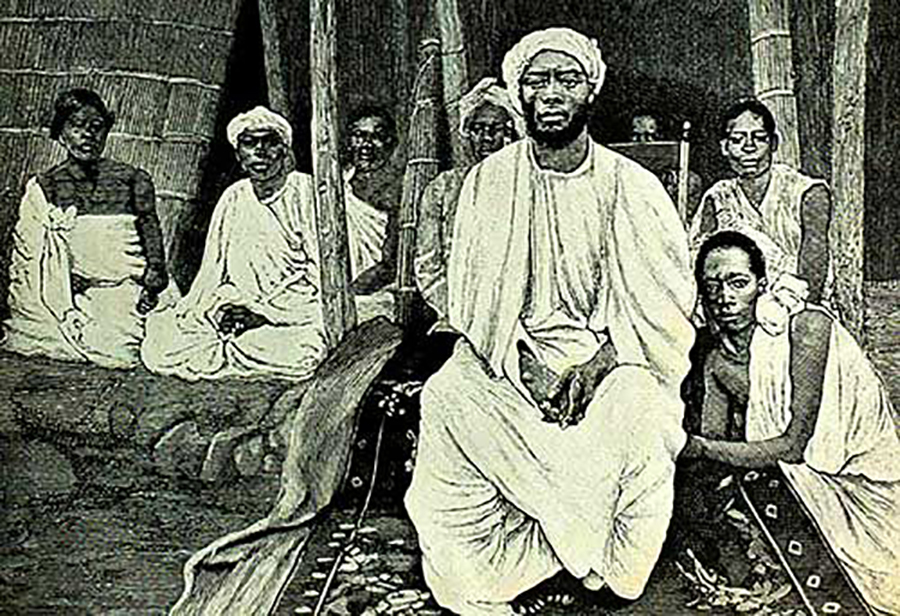
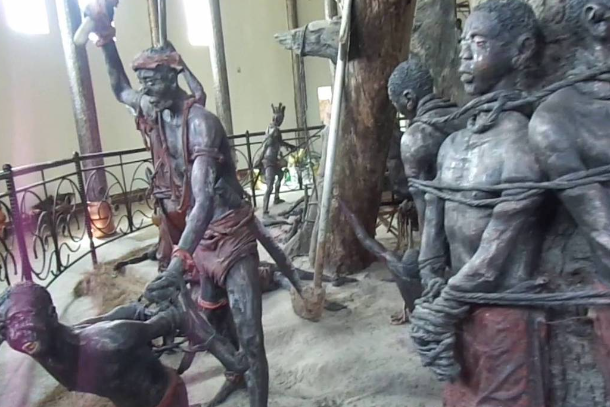
The most harrowing individual story belongs to Charles Lwanga, the leader of the young Christian community at court, who took over instructing and protecting the pages after an earlier martyrdom and was ultimately executed at Namugongo himself. Among those martyred alongside him was Kizito, just 13 or 14 years old — the youngest of the group, baptized only days before his death. The condemned were bound together, marched over ten miles toward Namugongo — one martyr, Gonzaga Gonza, didn't survive the march itself — and held for roughly a week while executioners gathered firewood and reeds for what was to come. On June 3, 1886, the majority of the group was burned alive on the site where the shrine now stands.
From Execution Ground to Basilica
What makes Namugongo remarkable isn't only the history — it's how directly the modern site sits on top of it. The Catholic shrine, formally the Basilica of the Uganda Martyrs, was built on the exact spot where Charles Lwanga and most of the group were killed, and on the same ground where an earlier Mill Hill Missionary parish had stood since 1935. Construction of the basilica began in 1967 and finished in 1975, designed with an architectural nod to traditional African huts — a circular structure supported by 22 copper domes, one for each of the 22 Catholic martyrs, with doors carved to depict scenes from the martyrs' lives. Inside, the basilica seats around 1,000 people, though on the annual feast day that capacity is dwarfed many times over by pilgrims who fill the surrounding grounds instead.
The Catholic martyrs' path to sainthood moved through Rome in stages that Ugandans still recite by date: beatified by Pope Benedict XV on June 6, 1920, and canonized by Pope Paul VI on October 18, 1964, in St. Peter's Basilica. Five years later, Paul VI became the first pope to visit the African continent, traveling to Uganda from July 31 to August 2, 1969, in part to honor the martyrs he had canonized. In 1993, Pope John Paul II elevated the shrine's status further, to a minor basilica. A separate Anglican shrine stands nearby, commemorating the martyrs from that tradition, making Namugongo one of the rare sites in the world actively honored by two Christian communions on the same ground.
June 3rd: A National Day Built Around One Site
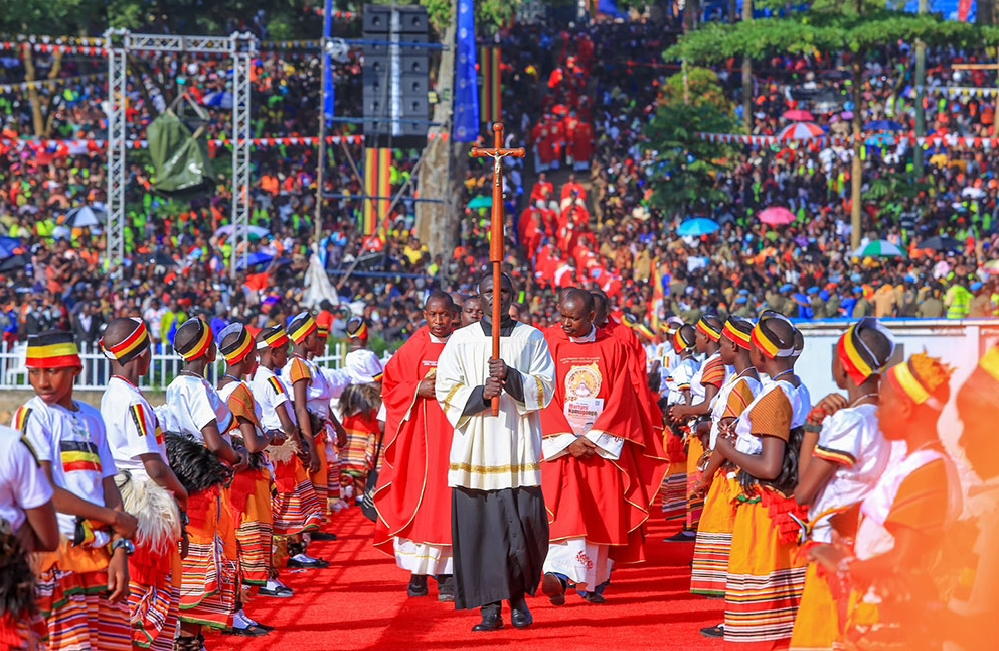
Uganda Martyrs' Day, observed every June 3rd, is a public holiday and one of the largest annual religious gatherings on the continent — drawing pilgrims not just from across Uganda but from Kenya, Tanzania, South Sudan, and the Democratic Republic of Congo. The day includes prayers, baptisms, dramatic reenactments, music, and communal meals, with clergy processing barefoot in a physical echo of the martyrs' own final walk. If your visit happens to fall around this date, Namugongo transforms from a solemn historic site into one of the most vivid living expressions of faith anywhere in East Africa — though the sheer scale of the crowds means it's a very different visit from a quiet weekday tour.
Visiting Namugongo Martyrs Shrine: What to Know
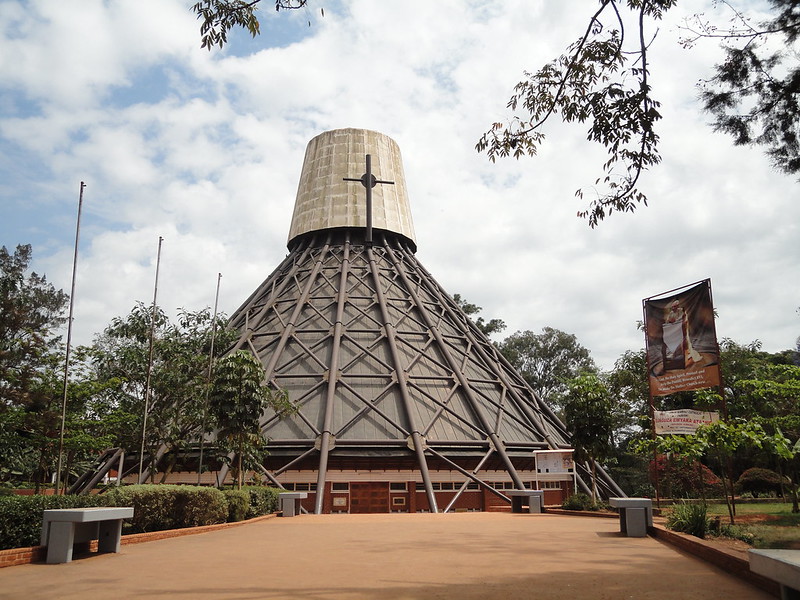
- Location: Namugongo, Kira Municipality, Wakiso District — roughly 15–17 km northeast of central Kampala.
- What's on site: The Catholic basilica, a separate Anglican martyrs shrine nearby, and a martyrs museum with artistic depictions of the martyrs' lives and the broader history of the persecution.
- Best time to visit: Any day of the year for a reflective, uncrowded visit; June 3rd specifically if you want to witness the pilgrimage and commemoration events firsthand (expect very large crowds and plan accordingly).
- Dress code: Modest dress is appropriate, as with any active place of worship.
- Good to pair with: The Ndere Cultural Centre and the Uganda Museum, both reasonably close by, for a fuller day of Kampala-area cultural and historical sites.
Plan Your Visit to Namugongo Martyrs Shrine
Whether you're visiting for quiet reflection or timing your trip around the June 3rd commemoration, Namugongo is one of the most moving historic sites near Kampala. Let us help you build it into your itinerary.
To book a trip to Namugongo Martyr's Shrine , simply contact us at info@ugandasafaribookings.com or call +256-700135510 to start planning your visit.