
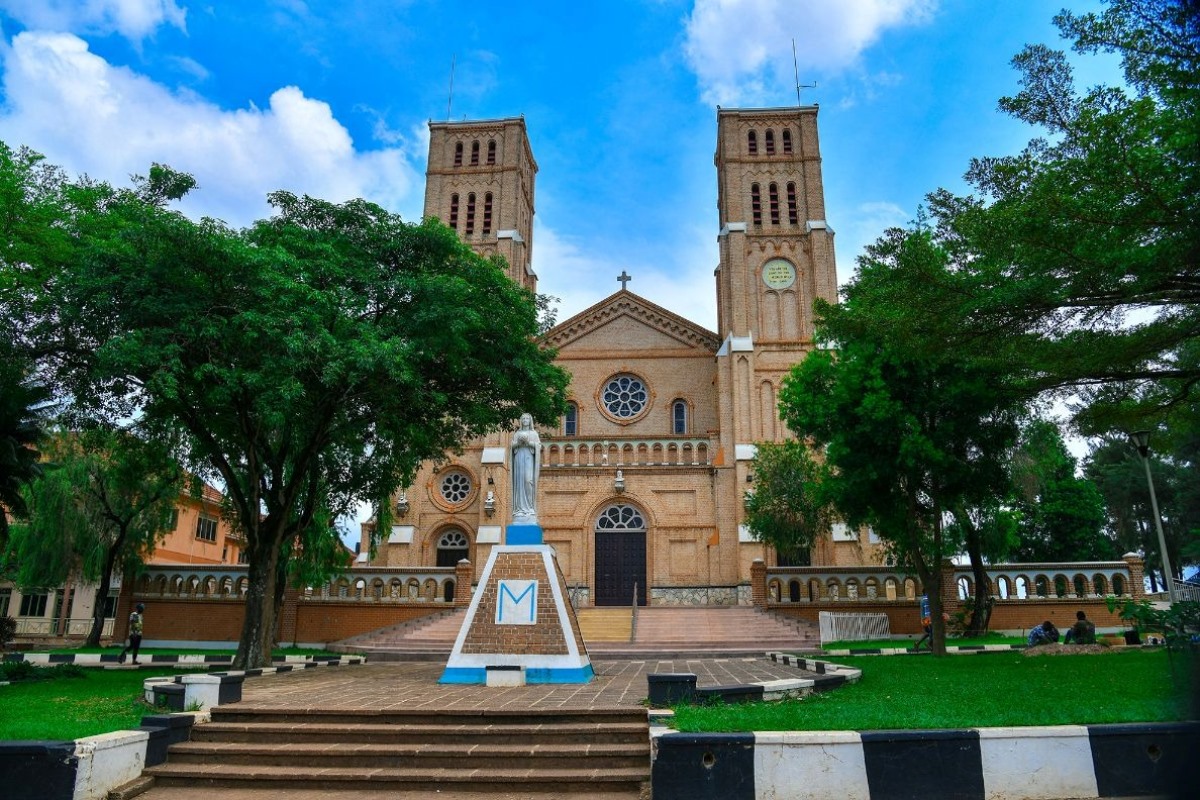
There's a quiet irony sitting atop one of Kampala's seven hills that most visitors never hear about. Rubaga Cathedral — Uganda's oldest Roman Catholic cathedral and the mother church of the Archdiocese of Kampala — stands on land donated by Kabaka Mwanga II, the very king who, just a few years earlier, ordered the executions that created the Uganda Martyrs. In 1889, Mwanga II gave Rubaga Hill to the French Catholic missionaries known as the White Fathers, land that would eventually become one of the most visited religious landmarks in East Africa, and a permanent memorial to Christians his own reign had killed.
Built on Donated Ground, Consecrated Under Two Decades
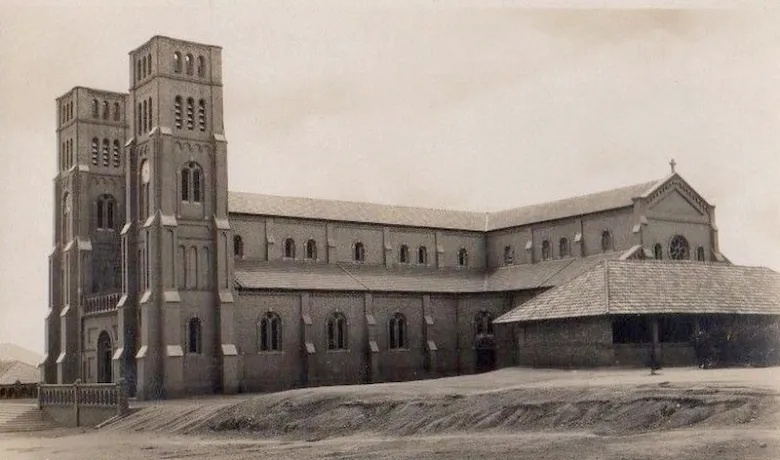
The idea for a permanent "mother church" of Ugandan Catholicism took shape in 1901, when Bishop Henry Hanlon launched a fundraising appeal among the country's growing Catholic community. Construction on the current cathedral began in 1914 and took over a decade to complete, finally reaching consecration on December 31, 1925 — St. Mary's Cathedral Rubaga, twin-towered and built in a Romanesque style that still dominates views across western Kampala today. The cathedral wasn't built in isolation; it anchored a growing complex on the hill that would eventually include Rubaga Hospital, a nursing school, a leadership training institute, and the offices of numerous Catholic institutions — turning the hilltop into something closer to a small campus of Ugandan Catholic life than a single church building.
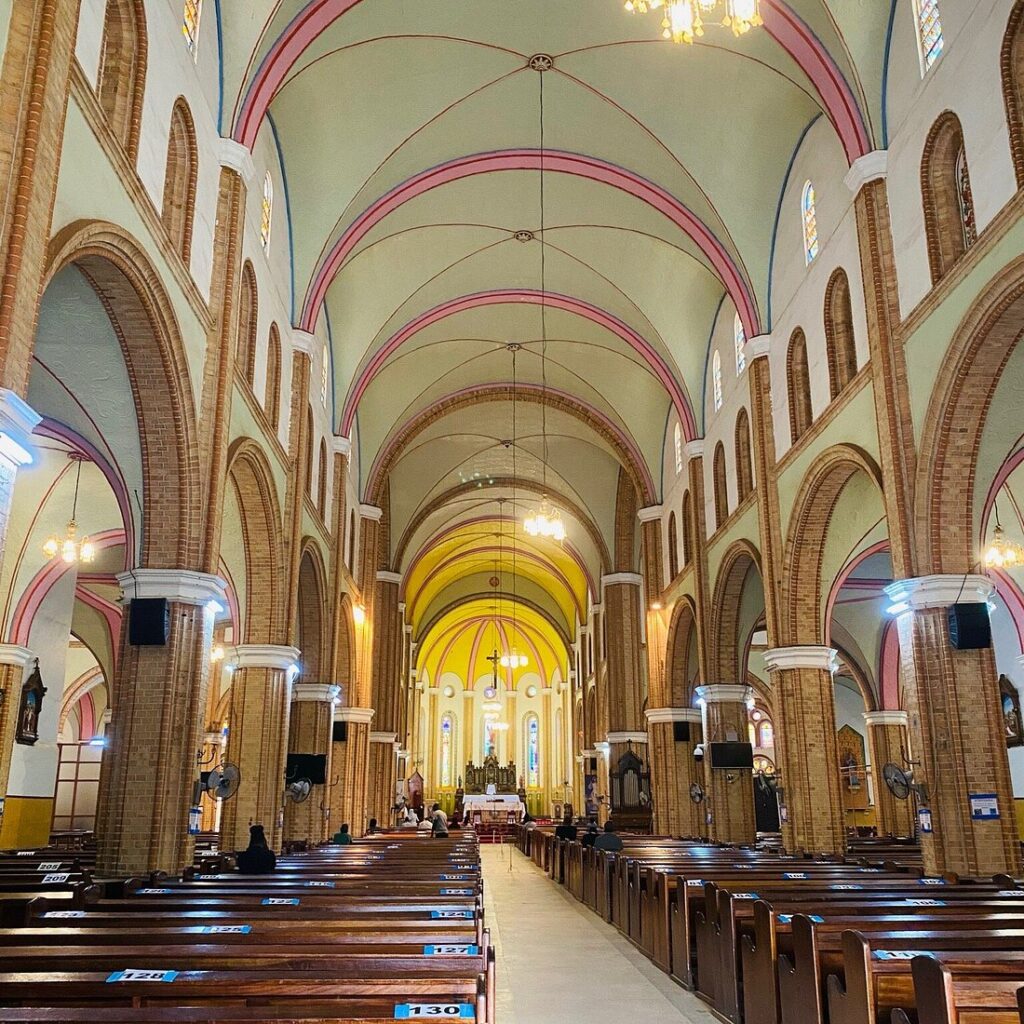
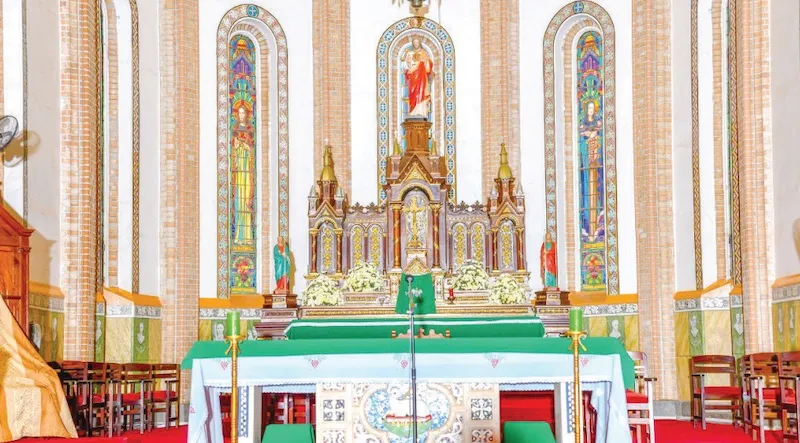
Details from the original construction still stand out to visitors today: the cathedral's ceiling, made of molded metal sheets shipped in from London, and its earliest stained-glass windows, installed under Bishop Edward Michaud, who is buried inside the cathedral after his death in 1945. Outside, a large statue of the Virgin Mary — imported from Italy and installed overlooking the city — has become one of the most photographed features of the site, visible from much of western Kampala.
A Memorial to the Martyrs, Inside the Building Their Persecutor Enabled
Rubaga Cathedral's transept holds a memorial to the Uganda Martyrs — the Christians executed by Mwanga II's own order in 1885 and 1886 — and the 22 Catholic martyrs among them, later canonized as saints, are depicted in the cathedral's stained-glass windows. It's a striking layer of history to sit with: the same king whose persecution created Uganda's most significant Christian martyrdom story is also, indirectly, responsible for the ground on which they're memorialized. Every June, thousands of pilgrims gathered for Uganda Martyrs' Day pass through or near Rubaga as part of the broader wave of Catholic commemoration across Kampala.
Where Popes and Archbishops Have Stood
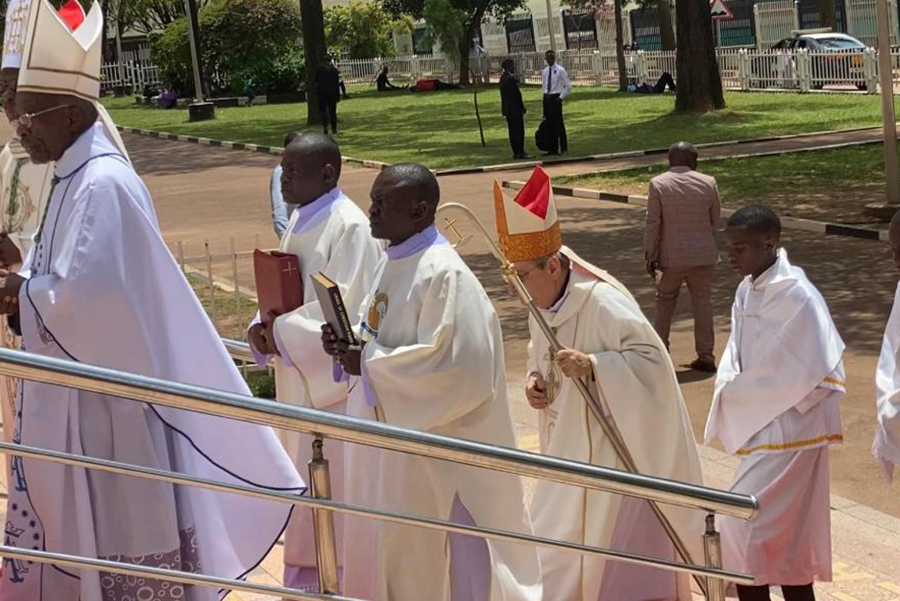
Few religious sites in Uganda can claim as concentrated a list of international visitors as Rubaga. Three popes have visited the cathedral over the decades. Pope Paul VI closed the African Bishops' Synod hosted by Uganda from Rubaga on July 29, 1969, part of the same historic trip that made him the first pope to visit the African continent. Pope John Paul II followed on February 8, 1993, meeting Catholic bishops and priests after a prayer service, planting a tree in the courtyard that still stands, and inaugurating a memorial clock near the parish entrance. The Archbishop of Canterbury, Robert Runcie, visited in January 1984 for a joint prayer service with Emmanuel Cardinal Nsubuga — an ecumenical gesture between the Anglican and Catholic leadership that his successor, George Carey, would repeat in the early 1990s.
The cathedral is also the final resting place of several of Ugandan Catholicism's most significant figures, including Archbishop Joseph Kiwanuka — the first African Catholic bishop and first African archbishop in the Kampala Archdiocese — and Cardinal Emmanuel Kiwanuka Nsubuga, Uganda's first cardinal. Their tombs, along with those of other missionaries and clergy buried on the grounds, make the cathedral as much a place of pilgrimage as a place of regular Sunday worship, where thousands of the faithful still gather weekly.
Visiting Rubaga Cathedral: What to Know
- Location: Rubaga (Lubaga) Hill, roughly 3 km west of Kampala's city center.
- What's on site: The main cathedral, memorials to the Uganda Martyrs, the tombs of Archbishop Kiwanuka and Cardinal Nsubuga, and the surrounding Rubaga institutional complex, including the hospital and training institute.
- Best time to visit: Any day for a quiet visit; Sunday mornings if you want to experience an active Mass, though expect large congregations.
- Dress code: Modest attire, as with any active place of worship.
- Good to pair with: Namirembe Cathedral (the Anglican equivalent, also on its own hill), and the Uganda National Mosque, giving visitors a compact tour of Kampala's three major hilltop religious landmarks in a single day.
Plan Your Visit to Rubaga Cathedral
Whether you're drawn by its architecture, its papal history, or its connection to the Uganda Martyrs, Rubaga Cathedral is one of Kampala's most layered historic sites. Let us help you build a visit into your Kampala itinerary.
To book a trip to Rubaga Cathedral, simply contact us at info@ugandasafaribookings.com or call +256-700135510 to start planning your visit.