
On a set of smooth granite outcrops in eastern Uganda's Kumi District, painted in red and white pigment sometime before the year 1250, are markings nobody can fully explain. Nobody knows for certain who painted them. Nobody knows exactly what all the symbols mean. And yet the local Iteso community has never treated them as a mystery to be solved so much as a place to still be respected — a rock shelter still used, within living memory, for prayer and sacrifice. That tension between archaeological puzzle and active shrine is what makes Nyero rock paintings one of the most genuinely different historic sites in Uganda.
Older Than Buganda, Older Than Written Record
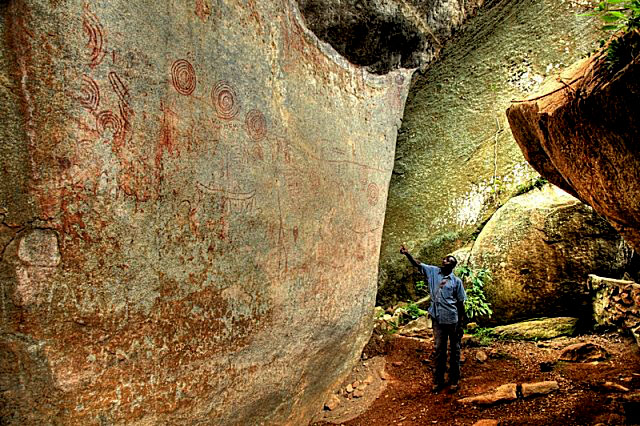
Most of Uganda's historic sites — the royal tombs, the cathedrals, the mosque — belong to the last 150 years. Nyero rock paintings belong to a different scale of time entirely. Researchers date the paintings to before 1250 CE, making them older than most of the kingdoms and institutions that define Uganda's more recent history by centuries. First documented by colonial researchers in 1913, the site actually comprises six rock shelters in total, though only three — Nyero I, II, and III — are the most frequently visited and best documented, each displaying its own distinct set of motifs: geometric patterns, concentric circles, canoe-shaped forms, human figures, and animal outlines rendered in red ochre.
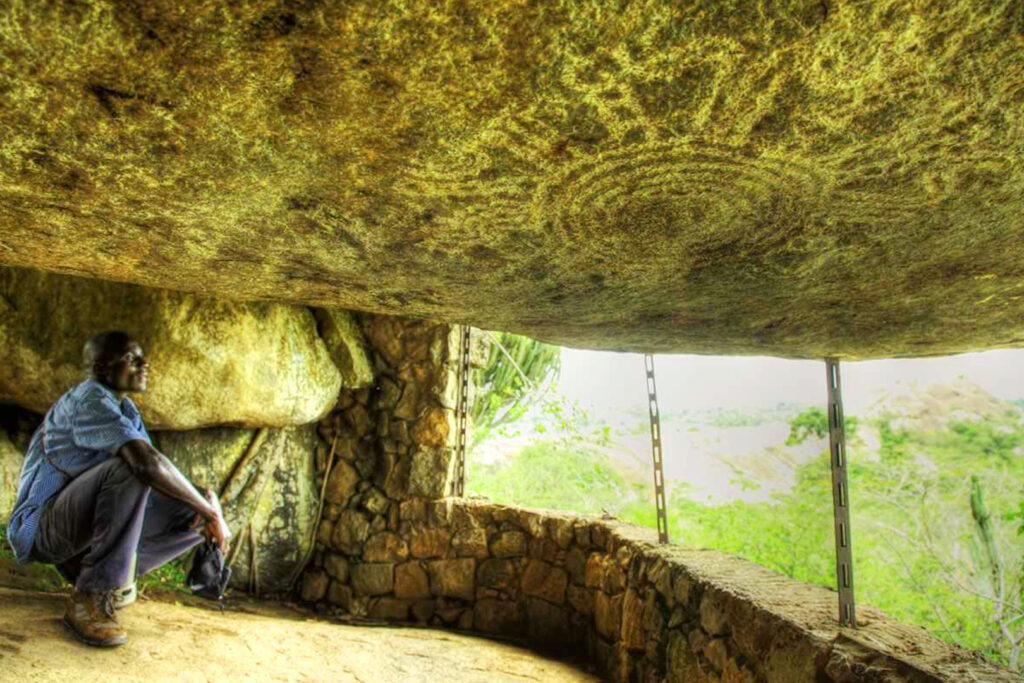
That red-pigment geometric style isn't unique to Nyero. It belongs to a broader tradition of rock art found across east, central, and parts of southern Africa, generally associated with the region's Late Stone Age hunter-gatherer cultures — which is part of why Nyero matters well beyond Uganda's borders. It offers physical, dated evidence connecting Uganda's landscape to a much older pan-African story of early human settlement, expression, and belief.
Who Actually Painted The Nyero Rocks?
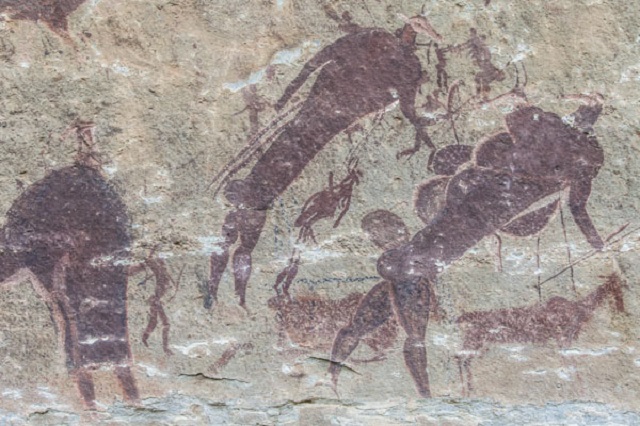
This is Nyero's genuine open question, and it's more interesting than most tour scripts let on. Early 20th-century researchers initially attributed the paintings to San (Bushmen) artists from southern Africa, based on stylistic similarities to rock art found there. Other researchers and oral traditions instead point to the Batwa — a forest-dwelling people found in scattered communities across the Great Lakes region — as the more likely original artists, with the Batwa believed to have once lived across a wider area of Uganda before being displaced by later Luo, Nilotic, and Bantu migrations into the east. By the time the Iteso people, the region's current inhabitants, settled the area, the paintings were already ancient and unexplained — inherited, not created, by the community that would go on to give them spiritual meaning.
A Shrine the Government Once Tried to Silence
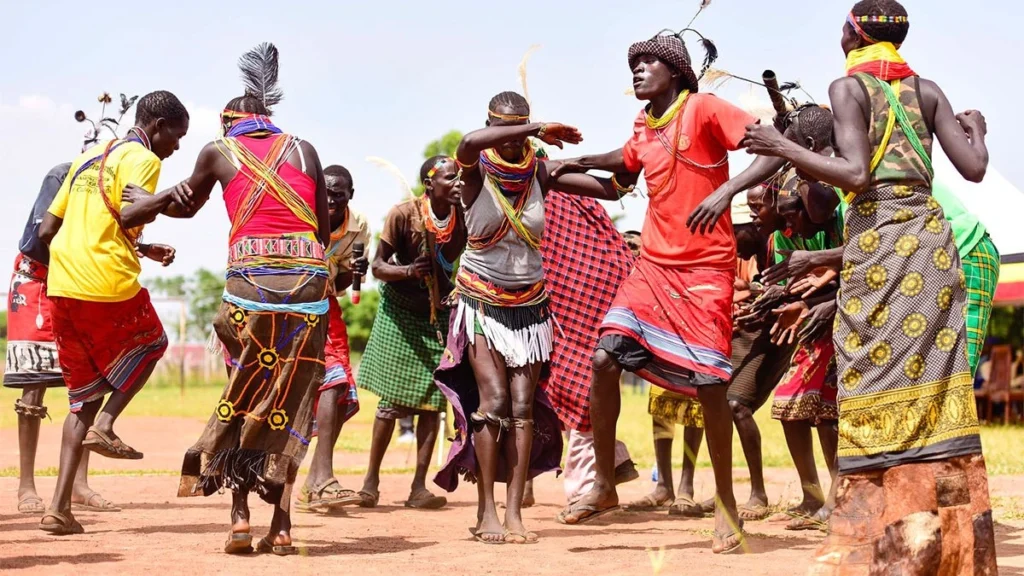
What sets Nyero rock paintings apart from almost every other rock art site on the continent is that its spiritual use didn't end with antiquity — it continued into living memory. Iteso communities used the shelters as shrines, bringing seasonal offerings and prayers tied to rain, fertility, protection from misfortune, and blessings for childbearing. Some elders describe visions or dreams connected to spirits believed to inhabit the rocks. Traces of smoke from these ritual sacrifices are still visible in parts of the caves today.
In the 1970s, the Ugandan government of the time moved to stop prayer practices at the site — an attempt to formally sever Nyero from its living religious use. It didn't fully succeed. Oral history still records strong community attachment to the shelters, and the area immediately surrounding the paintings continues to be regarded locally as sacred ground, even as the site has simultaneously become a protected national monument and a stop on Uganda's archaeological tourism circuit. Few heritage sites anywhere manage to be both a scientific curiosity and an active point of local prayer at the same time — Nyero is one of them.
Why It's Worth the Detour
Nyero sits well off Uganda's standard safari circuit, in Kumi District roughly 250 km from Kampala and about four hours' drive from the capital, or a natural stopover for travelers heading toward Sipi Falls, Mount Elgon, or Kidepo Valley National Park in the country's northeast. It won't suit a traveler with only a day or two in Kampala. But for those building a longer itinerary through eastern Uganda, it offers something none of the capital's historic sites can: a direct physical link to the region's earliest known human history, standing in the exact spot where unknown artists worked more than 700 years ago.
Visiting Nyero Rock Paintings: What to Know
- Location: Nyero village, Kumi District, eastern Uganda — about 8 km west of Kumi town and roughly 250 km (around 4 hours' drive) from Kampala.
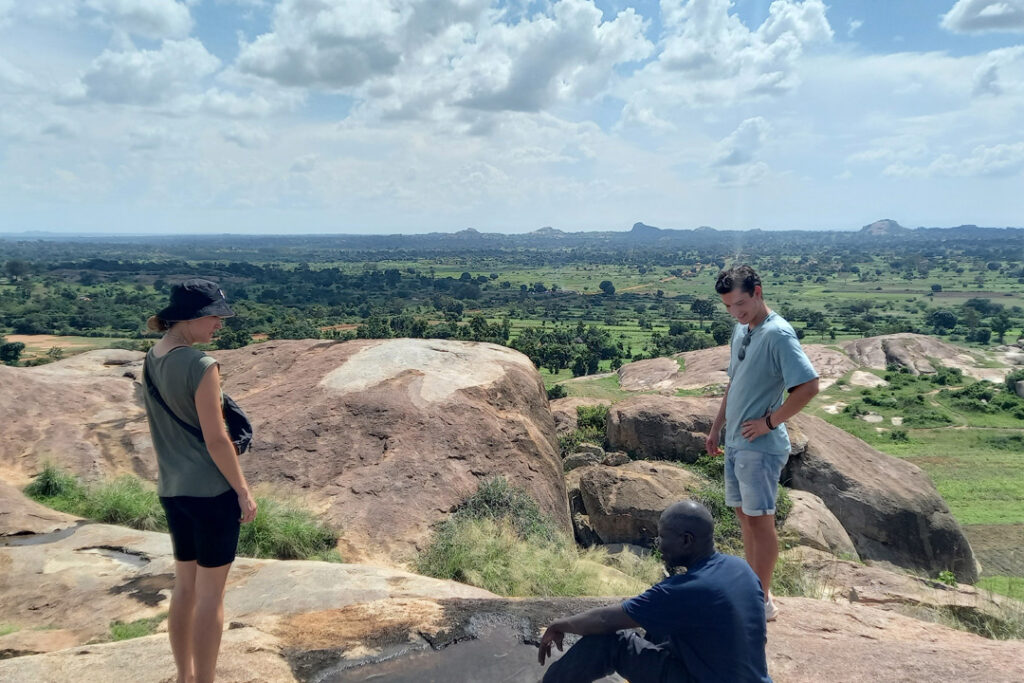
- What's on site: Three primary rock shelters (Nyero I, II, III) featuring the bulk of the visible paintings, with local guides available to lead tours and explain the symbols and their significance.
- Good to combine with: A longer eastern-Uganda route toward Sipi Falls, Mount Elgon National Park, or Kidepo Valley National Park, given the distance from Kampala.
- What to bring: Comfortable walking shoes for navigating the granite outcrops, sun protection, and a camera — though always ask your guide about photography etiquette given the site's continued cultural sensitivity.
- Respect on site: Because parts of the shelters remain locally significant as places of prayer, visitors should treat the site with the same quiet respect expected at any active shrine, not purely as an archaeological exhibit.
Plan Your Visit to Nyero Rock Paintings
If you're building an eastern Uganda itinerary and want to include one of the country's oldest and most enigmatic historic sites, we can help you plan the route.
Contact us at info@ugandasafaribookings.com or call +256-700135510 to start planning your visit.