
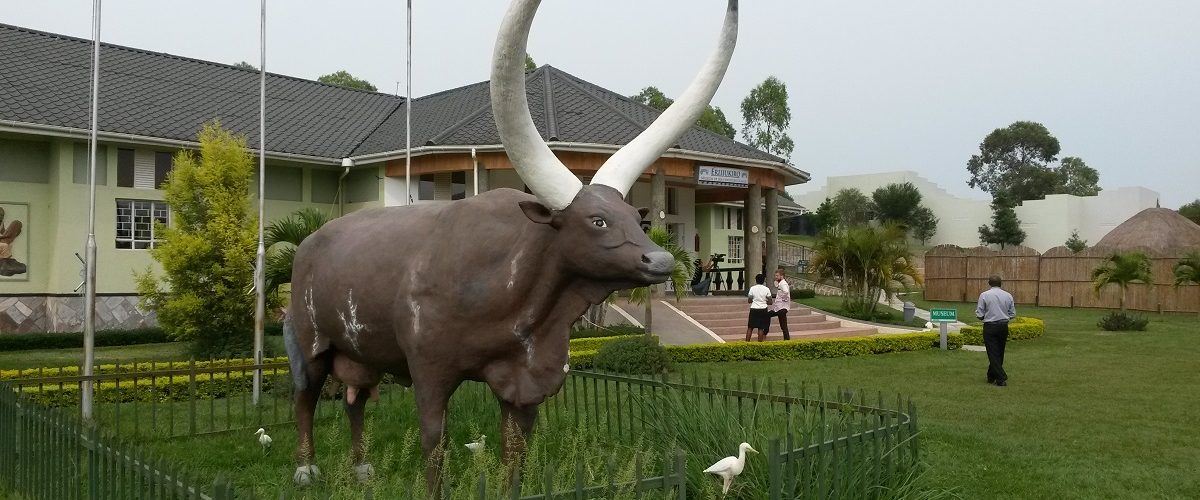
In the year 1520, according to Ankole oral history, a Bunyoro army swept into Ankole territory near modern-day Mbarara, raiding cattle and villages as it went. Then, in the middle of the day, the sky went dark. A solar eclipse swept over the battlefield at Biharwe, and the Bunyoro king, convinced it was a sign of divine punishment, ordered his men to abandon their captured cattle and retreat immediately — never to return. The Banyankole, watching their herds mysteriously spared, came away believing the cattle themselves were a gift from God. Five centuries later, that single astronomical coincidence still anchors one of western Uganda's richest cultural institutions: the Igongo Cultural Centre.
A Museum Built Where History Actually Happened
Located about 12 kilometers from Mbarara city along the Mbarara–Masaka highway, Igongo Cultural Centre sits on the grounds of a former Ankole royal gathering place, directly across from Biharwe Hill, where the eclipse memorial itself now stands as a protected monument. Founded in 2003 by businessman and historian Apollo Karugaba, the center was built specifically to preserve and share the heritage of the Banyankole and neighboring communities of southwestern Uganda — the Bakiga, Batoro, and Banyoro among them — collectively known in the region as the Banyakitara.
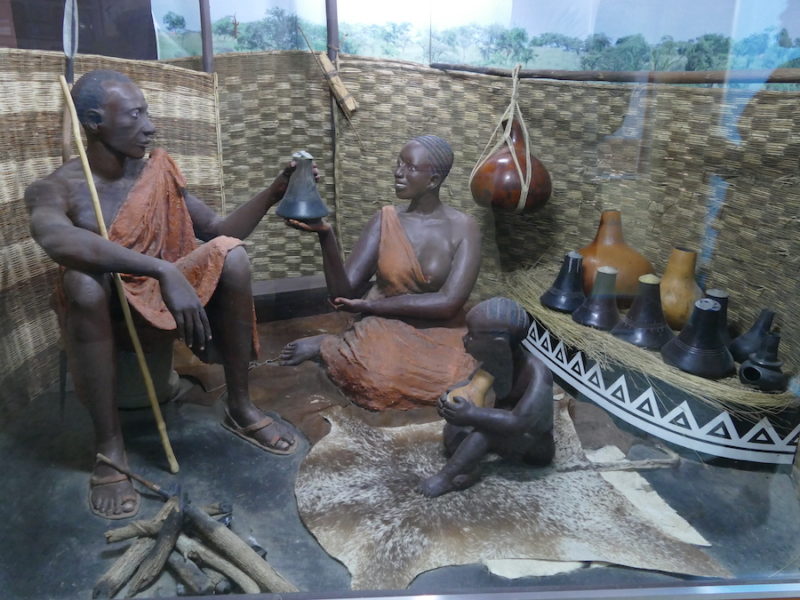
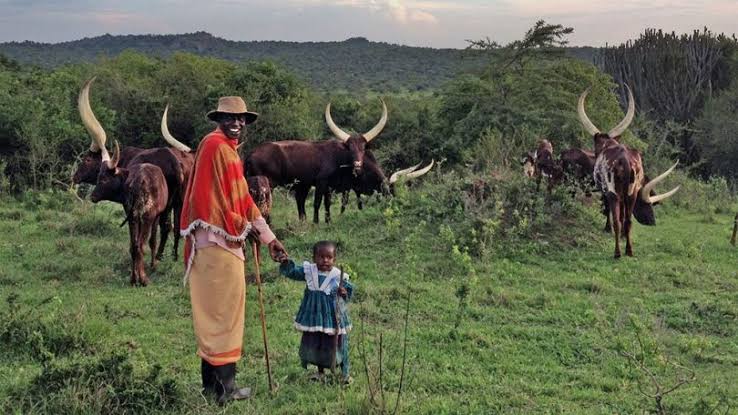
At its heart is the Eriijukiro Museum — "a place of memory" — the largest museum exhibition space in western Uganda. Inside, exhibits trace Ankole history from the pre-colonial era through to the present day: royal regalia and artifacts from the Obugabe, the traditional Ankole kingship; detailed portrayals of past kings and queens and how the kingdom was governed; and displays on the region's most defining cultural symbol, the long-horned Ankole cattle, whose central role in Banyankole identity, diet, and economy runs through nearly every section of the museum. A dedicated exhibit inside the museum, the Kitami Palace display, is devoted to Queen Kitami, an 18th-century female ruler of the neighboring Mpororo kingdom — a rare and deliberate spotlight on women's leadership within a regional history usually told through kings.
Beyond the Museum: A Living Cultural Village
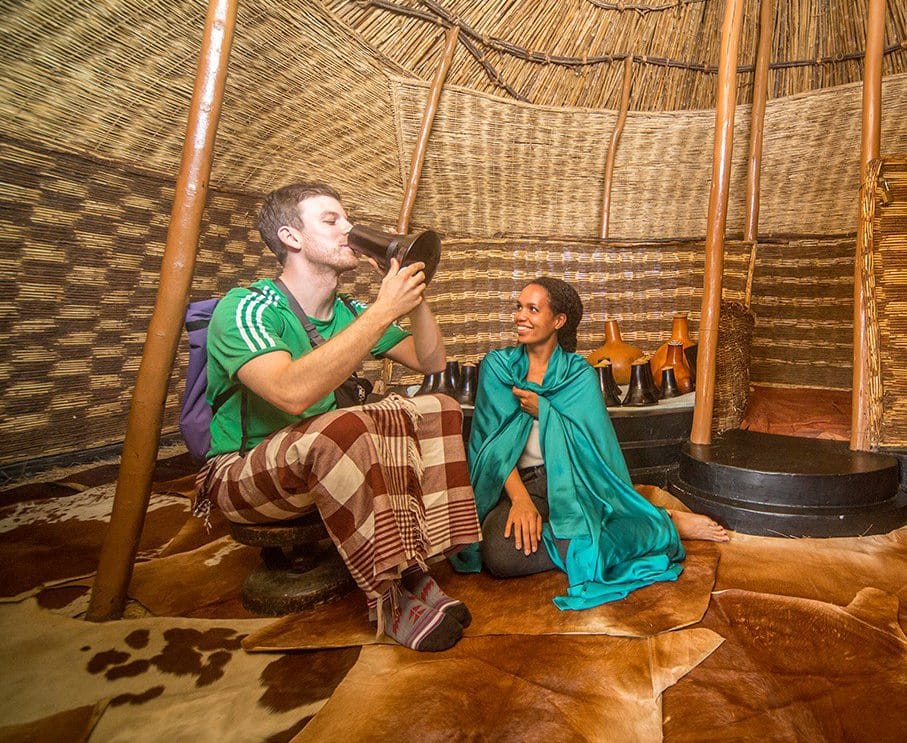
Igongo isn't a static collection behind glass. The center includes the Eitaramiro cultural village, a recreated homestead complex illustrating how traditional Ankole and Kigezi households actually functioned, alongside outdoor cattle kraals and demonstration areas where visitors can watch pottery-making, basket weaving, and traditional cooking in progress. Depending on the day, visitors can join hands-on sessions learning to make eshabwe — Ankole's distinctive ghee-based butter sauce — or try their hand at milking one of the center's long-horned cattle, a direct, physical link to the pastoral culture the museum documents.
The center has also documented a more recent chapter of Ankole agricultural history: a collaboration with the University of Basel in Switzerland on cheese-making and milk pasteurization techniques, presented at Igongo as a case study in how the region has adapted modern technology to its traditional cattle-based economy without losing that economy's cultural core.
More Than a Museum Visit
Because Igongo combines a museum, a cultural village, a hotel, restaurants, and a craft shop on one site, it functions less like a quick stop and more like a genuine base for exploring Ankole heritage in depth. The center's two restaurants serve traditional Bahima and Ankole dishes — including smoked Ankole cow's milk, eshabwe, millet bread, and roasted meats — while the on-site Nkwanzi craft and bookshop offers handmade jewelry, woven baskets, cow-horn items, and a genuinely well-curated selection of books on Ugandan and Ankole history. Day trips arranged from the center can include visits to the Biharwe Eclipse Monument itself, local honey farms, and evening cultural performances with Bahima community members.
Visiting Igongo Cultural Centre: What to Know
- Location: Biharwe, roughly 12–15 km from Mbarara city center along the Mbarara–Masaka highway, about a 4–5 hour drive from Kampala.
- What's on site: The Eriijukiro Museum, the Eitaramiro cultural village, two restaurants, a craft shop and bookstore, on-site accommodation, and the nearby Biharwe Eclipse Monument.
- Time needed: The core museum tour takes roughly 30 minutes to an hour, though the wider center — with the cultural village, shops, and dining — comfortably fills a half day.
- Good to pair with: A broader southwestern Uganda route toward Lake Mburo National Park, Bwindi Impenetrable Forest, or the Rwanda border, given Mbarara's position as a natural stopover town.
- Best for: Travelers interested in Ankole and Banyakitara culture, cattle-keeping traditions, and pre-colonial regional history — a strong complement to Kampala's Buganda-focused sites.
Plan Your Visit to Igongo Cultural Centre
If your route through Uganda takes you toward Mbarara, Lake Mburo, or the southwest, Igongo Cultural Centre is one of the richest cultural stops along the way. Let us help you plan it.
To visit the Igongo cultural center- simply contact us at info@ugandasafaribookings.com or call +256-700135510 and we will get you a driver and car for the trip to western Uganda.