
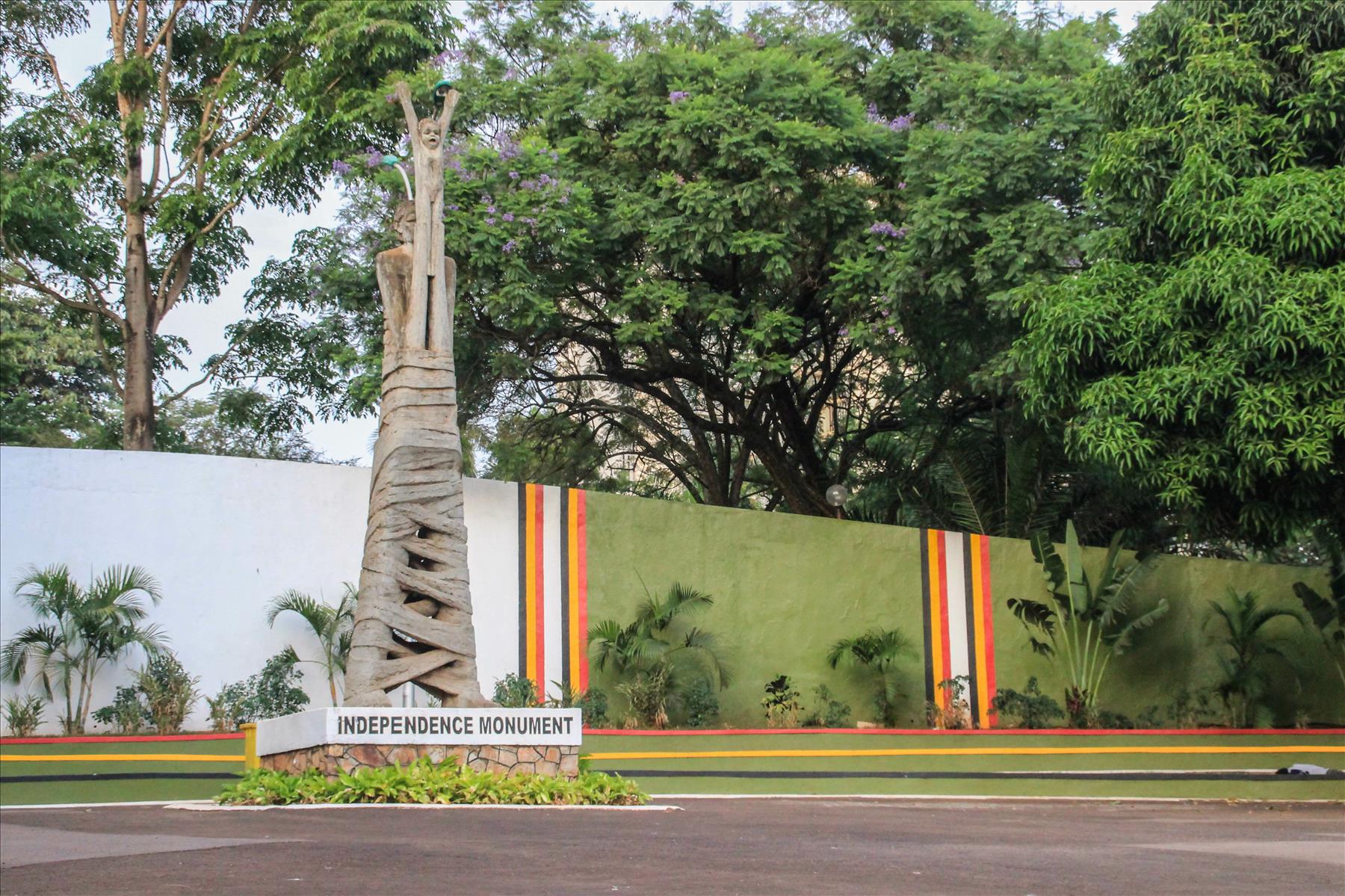
On October 8, 1962, one day before Uganda formally became independent, Prime Minister-designate Milton Obote stood in front of a crowd of officials and cameras to unveil the country's brand-new Independence Monument. He pulled the cord. The reef-knot holding the veil in place refused to come undone. Obote, caught mid-ceremony in front of the nation's press, reportedly laughed off the mishap with a line that's been retold in Uganda ever since: that when a child is born, you don't get to see it all at once. It's a small, human footnote to a monument that has since become one of the most recognized pieces of public art in the country — reproduced on Ugandan currency notes and etched into the collective memory of the nation's founding, even as many Ugandans who pass it daily know surprisingly little about its story.
A Mother, a Child, and a Deliberately Unfinished Message
Standing six meters tall in the King George V Jubilee Gardens on Nile Avenue, between the Sheraton Kampala Hotel and the Grand Imperial Hotel, the monument depicts a woman with her legs planted firmly apart, unwrapping a bound child and raising it toward the sky. The child's hands reach upward in what reads as triumphant celebration; the mother's expression, by most descriptions, is more contemplative — less pure jubilation than a kind of watchful uncertainty about what comes next. That contrast wasn't accidental. The message widely attributed to the piece is that Britain had done its part in bringing the child — the new nation — into being, but that everything from that point forward was Uganda's own responsibility.
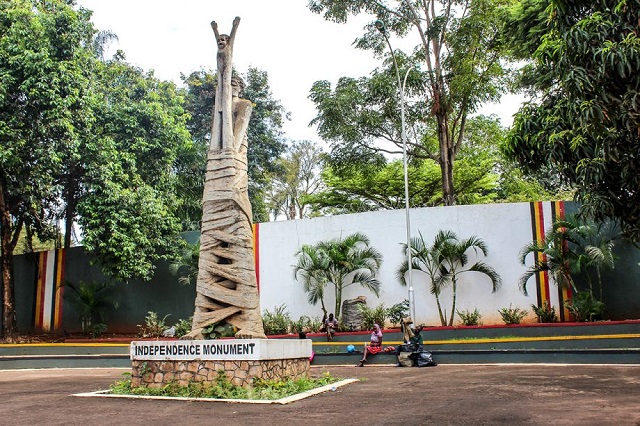
The sculpture's texture carries its own symbolism: sections of visible voids and gaps in the concrete binding around the figures are often read as representing the loosening bonds between colonizer and colony, while also, according to some historians, reflecting the genuine anxiety and uncertainty under which the piece was created — a nation about to govern itself for the first time, with no guarantee of how that experiment would unfold. Some historians go further, arguing that sculptor Gregory Maloba, aware of how difficult it would be to represent a single, unified "Ugandan" identity for a country made up of dozens of distinct kingdoms and ethnic communities, leaned instead on the more universal imagery of motherhood and birth — a symbol that could transcend Uganda's internal plurality rather than attempt, and likely fail, to represent it directly.
The Artist Behind It
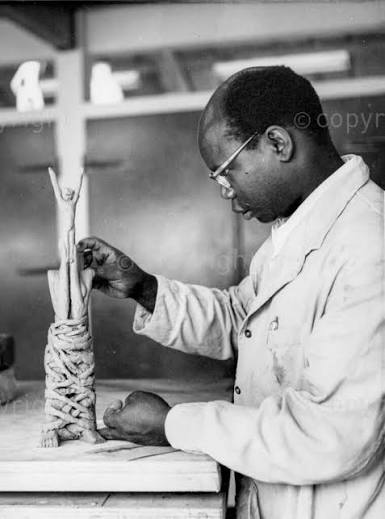
The monument is the work of Gregory Maloba, a Kenyan-born sculptor of Luhya heritage who studied and later taught at Makerere University's Margaret Trowell School of Industrial and Fine Art from 1939 to 1965 — the same institution that, at various points, also housed the early Uganda Museum collection. Maloba was already one of the region's most respected sculptors by the time he was commissioned, having produced other notable works including a bust of Ham Mukasa, and he completed the Independence Monument in the months directly preceding October 9, 1962. Made from cement, sand, iron bars, and wire mesh, and left largely unsheltered from Kampala's weather for over six decades, the monument's continued survival is itself something of a quiet testament to the durability of Maloba's original construction.
More Than a Photo Stop
The Independence Monument's significance extends well beyond its physical presence in downtown Kampala. It appears on the reverse of Uganda's currency notes and features regularly in the country's national promotional materials, making it — whether or not passersby immediately recognize the connection — one of the most widely reproduced images of Uganda's national identity. Nearby, at the junction of Speke Road and Nile Avenue, a separate statue commemorates Sir Edward Muteesa II, the Kabaka of Buganda who became independent Uganda's first president, adding a second layer of independence-era history to the same small stretch of the city.
Visiting the Independence Monument: What to Know
- Location: King George V Jubilee Gardens, Nile Avenue, between the Sheraton Kampala Hotel, Grand Imperial Hotel, and Standard Chartered Bank in central Kampala.
- Access: Open-air and freely viewable at any time of day, with no entrance fee.
- Best time to visit: Any time — it's a quick stop that pairs naturally with a broader downtown Kampala walking tour, and the surrounding hotels make it an easy add-on if you're staying nearby.
- Good to pair with: The nearby Edward Muteesa II statue, and a wider city-center walking route taking in Kampala Road and the Old Taxi Park.
Plan Your Visit to the Independence Monument
A quick but meaningful stop on any Kampala city tour, the Independence Monument connects easily with a full day of downtown historic sites. Let us help you build it into your itinerary.
To visit the Independence Monument , simply contact us at info@ugandasafaribookings.com or call +256-700135510 to start planning your visit.