
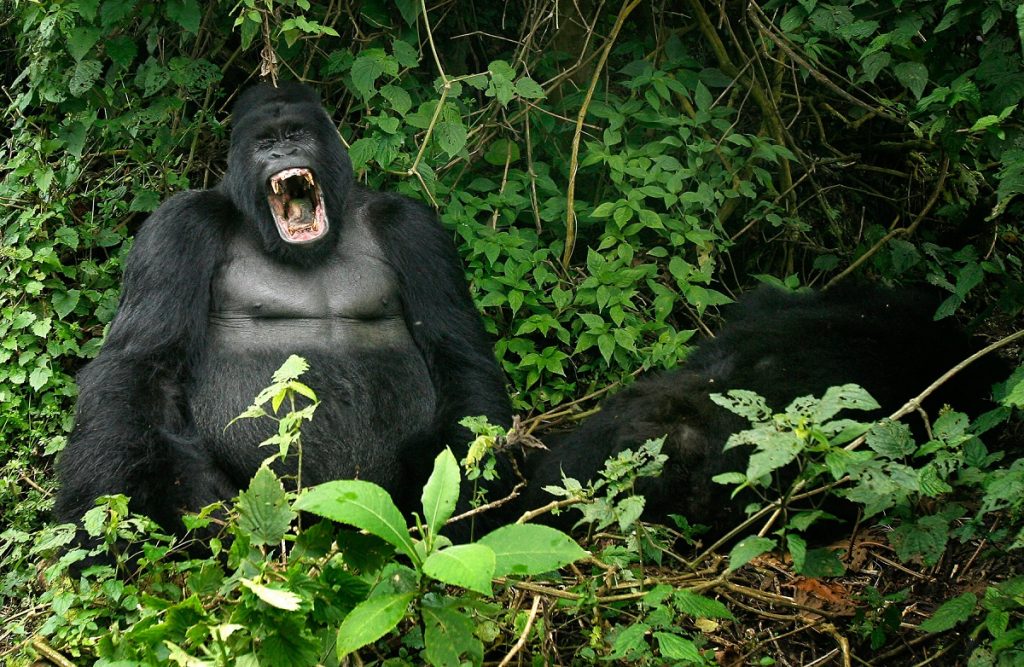
Mountain gorillas survive in only three countries on Earth — Uganda, Rwanda, and the Democratic Republic of Congo — and Uganda and Rwanda are, by far, the two most visited and best set up for tourism. A gorilla safari to either (or both) is one of the most extraordinary wildlife experiences left on the planet: an hour spent a few meters from a family of 200kg silverbacks and their young, deep in misty rainforest, watching them go about their day as if you weren't there.
This guide covers everything you need to plan one — permit costs, how Uganda and Rwanda actually compare, trekking difficulty, when to go, what to pack, and how to combine both countries into a single trip.
Uganda vs Rwanda: The Core Difference
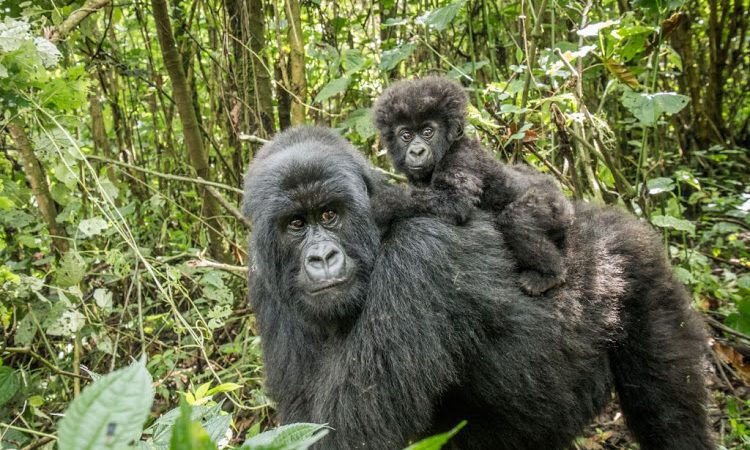
Both countries protect the same species — the mountain gorilla — and both offer a strictly regulated one-hour encounter with a habituated family, led by armed rangers and trackers. Where they differ is price, access, and trekking style.
| Uganda | Rwanda | |
|---|---|---|
| Parks | Bwindi Impenetrable National Park, Mgahinga Gorilla National Park | Volcanoes National Park |
| Permit price | $800 ($600 in low season: April, May, November) | $1,500 |
| Number of gorilla families | More families spread across a larger, denser park | Fewer, more concentrated families |
| Distance from capital/airport | 8–10 hours by road from Entebbe, or a short flight to Kihihi/Kisoro | 2–3 hours by road from Kigali |
| Terrain | Steep, dense, often muddy — a tougher trek | Comparatively gentler volcanic slopes |
| Extra experience | Gorilla Habituation Experience — four hours with a semi-habituated family | Golden monkey tracking nearby |
| Best for | Budget-conscious travelers, longer treks, wider wildlife variety | Shorter trips, easier logistics, luxury lodges |
Neither is "better" outright — it comes down to your budget, how much time you have, and how physically demanding a trek you're up for.
Permit Costs, In Detail
The permit is the single biggest fixed cost of any gorilla trip, and prices for 2026–2027 look like this:
- Uganda: $800 per foreign non-resident, dropping to $600 in the green-season months of April, May, and November. Foreign residents pay around $700, and East African Community citizens pay a heavily discounted local rate.
- Rwanda: $1,500 per person year-round, set by the Rwanda Development Board. A roughly 30% low-season discount (November–May) applies when it's bundled with stays in Akagera and Nyungwe National Parks.
- DRC (Virunga): Around $400, though access has been intermittent due to periodic park closures — check current status before planning around it.
Both permit types cover one hour with a habituated family, an armed ranger guide, trackers, and park entry — but not transport, accommodation, meals, or tips. Uganda also offers a Gorilla Habituation Experience, letting you spend up to four hours with a semi-habituated family for a premium price (around $1,500, rising to $1,800 from January 2027) — a unique option Rwanda doesn't offer.
Uganda now runs park-gate payments cashlessly, meaning your permit must be paid in full through a licensed operator before you arrive — you can't pay at the gate.
What a Full Trip Actually Costs
The permit is only part of the budget. All-in, per person:
- Budget trip (Uganda-focused): roughly $1,200–$2,500
- Mid-range 5-day safari: roughly $2,400–$4,500 in Uganda, $3,500–$5,500 in Rwanda
- Luxury trip: $5,000–$7,000+, especially in Rwanda where lodge standards near Volcanoes National Park run high
Beyond the permit, expect to budget for private 4x4 transport (roughly $150–$250/day), accommodation (from $100/night budget to $400+/night luxury), a domestic flight if flying into Bwindi's airstrips (around $540 round trip), porter fees (about $20/trek — genuinely worth hiring, as they employ local community members and help enormously on steep terrain), meals, tips, and visas.
How Hard Is the Trek, Really?
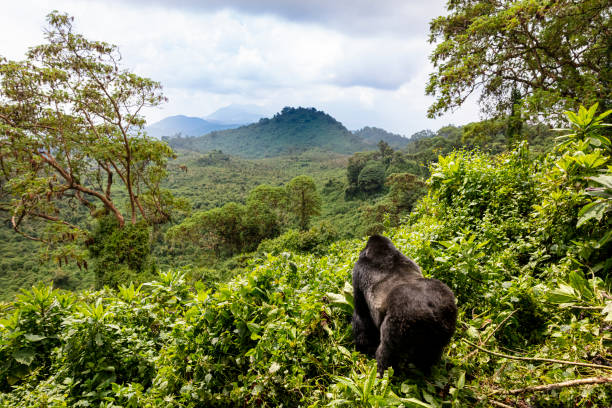
This is the question most people underestimate. Gorilla trekking isn't a stroll — you're walking through dense rainforest at altitude (1,500–2,900m), on trails that can be steep, muddy, and unmarked. Once rangers locate the gorillas by radio, the group often has to go off-trail through undergrowth to reach them.
- Rwanda's Volcanoes National Park tends to have gentler, more consistent terrain, and treks can be assigned by fitness level in advance.
- Uganda's Bwindi ("Impenetrable" is not just branding) is denser and steeper, and treks can run from under an hour to over six hours of hiking each way depending on where the gorilla family has moved to that day.
There's no way to predict exact trek length in advance — gorillas move daily, and rangers track them fresh each morning. A reasonable level of fitness matters more here than in most safari activities. Porters are available in both countries and worth every dollar if you're not an experienced hiker.
Best Time to Go
Gorilla trekking happens year-round in both countries, since permits are capped daily regardless of season. The real variable is weather:
- Dry seasons (June–September and December–February): Firmer trails, easier hiking, clearer visibility — also the busiest and priciest months, so book well ahead.
- Wet seasons (March–May and October–November): Muddier, more physically demanding trails, but fewer crowds and — in Uganda specifically — discounted permits in April, May, and November.
Rain can fall in either season since both parks sit in true rainforest, so pack for wet weather regardless of when you go.
Booking Timeline
Permits are capped per park per day and sell out well in advance, especially around peak months and the Christmas/New Year period:
- Peak season: book 6–9 months ahead
- Low season: 2–3 months is often enough
- Christmas/New Year: 9–12 months ahead
- Gorilla Habituation Experience: 6+ months ahead, regardless of season
Because dates are fixed once a permit is purchased and generally can't be rescheduled, lock in your travel dates before buying.
Combining Uganda and Rwanda in One Trip
Because Bwindi/Mgahinga and Volcanoes National Park sit close to a shared border near Kisoro (Uganda) and Musanze (Rwanda), it's genuinely practical to trek gorillas in both countries on one trip — crossing overland via the Cyanika or Katuna border post in one to two hours. A common structure:
- Fly into Entebbe or Kigali
- Trek gorillas in one country
- Cross the border overland to the other park
- Trek gorillas a second time (or track golden monkeys/chimps as an add-on)
- Close the trip with a city stop in Kampala or Kigali before departure
The East Africa Tourist Visa covers Uganda, Rwanda, and Kenya on a single visa, which makes this kind of cross-border itinerary considerably simpler than applying for each country separately.
What to Pack
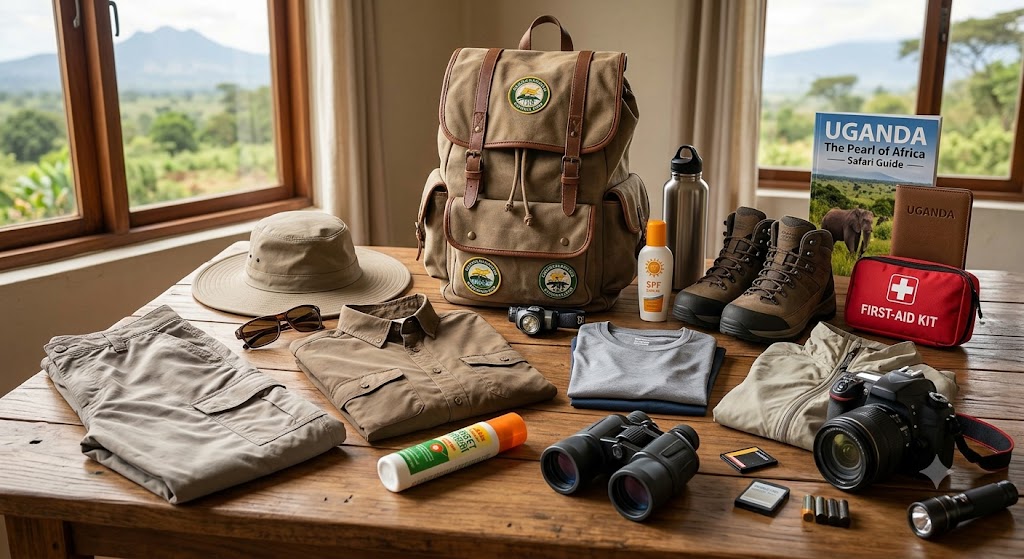
- Sturdy, broken-in hiking boots with ankle support
- Waterproof rain jacket, regardless of season
- Long trousers and long sleeves (tucked in — nettles and biting ants are a real hazard in the undergrowth)
- Gardening-style gloves for gripping vegetation on steep sections
- A daypack with water, snacks, and a rain cover
- Insect repellent and sun protection
- A telephoto lens if you're serious about photos — you can't approach closer than the mandated 7-meter minimum distance from the gorillas
Trekking Etiquette and Rules
Both countries enforce the same core rules, set to protect the gorillas from human disease transmission and stress:
- Maintain at least 7 meters distance from the gorillas at all times
- No trekking if you have a cold, flu, or any contagious illness — gorillas are highly susceptible to human respiratory illnesses
- No flash photography
- Keep your voice low and movements calm
- Maximum group size of 8 visitors per gorilla family, per trek
- No eating or drinking near the gorillas
- Children under 15 are generally not permitted to trek
Quick FAQ
Which is cheaper, Uganda or Rwanda? Uganda, by a significant margin — its standard permit costs roughly half of Rwanda's.
Which is easier to get to? Rwanda — Volcanoes National Park is a 2–3 hour drive from Kigali International Airport, versus a much longer transfer or a domestic flight to reach Bwindi in Uganda.
Can I do both countries in one trip? Yes — it's one of the most popular ways to safari in the region, thanks to the short border crossing between the two parks.
Do I need a visa for both? The East Africa Tourist Visa covers Uganda, Rwanda, and Kenya on one visa, which is usually the simplest option for a combined trip.
Is gorilla trekking safe? Yes, when done through a licensed operator with certified rangers — gorilla trekking has an excellent safety record in both countries, and rangers are trained and armed for the trek's duration.
Final Thought
A Uganda Rwanda gorilla safari isn't a casual add-on to an African trip — it's usually the reason for the trip. Whichever park you choose, or however you combine the two, the permit is your gateway and your biggest single decision. Book it early, budget honestly for everything around it, and go in with realistic expectations about the hike — the reward, an hour face to face with a wild gorilla family, is worth every muddy step.
To book a gorilla safari in Uganda or Rwanda today - simply contact us now by sending an email to info@ugandasafaribookings.com or call +256-700135510.