
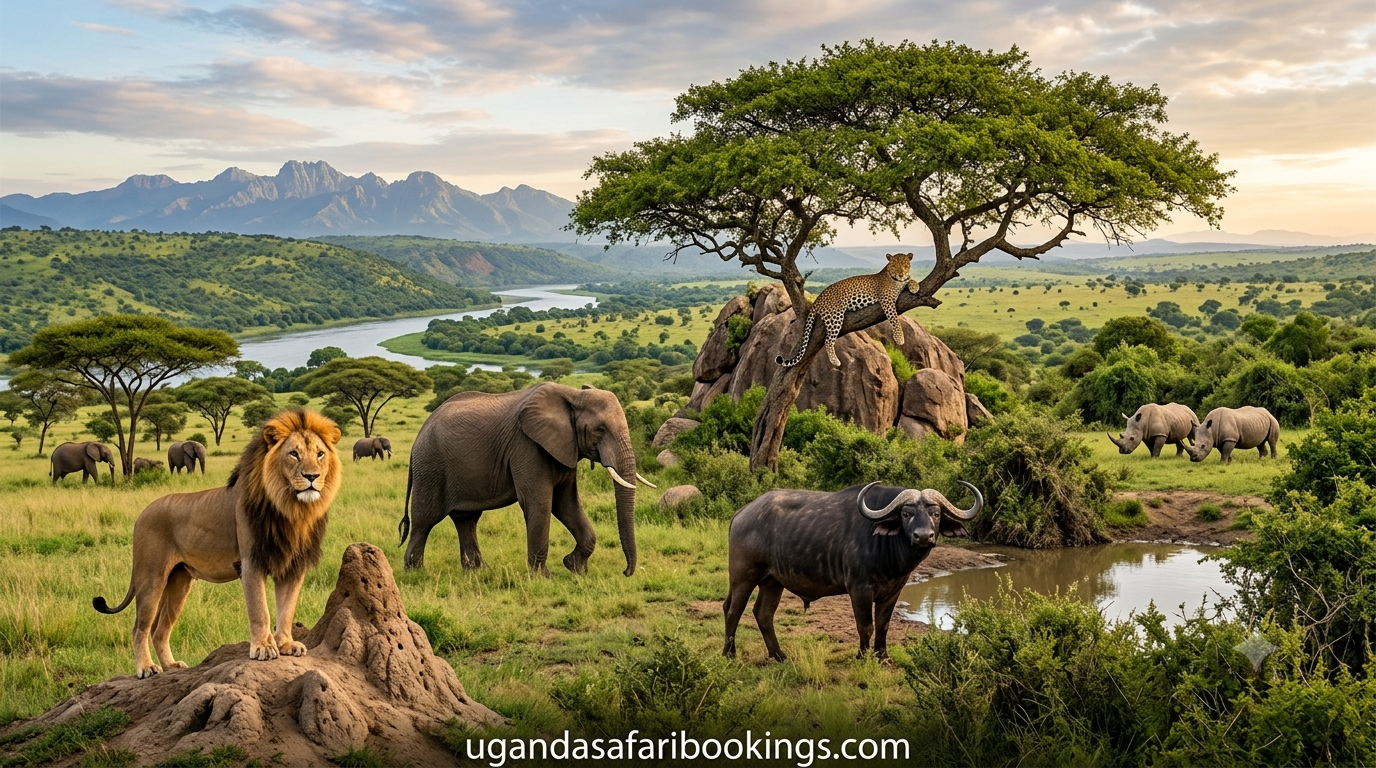
Uganda rarely tops the list when people picture the Big Five — that mental image usually belongs to Kenya's Maasai Mara or South Africa's Kruger. But Uganda quietly offers all five: lion, elephant, buffalo, leopard, and rhino. The catch — and the thing that makes it interesting — is that you can't see all five in a single park. Here's exactly where to find each one, and how to plan a trip that gets you all five.
The Big Five, and Why Uganda Is Different
The "Big Five" term dates back to big-game hunting, when these five animals — lion, leopard, elephant, buffalo, and rhino — were considered the most dangerous to hunt on foot. Today the term has been fully repurposed for wildlife photography and safari bucket lists, but the animals themselves remain the same.
Uganda's twist: white rhinos went locally extinct in the country by the early 1980s, wiped out by poaching and civil conflict. That means the "Big Four" — lion, leopard, elephant, buffalo — live in Uganda's savanna parks, while rhinos exist only at a dedicated sanctuary, reintroduced through a conservation program starting in the late 1990s. Seeing all five means combining at least two destinations.
Where to Find Each Animal
Lion
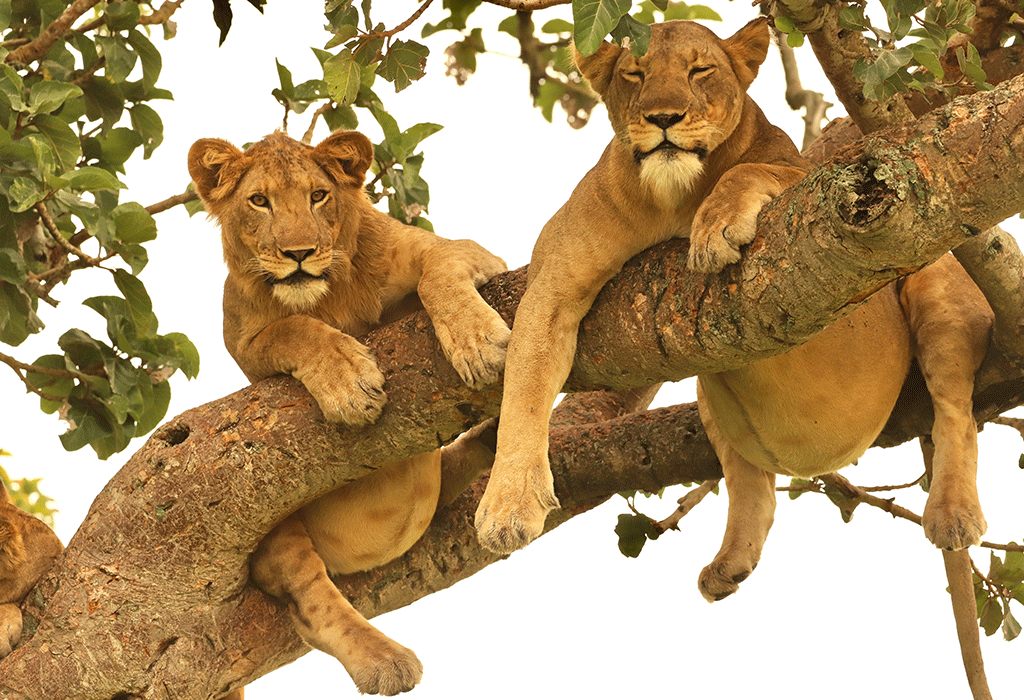
Uganda's most famous lion population lives in Queen Elizabeth National Park, home to the country's celebrated tree-climbing lions, most reliably spotted in the Ishasha sector draped across the branches of fig trees during the heat of the day — an unusual behavior rarely seen elsewhere in Africa. Murchison Falls National Park and Kidepo Valley National Park also support healthy lion populations, with Kidepo's rugged, remote landscape offering sightings against a genuinely dramatic mountain backdrop.
Elephant
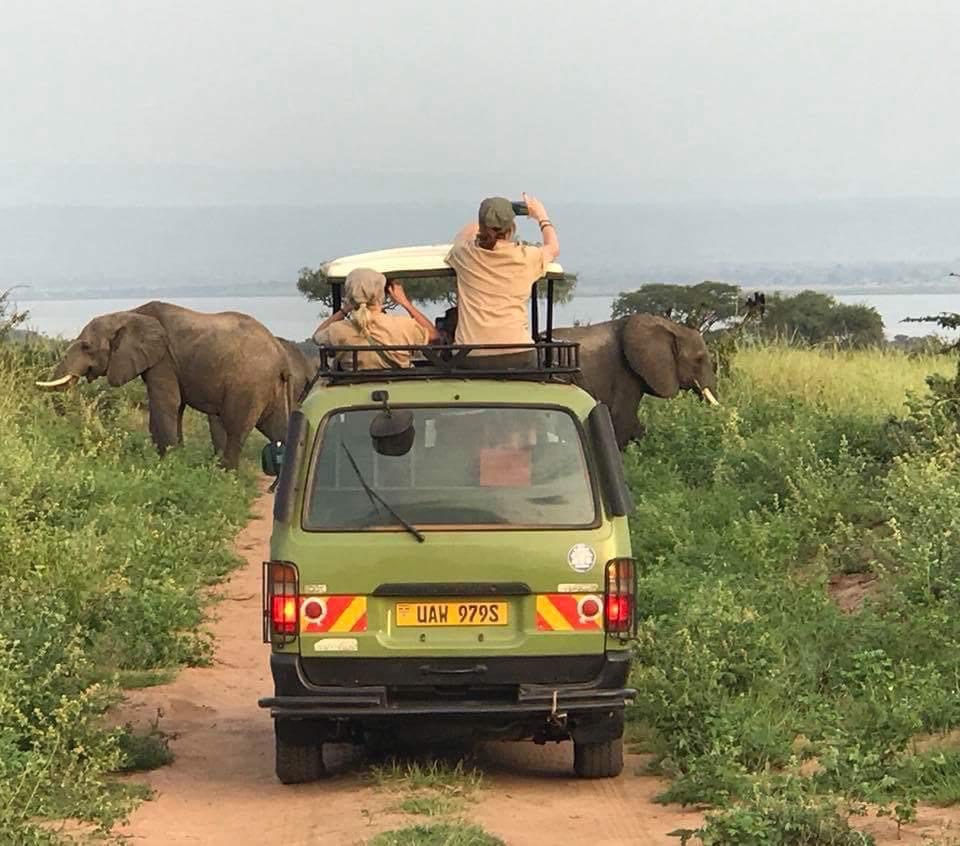
Large elephant herds are widespread across Uganda's savanna parks. Murchison Falls National Park offers particularly good sightings, including elephants bathing and playing along the banks of the Nile. Queen Elizabeth and Kidepo Valley also host substantial herds.
Buffalo
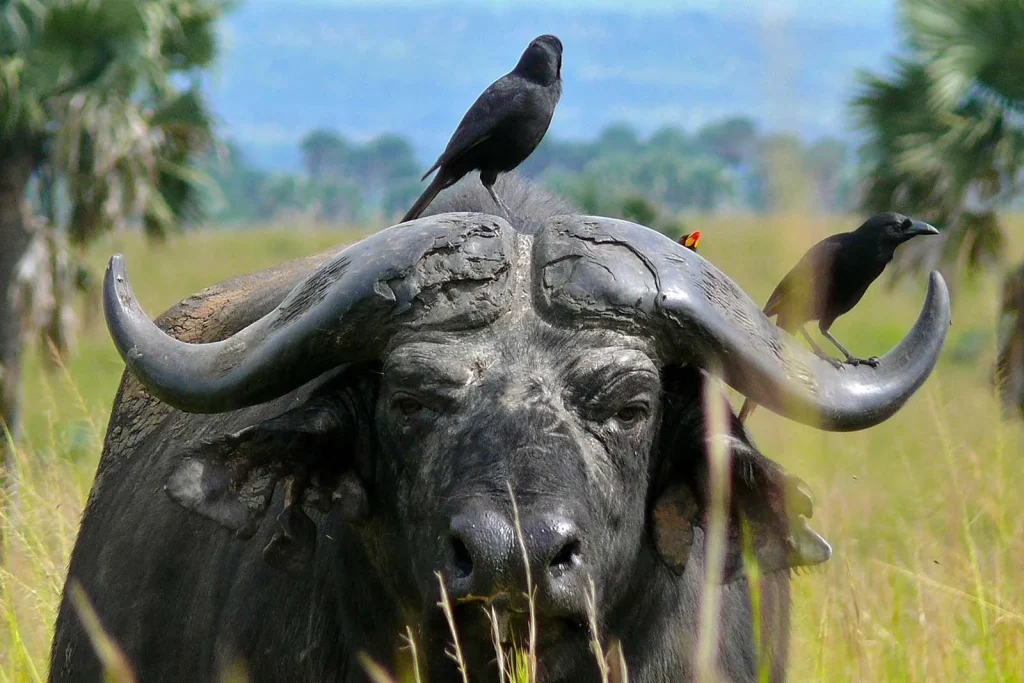
Buffalo herds roam Murchison Falls, Queen Elizabeth, and Kidepo Valley, with Kidepo boasting some of the largest buffalo herds found anywhere on the continent. For a different experience, Lake Mburo National Park — smaller and easily combined with a Kampala–southwest itinerary — offers a chance to see buffalo in tighter, more solitary groups alongside zebras and giraffes.
Leopard
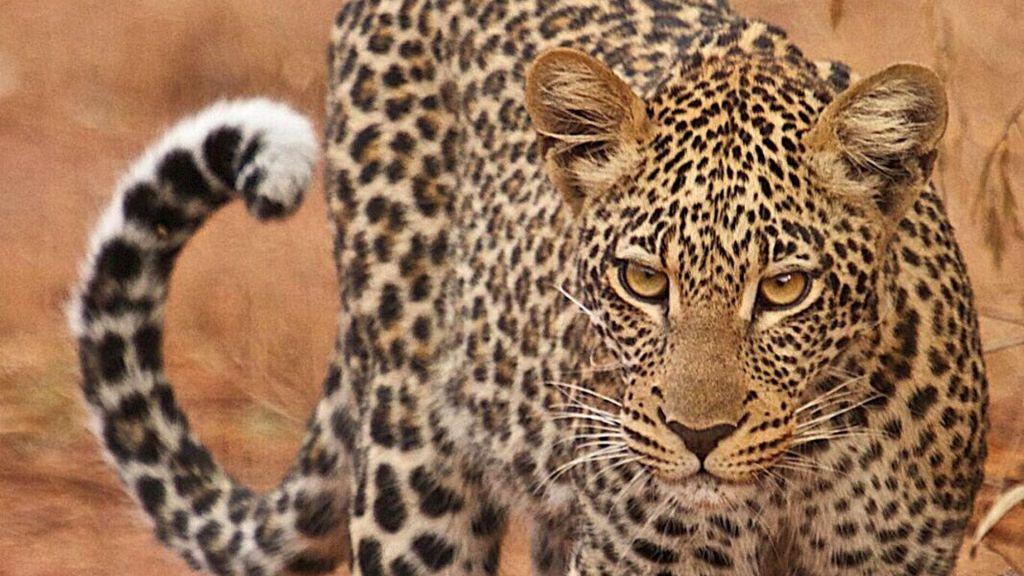
The leopard is widely considered the hardest of the five to actually find — solitary, nocturnal, and extremely well camouflaged. Murchison Falls is regarded as Uganda's best leopard destination, with guides often spotting them resting in trees or moving through the grassland during early morning game drives, particularly near Pakuba Lodge and the Nyamsika Cliffs. Lake Mburo's night game drives are another strong option, since leopards are far more active after dark.
Rhino
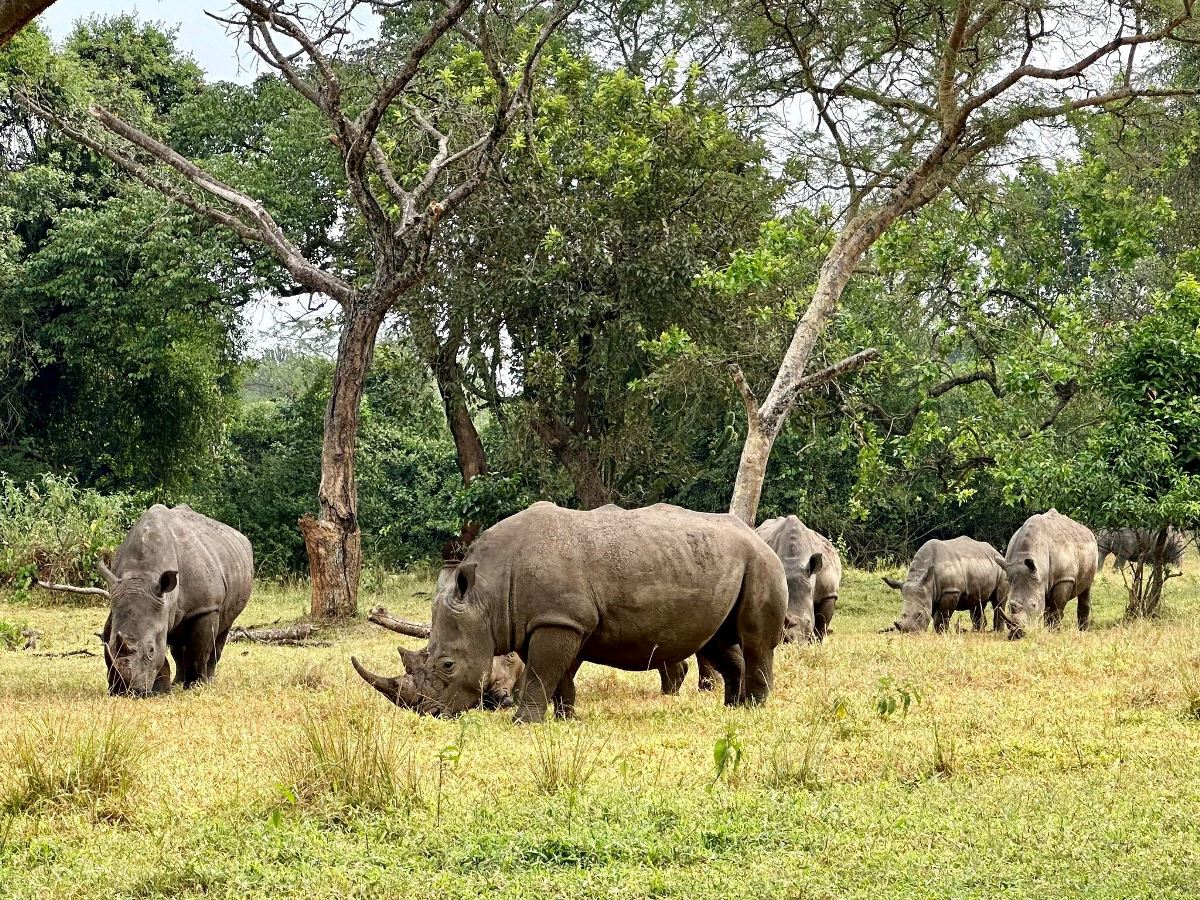
This is the animal that makes a Uganda Big Five trip genuinely distinctive. Ziwa Rhino Sanctuary, located in Nakasongola district roughly 176 km from Kampala on the route to Murchison Falls, is Uganda's sole rhino stronghold — and the encounter itself is unlike a typical safari. Rather than viewing from a vehicle, visitors join armed ranger guides for a walking safari, tracking rhinos on foot at close range through the sanctuary's savanna and forest. The sanctuary now protects a growing population of white rhinos, the result of a reintroduction program that began with animals imported from Kenya in the early 2000s. In a major conservation milestone in 2026, rhinos bred at Ziwa were released into Kidepo Valley National Park for the first time in more than four decades — a step toward eventually returning them to the wild.
Planning a Big Five Circuit
Because no single park has all five animals, most Big Five itineraries in Uganda follow a similar loop:
- Ziwa Rhino Sanctuary — rhino tracking on foot
- Murchison Falls National Park — lion, leopard, elephant, buffalo, plus a boat cruise to the base of the falls and a chance to spot the rare shoebill stork
- Queen Elizabeth National Park — tree-climbing lions in Ishasha, plus a Kazinga Channel boat safari for hippos and birdlife
A typical Big Five trip runs 7 to 10 days, and it's easily combined with other Uganda highlights — chimpanzee tracking in Kibale, gorilla trekking in Bwindi, or the remote wilderness of Kidepo Valley for travelers wanting a true off-the-beaten-path detour.
Best Time to Go
Uganda's savanna parks are accessible year-round, but the dry seasons (roughly December–February and June–September) offer the easiest game viewing, with wildlife concentrated around water sources and trails easier to navigate. The wetter months bring lush scenery and strong birdwatching, but game drives can be muddier and sightings slightly less predictable.
Can You Combine the Big Five with Gorilla Trekking?
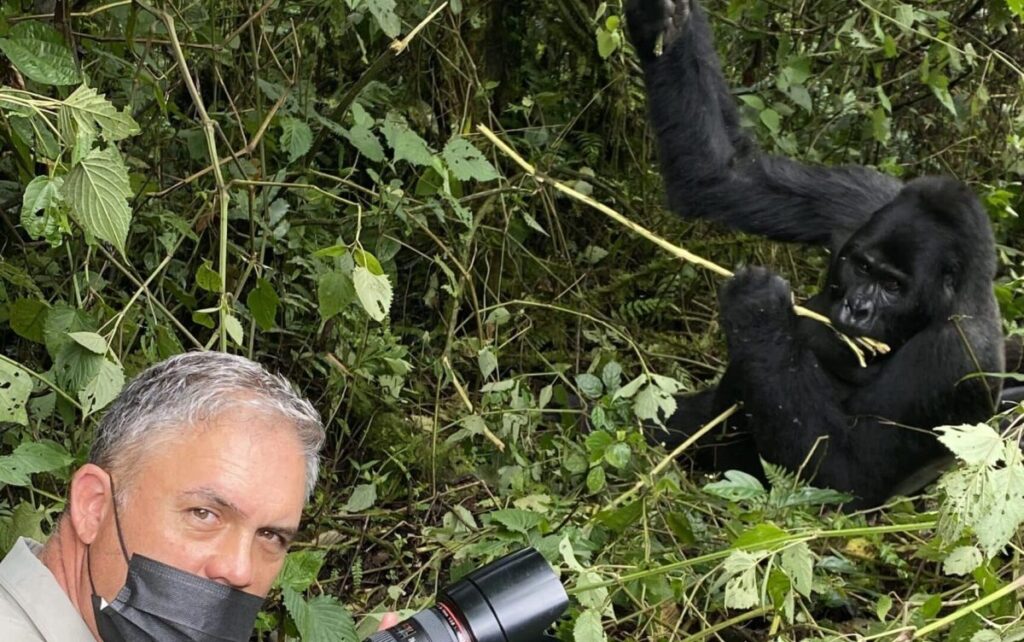
Yes — and many travelers do. Uganda is one of the few countries in Africa where a single itinerary can realistically include both a Big Five safari and mountain gorilla trekking in Bwindi Impenetrable National Park, making it possible to build a trip that few other destinations can match for sheer variety.
The Bottom Line
Seeing Uganda's Big Five takes a bit more planning than a single-park safari elsewhere in Africa, but that's arguably part of the appeal — you get tree-climbing lions found almost nowhere else, an on-foot rhino tracking experience unlike a typical game drive, and some of the least crowded savanna parks left on the continent, all within one country. Build the loop right, and you'll leave with a wildlife story that's genuinely different from the standard Big Five checklist photo.
Wildlife population figures and park details reflect conservation reporting current as of 2026 and may change as populations and reintroduction programs evolve.
Let us plan your Big five safari in Uganda today- contact us now by emailing to info@ugandasafaribookings.com or calling +256-700135510 to chat with reservations manager.