Deep in the mist-shrouded mountains of southwestern Uganda lies one of Africa’s most extraordinary wildlife experiences. Bwindi Impenetrable National Park, a primeval forest spanning 321 square kilometers, harbors roughly half of the world’s remaining mountain gorillas. For adventurous travelers seeking transformative encounters with nature, gorilla trekking in Bwindi represents not just the highlight of a Uganda safari adventure, but one of the most profound wildlife experiences available anywhere on Earth.
A Forest Frozen in Time
Bwindi’s name tells its story. “Impenetrable” isn’t marketing hyperbole but an apt description of this ancient rainforest, which has remained largely unchanged for over 25,000 years. The forest survived the last Ice Age, serving as a crucial refuge for species when much of Africa’s landscape transformed. Today, it stands as a UNESCO World Heritage Site, recognized both for its exceptional biodiversity and its critical role in mountain gorilla conservation.
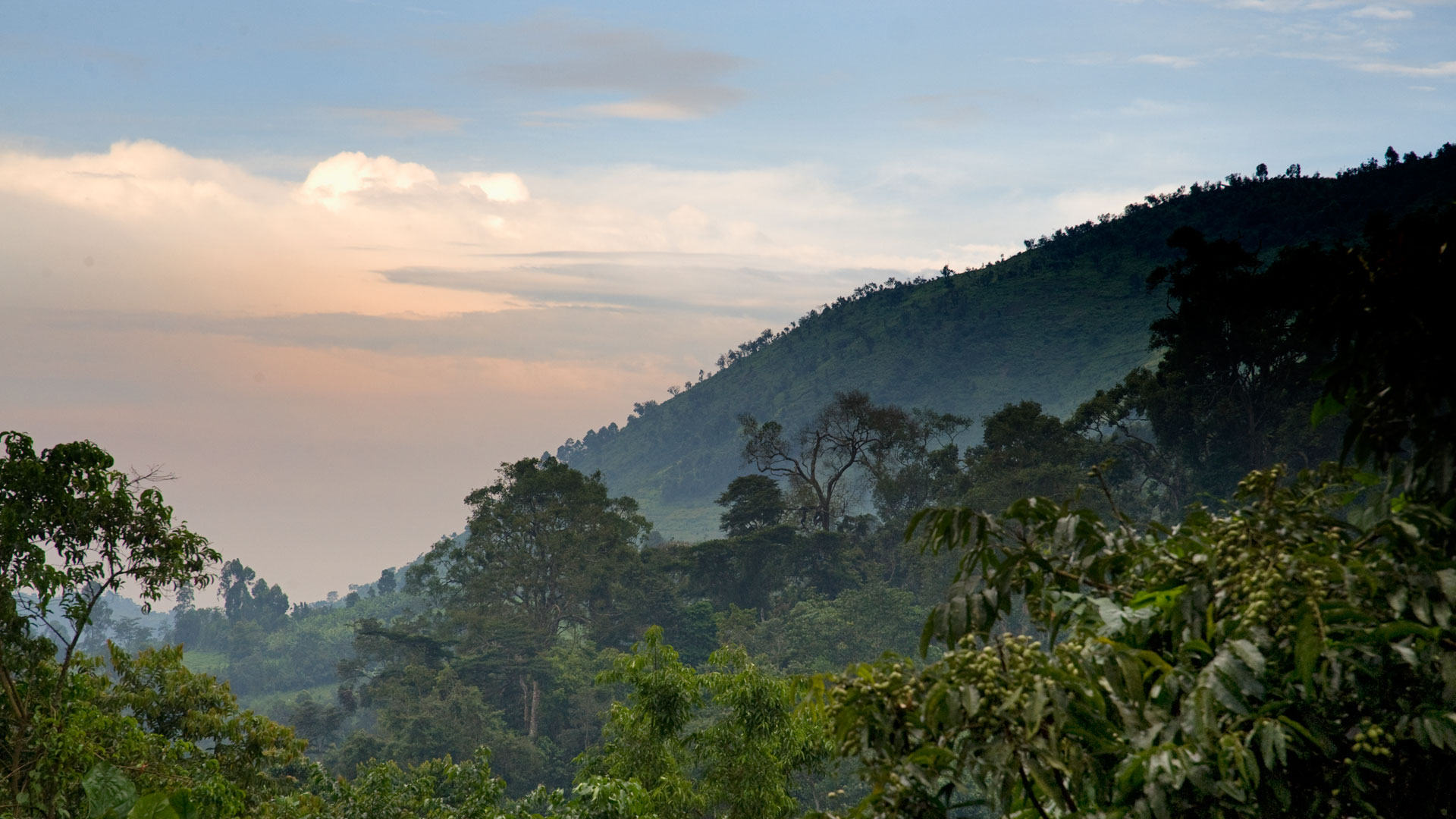
The terrain that makes Bwindi “impenetrable” is precisely what creates its magic. Steep valleys carved by centuries of rainfall plunge between ridges that climb from 1,160 to 2,607 meters above sea level. The forest canopy forms a dense, cathedral-like ceiling overhead, filtering sunlight into ethereal beams that illuminate the undergrowth. This is not the Africa of sweeping savannas and acacia trees, but something far more primordial, where every surface teems with life and the air itself feels thick with moisture and possibility.
The Mountain Gorillas: Our Closest Relatives
Mountain gorillas (Gorilla beringei beringei) are among our nearest living relatives, sharing approximately 98% of our DNA. Standing face-to-face with a silverback, the resemblance becomes startlingly apparent. Their eyes convey intelligence, curiosity, and emotion. Their family dynamics mirror our own, with hierarchies, playful juveniles, protective parents, and complex social bonds.
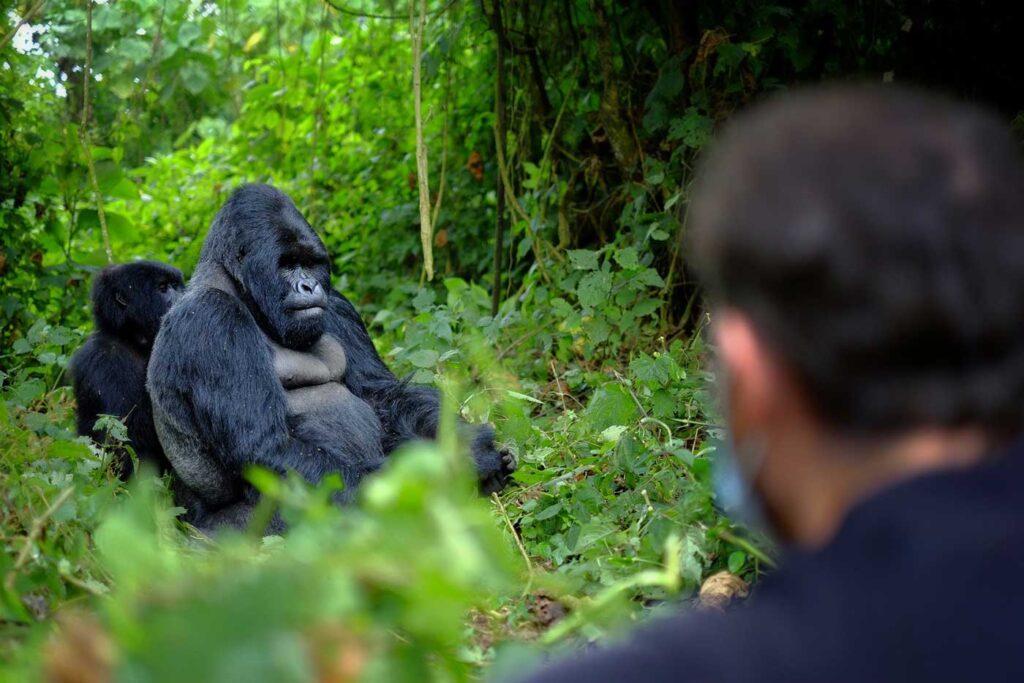
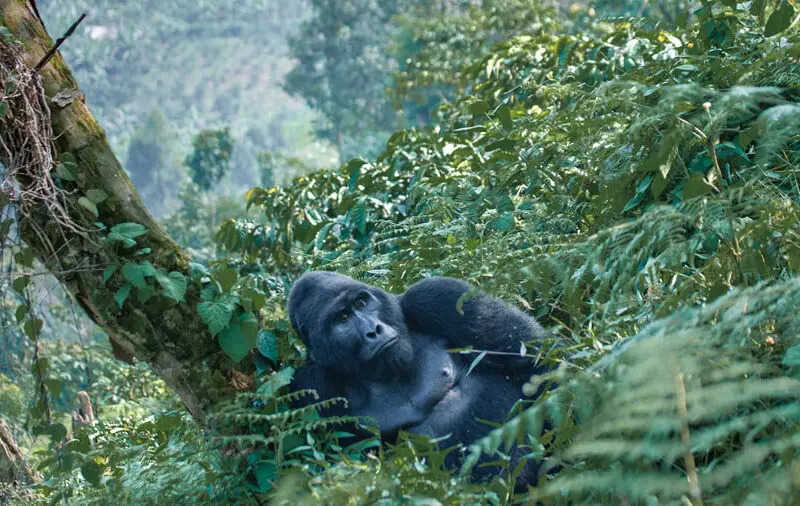
Bwindi is home to approximately 459 mountain gorillas, representing nearly half the global population of roughly 1,000 individuals. These gorillas live in family groups typically led by a dominant silverback, an adult male whose distinctive silver saddle of hair across his back signals maturity and authority. A silverback can weigh up to 220 kilograms and possesses strength estimated at ten times that of an adult human, yet these gentle giants spend their days foraging for vegetation, grooming family members, and watching over their young.
The survival story of mountain gorillas represents one of conservation’s rare success stories. In the 1980s, fewer than 300 individuals survived, their future looking desperately uncertain. Decades of dedicated conservation efforts, strict protection measures, and sustainable tourism have allowed populations to slowly recover. Every encounter with these magnificent creatures carries the weight of this achievement.
The Trek: An Adventure Like No Other
Gorilla trekking in Bwindi forest is not a passive wildlife viewing experience. It’s an expedition that demands physical effort, mental preparation, and a willingness to surrender to the forest’s rhythms. The journey begins in darkness, with travelers assembling at park headquarters for briefing sessions at dawn. Uganda Wildlife Authority rangers explain the day’s protocol, assign groups to specific gorilla families, and set expectations for what lies ahead.
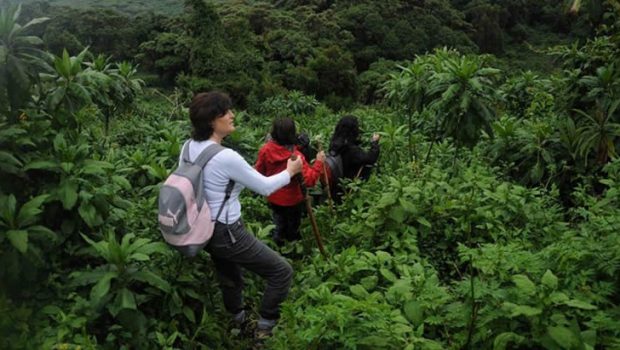
The park maintains 19 habituated gorilla families across four main sectors: Buhoma, Ruhija, Rushaga, and Nkuringo. Each sector offers distinct terrain and varying difficulty levels. Some treks last just an hour before encountering gorillas; others require six or more hours of challenging hiking through dense vegetation, across streams, and up precipitous slopes. The unpredictability is part of Bwindi’s allure. Gorillas are wild animals following their own schedules, not performers waiting in designated spots.
Guides and trackers possess intimate knowledge of their assigned gorilla families. Trackers leave before dawn to locate the groups, communicating via radio to guide trekking parties toward the gorillas’ current location. These expert guides read the forest like a book, interpreting broken branches, fresh dung, and feeding patterns to predict movement. Many trackers grew up in communities surrounding the forest, carrying traditional knowledge passed through generations.
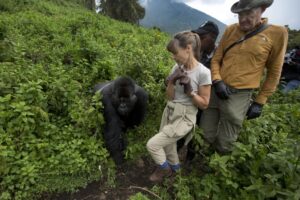
The moment of encounter arrives suddenly, often preceded by rustling in the undergrowth or the distinctive scent of gorillas. Then, through a gap in the vegetation, you see them. A female cradling an infant. Juveniles wrestling in the leaves. The massive silverback reclining against a tree trunk, observing his family with calm authority. Time seems to stop.
The Magic Hour
Regulations permit exactly one hour with each gorilla family, a limitation that initially seems frustratingly brief but proves perfect. Sixty minutes provides sufficient time to observe natural behaviors while minimizing stress on the gorillas and preventing disease transmission. These encounters unfold at remarkably close range, often within just a few meters. Gorillas may pass within arm’s reach, though touching remains strictly forbidden.
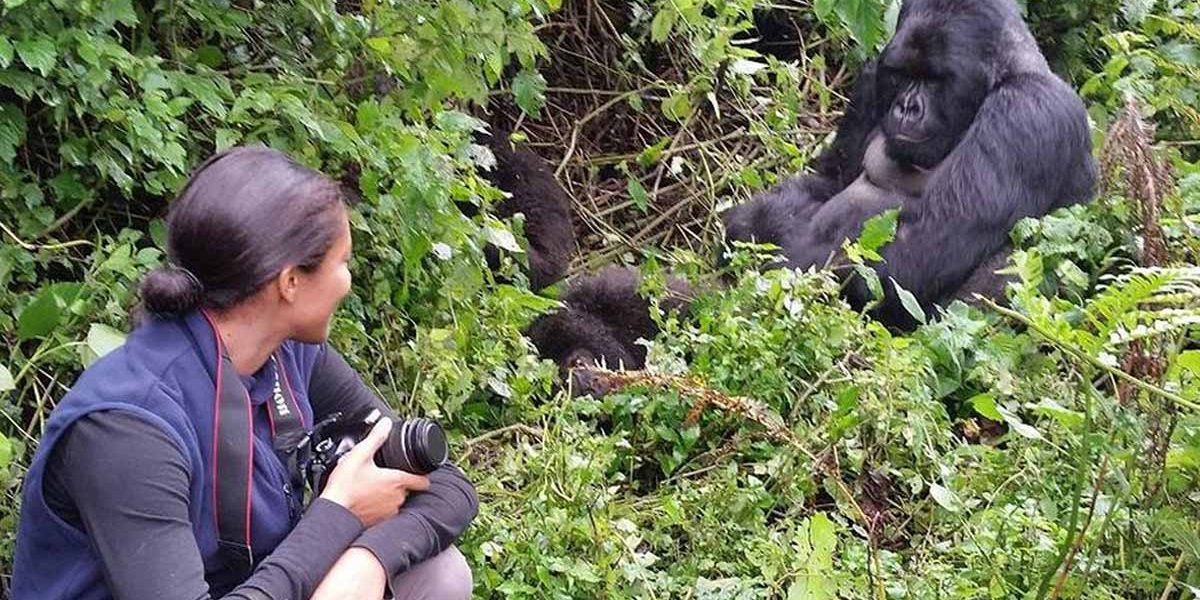
During this precious hour, visitors witness the gorillas’ daily life. A mother grooms her infant with tender precision. Juveniles play-fight with abandon, tumbling through the understory while anxious parents watch nearby. The silverback feeds methodically, stripping bark from branches or selecting particular leaves with surprising delicacy given his enormous hands. Sometimes gorillas sleep, sprawled in positions of complete relaxation. Other times they move through the forest, and visitors follow at a respectful distance.
The emotional impact catches many by surprise. Travelers expect to be impressed by the gorillas’ size and rarity. They don’t anticipate the profound connection that develops when making eye contact with another great ape. The experience transcends typical wildlife viewing, becoming instead a reminder of our shared evolutionary heritage and our responsibility as stewards of the natural world.
Conservation That Works
The mountain gorilla trekking program represents conservation funding at its most direct and effective. Permit fees generate crucial revenue for park management, anti-poaching patrols, and community development programs. At $800 per person for foreign non-residents, permits represent significant income for Uganda, creating powerful economic incentives for gorilla protection.
Revenue sharing programs distribute portions of permit fees to communities surrounding the park, funding schools, health clinics, water projects, and income-generating initiatives. This model transforms local residents from potential adversaries, who might otherwise see the forest as a source of farmland or bushmeat, into conservation allies with vested interests in protecting gorillas. Community members work as guides, trackers, porters, and in hospitality, creating employment that didn’t exist before gorilla tourism.
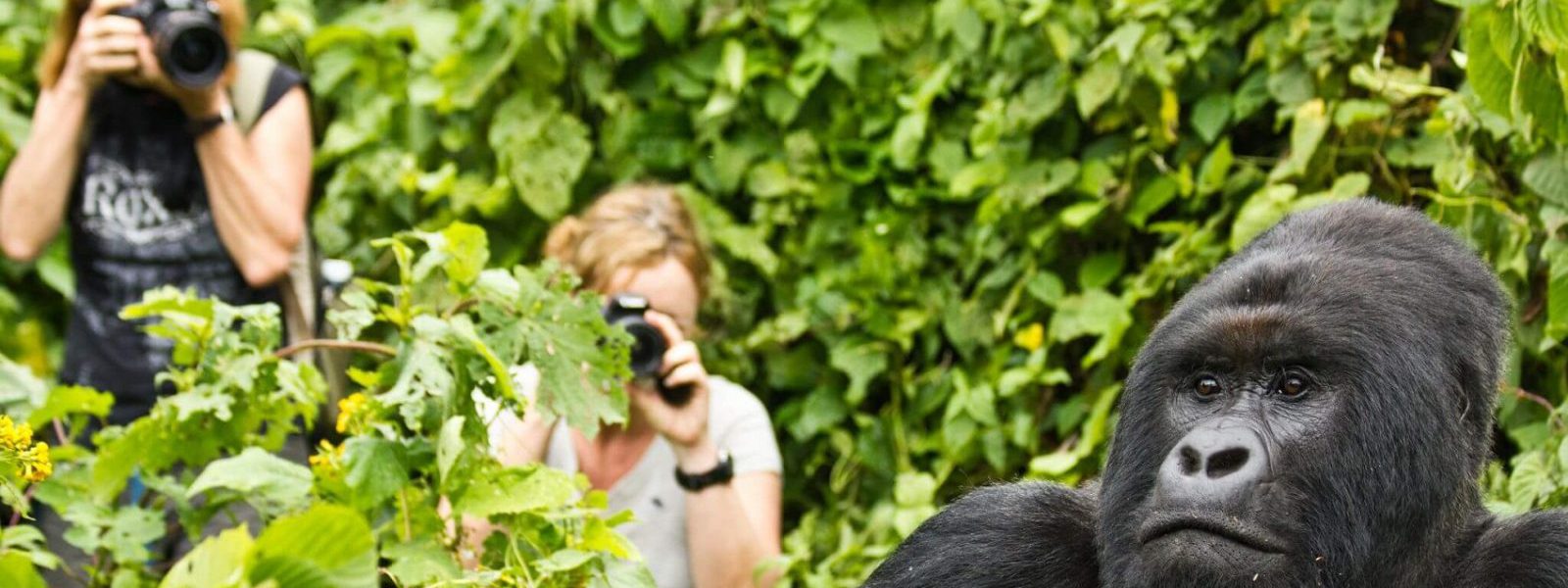
The habitation process itself demonstrates remarkable conservation science. Training wild gorilla families to tolerate human presence requires years of gradual, patient exposure. Researchers and trackers spend countless hours near gorilla groups, slowly reducing flight distance until the animals accept human observers as neutral presences. This delicate work ensures gorillas remain wild and maintain natural behaviors while allowing tourism that funds their protection.
Strict protocols safeguard gorilla health. Visitors showing any signs of illness are denied access, as mountain gorillas are highly susceptible to human diseases. Group sizes are limited to eight people maximum per family per day. Viewing maintains a seven-meter distance when possible, though curious juveniles sometimes approach closer. These measures balance tourism benefits against conservation imperatives.
Beyond Gorillas: Bwindi’s Biodiversity Treasure
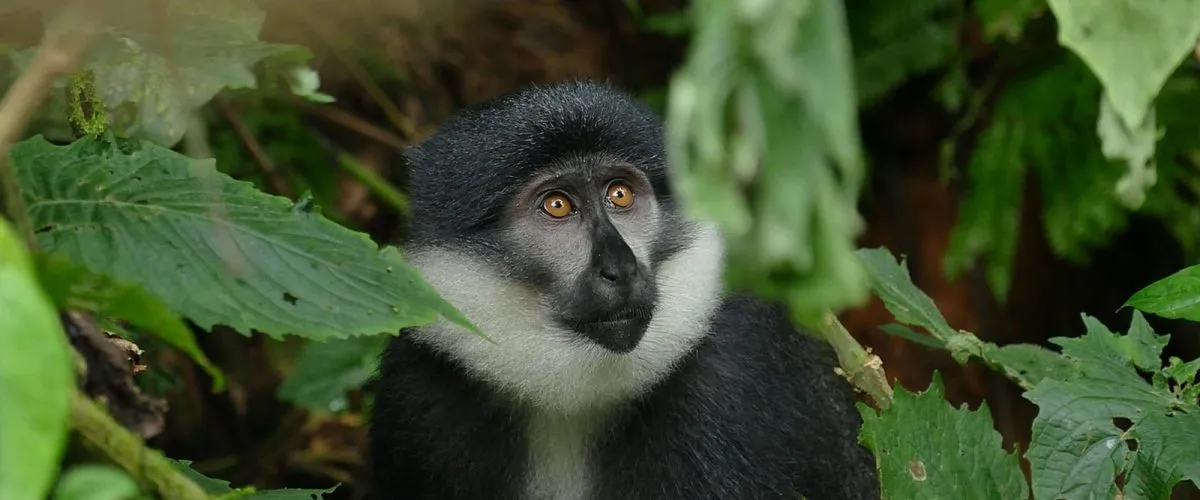
While gorillas rightfully claim the spotlight, Bwindi’s ecological significance extends far beyond these charismatic megafauna. The forest harbors at least 120 mammal species, including forest elephants, eleven primate species, numerous duiker antelope, and the endangered African golden cat. The primate diversity alone is staggering, with chimpanzees, black-and-white colobus monkeys, L’Hoest’s monkeys, blue monkeys, and red-tailed monkeys all calling Bwindi home.
Birdwatchers consider Bwindi among Africa’s premier destinations, with over 350 recorded bird species including 23 Albertine Rift endemics found nowhere else on Earth. The African green broadbill, Grauer’s rush warbler, short-tailed warbler, and bar-tailed trogon represent just a fraction of the specialized species thriving in this habitat. Dawn in Bwindi brings a symphony of bird calls echoing through the canopy.
The forest’s botanical diversity is equally remarkable. Ancient hardwoods tower overhead, some exceeding 200 years old. Over 200 tree species have been identified, along with countless ferns, orchids, and other plants creating the layered complexity characteristic of tropical montane forests. Some tree species found here exist nowhere else in Uganda, making Bwindi a critical reservoir of plant genetic diversity.
Planning Your Trek: Practical Considerations
Gorilla trekking demands advance planning. Permits should be secured months ahead, particularly for peak seasons from June to September and December to February. While permits can occasionally be obtained last-minute, waiting risks disappointment, as daily access is strictly limited to protect the gorillas.
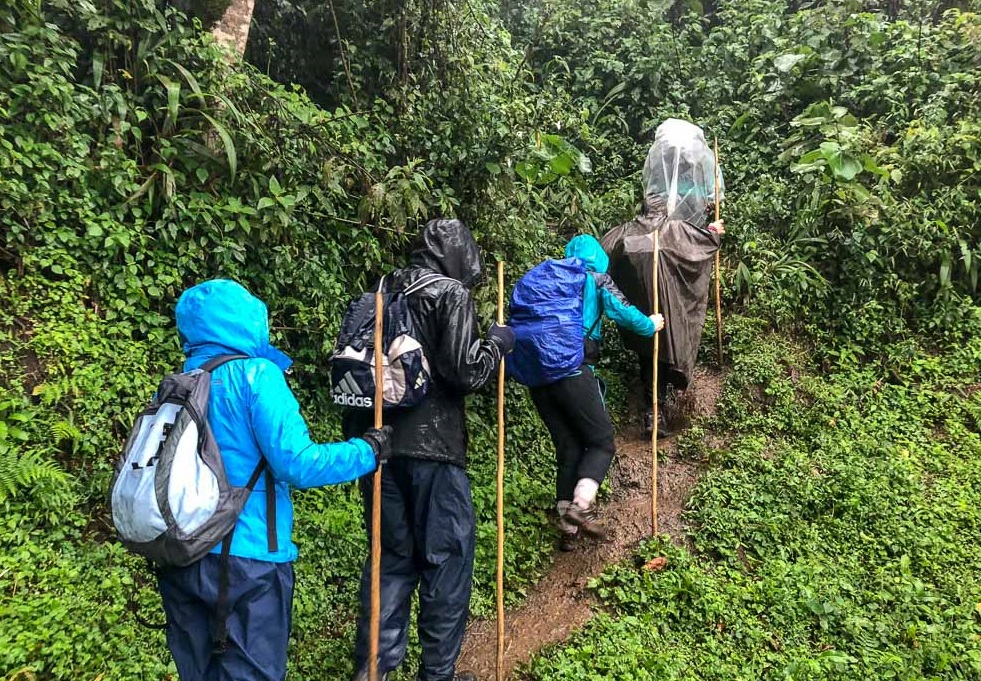
Physical fitness requirements vary by sector. The Buhoma sector generally offers moderate terrain, while Nkuringo presents steep, challenging climbs. However, unpredictability remains constant. Even supposedly easier treks can become demanding if gorillas have moved to difficult terrain. A reasonable level of fitness, comfortable with several hours of hiking, proves essential. Porters are available to hire and can assist with carrying daypacks or even providing physical support on steep sections, employment that benefits local communities.
The equatorial location means Bwindi experiences rainfall year-round, though April, May, and November see heavier precipitation. “Rainy season” shouldn’t deter visitors, however. Rain often falls in afternoon showers rather than all-day deluges, and forests are less crowded during these months. Gorillas don’t mind rain, and neither should properly equipped trekkers.
Essential gear includes waterproof hiking boots with good ankle support, as terrain can be muddy and steep. Long trousers and long sleeves protect against stinging nettles and thorns. Waterproof jackets, gardening gloves for gripping vegetation, and gaiters complete the practical wardrobe. Despite the equatorial location, higher elevations mean cool temperatures, particularly early morning.
Where to Stay: Accommodation Options
Accommodation around Bwindi ranges from basic guesthouses to luxury safari lodges, each sector offering multiple options. Buhoma, the most established sector, features the widest accommodation selection. Properties like Buhoma Lodge, Sanctuary Gorilla Forest Camp, and Mahogany Springs provide upscale comfort after challenging treks, with features like fireplaces, gourmet dining, and spa services.
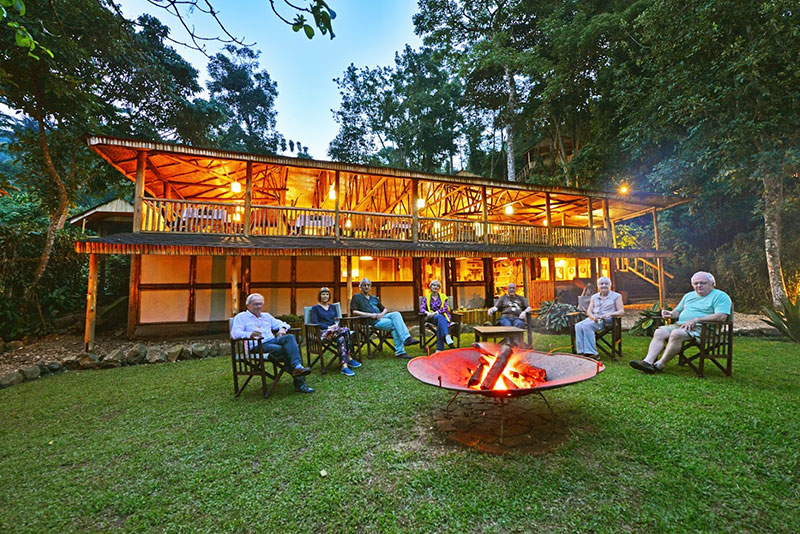
Nkuringo and Rushaga sectors have developed more recently, offering newer properties with stunning views across the Virunga Volcanoes toward the Democratic Republic of Congo. Mid-range and budget options exist throughout, ensuring gorilla trekking remains accessible to travelers with varying budgets.
Many lodges position themselves just outside the park boundary, minimizing travel time to trekking starting points. The best properties employ local staff, source food locally, and invest in community projects, extending conservation benefits beyond park boundaries.
Cultural Encounters: The Batwa Experience
No exploration of Bwindi is complete without acknowledging the Batwa, the forest’s original inhabitants. For millennia, these hunter-gatherers lived sustainably within what is now the park, their entire culture adapted to forest life. When Bwindi was gazetted as a national park in 1991, the Batwa were evicted, losing their ancestral homeland and traditional way of life almost overnight.
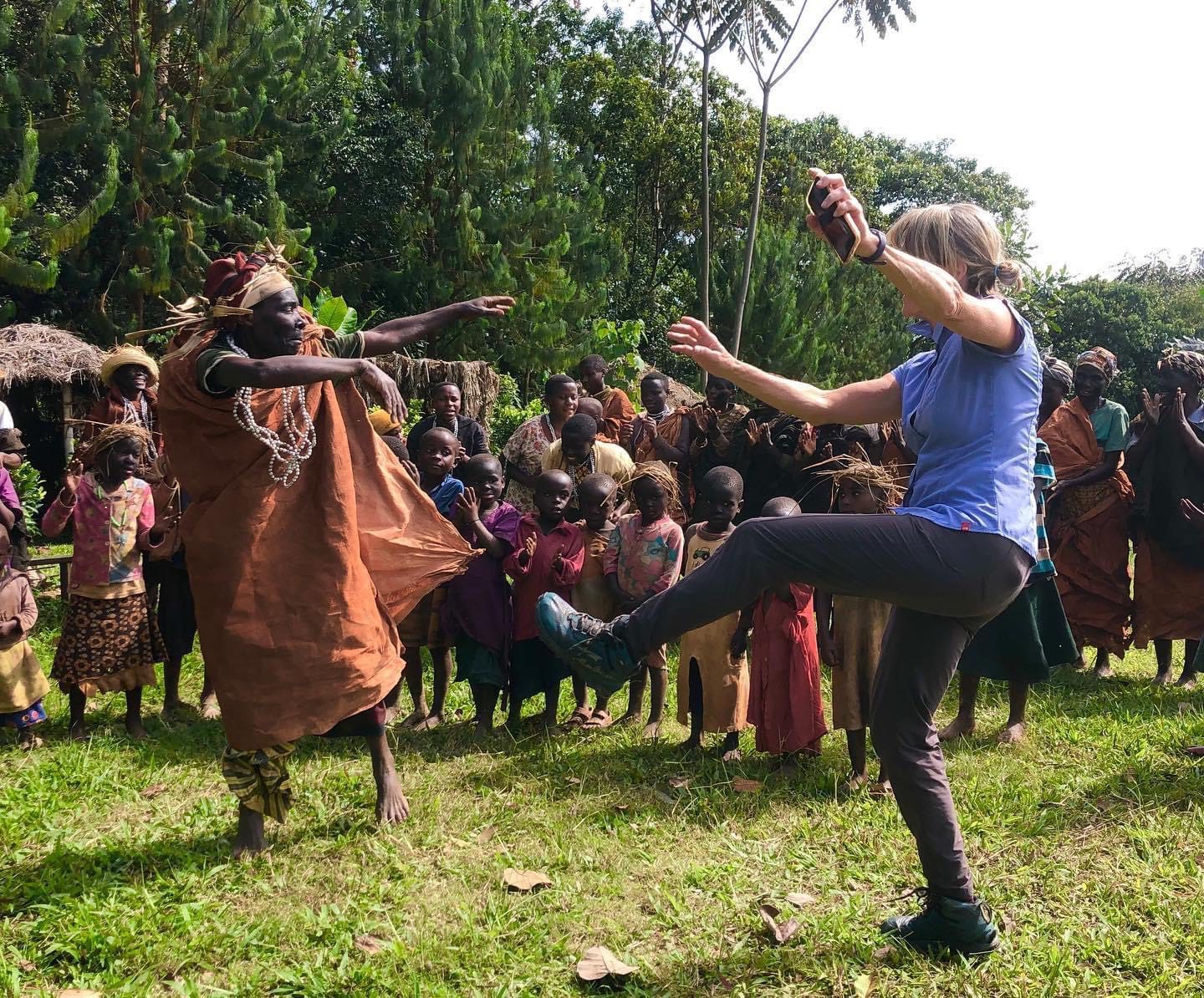
Today, some Batwa communities offer cultural experiences allowing visitors to learn about their heritage. Batwa guides demonstrate traditional hunting techniques, medicinal plant use, fire-making, and the forest skills that sustained their ancestors. These encounters provide important income for marginalized Batwa communities while preserving cultural knowledge at risk of disappearing.
The Batwa’s story adds complexity to conservation narratives. While gorilla protection has succeeded remarkably, it came at human cost. Supporting Batwa cultural programs and community initiatives represents one way visitors can acknowledge this difficult history and contribute to more equitable conservation models.
The Broader Safari Context
While gorilla trekking often serves as the centerpiece of Uganda safari itineraries, the country offers remarkable diversity. Queen Elizabeth National Park delivers classic savanna experiences with lions, elephants, and buffalo. Murchison Falls National Park features dramatic landscapes and abundant wildlife along the Nile. Kibale Forest provides chimpanzee tracking. The Rwenzori Mountains offer mountaineering challenges. Combining Bwindi with these destinations creates comprehensive Uganda safaris showcasing the country’s ecological variety.
The advantage of focusing on Uganda over neighboring Rwanda for gorilla trekking often comes down to permit pricing. Rwanda’s gorillas command $1,500 per permit compared to Uganda’s $800, a significant difference for budget-conscious travelers. Both countries offer excellent gorilla experiences, though Bwindi’s larger gorilla population means more habituated families and potentially greater flexibility in securing permits.
Ethical Considerations and Responsible Tourism
Responsible gorilla tourism requires constant vigilance. The line between sustainable wildlife viewing and harmful exploitation remains thin. Visitors bear responsibility for following protocols strictly: maintaining distance, limiting group sizes to designated numbers, not visiting when ill, avoiding flash photography, and keeping voices low. These rules exist not to diminish experiences but to protect gorillas for future generations.
Tour operators vary significantly in their commitment to conservation and community benefit. Research companies carefully, favoring those with clear conservation policies, employment of local guides, and transparent community engagement. Cheaper isn’t better if it means cutting corners on conservation standards or exploiting local workers.
The broader question of whether wildlife tourism benefits animals and communities deserves ongoing examination. In Bwindi’s case, evidence suggests the model works. Gorilla populations have grown. Communities have gained economically. Local attitudes toward conservation have shifted positively. However, continued success requires constant adaptation, monitoring, and willingness to adjust practices based on research findings about gorilla welfare.
Climate Change and Future Challenges
Mountain gorillas face an uncertain future despite recent population recovery. Climate change threatens their limited habitat, potentially forcing populations higher into mountains as temperatures rise. Bwindi represents one of only two locations where mountain gorillas survive, the other being the Virunga Massif spanning Uganda, Rwanda, and the Democratic Republic of Congo. This extremely limited range makes the species inherently vulnerable.
Disease remains another constant threat. COVID-19 demonstrated the risk respiratory illnesses pose to great apes. Ebola outbreaks in neighboring regions highlight vulnerabilities to emerging pathogens. Rigorous health protocols for tourists and staff continue to be essential protection measures.
Political stability in the region affects conservation success. While Uganda has maintained relative stability, the broader Great Lakes region experiences periodic conflict. The Democratic Republic of Congo portion of gorilla habitat has suffered particularly from armed groups, poaching, and resource extraction. Regional cooperation on conservation becomes crucial for long-term survival.
Why Bwindi Deserves Its Crown
Among Uganda’s many safari attractions, gorilla trekking in Bwindi stands apart. The experience combines adventure, natural beauty, wildlife encounter, and emotional impact in ways few destinations can match. It represents conservation success, community development, and the possibility of sustainable tourism funding wildlife protection. It connects visitors viscerally to evolutionary heritage and environmental responsibility.
The designation as Uganda’s “crown jewel” reflects this multifaceted value. Gorillas attract international visitors who might otherwise never consider Uganda, generating revenue that flows through the entire tourism sector. The Bwindi experience creates ambassadors for conservation who return home transformed, sharing their encounter with family, friends, and colleagues. Some visitors become donors supporting gorilla conservation long-term. Others adjust their own environmental behaviors, recognizing connections between daily choices and wildlife survival half a world away.
Perhaps most importantly, looking into a gorilla’s eyes creates empathy impossible to achieve through documentaries or photographs. That moment of recognition, when a silverback regards you with what appears to be curiosity or a mother cradles her infant with obvious tenderness, bypasses intellectual understanding and speaks directly to emotion. You don’t just observe gorillas; you feel kinship with them. That feeling, more than any statistic or argument, drives conservation commitment.
Conclusion
Gorilla trekking in Bwindi Impenetrable National Park offers more than a wildlife experience. It provides a portal into the ancient past when forests covered more of Africa, a glimpse of conservation done right, and a profound encounter with our closest relatives in the animal kingdom. The trek challenges physically while rewarding emotionally and spiritually. The forest itself, with its layered biodiversity and primeval atmosphere, would justify the journey even without gorillas.
For travelers seeking transformative experiences rather than mere sightseeing, for adventurers willing to work for their rewards, for anyone who believes encountering nature in its wildest forms matters profoundly, Bwindi delivers magnificently. It reminds us that some things cannot be replicated or replaced, that wildness has intrinsic value beyond economic calculation, and that humans and wildlife can coexist when given proper frameworks and incentives.
The crown jewel of Uganda safaris isn’t an exaggeration. It’s an accurate description of a place where mist-shrouded mountains harbor ancient forests, where approximately half the world’s mountain gorillas live free, where conservation succeeds, where communities benefit, and where visitors discover something rare in our modern world: true wilderness and the humbling, exhilarating privilege of encountering it on its own terms.
Are you planning a safari to Uganda for chance to track down mountain gorillas in the wild- we at Uganda Safari Bookings will be more than delighted to offer you our services. Simply contact us now by sending an email to info@ugandasafaribookings.com or calling +256-700135510 to speak with the reservations team.

More Articles
Why Uganda Safari Bookings Is Your Best Travel Partner?
Big 5 & Beyond: Discovering the Best Uganda Safaris for 2026
How to Plan Your A Uganda Safari in 2026: Step-by-Step Guide