In the rolling green hills of Hoima District in western Uganda, set within a landscape of extraordinary beauty where fertile farmland meets tropical forest and the distant blue ridges of the Albertine Rift shimmer on the horizon, lies one of the most historically significant and spiritually profound sites in all of East Africa. The Mparo Tombs — the royal burial ground of the Omukama (Kings) of Bunyoro-Kitara — stand as the most tangible and most sacred monument to a kingdom whose history stretches back further than almost any other political formation in sub-Saharan Africa, and whose story is among the most dramatic, the most turbulent, and ultimately the most resilient in the entire history of the Great Lakes region.
Bunyoro-Kitara is, by the reckoning of its own oral traditions and by the assessment of most serious historians of the region, the oldest surviving kingdom in East Africa. Its origins are traced in oral tradition to the semi-mythical Batembuzi dynasty and the legendary Chwezi Empire — the same mysterious civilisation associated with the great earthworks at Bigo bya Mugenyi — before the establishment of the historical Babito dynasty that has ruled Bunyoro-Kitara to the present day. Through centuries of imperial expansion, political rivalry, colonial subjugation, and determined revival, the Bunyoro-Kitara Kingdom has maintained its identity, its institutions, and its royal traditions with a continuity that is genuinely remarkable.
The Mparo Tombs are the physical heart of this royal continuity. Here, on a sacred hilltop in Hoima District, rest the remains of the Omukama who presided over Bunyoro-Kitara during some of the most consequential decades of its long history — most especially the great Omukama Kabalega, whose fierce and prolonged resistance to British colonisation in the late 19th century made him one of the most celebrated and revered figures in the history of African resistance to imperialism. To visit Mparo is to stand in the presence of that history — to encounter, in the most immediate and tangible way, the legacy of a kingdom that refused to be extinguished.
Historical Background: The Bunyoro-Kitara Kingdom and Its Ancient Roots
The Most Ancient Kingdom of East Africa
The Bunyoro-Kitara Kingdom occupies a unique position in the history of East Africa as the region’s oldest continuously existing political institution. While the precise dating of its origins is necessarily uncertain — the earliest periods belong to oral tradition rather than written record or archaeological documentation — the consensus among historians is that Bunyoro-Kitara has existed as a recognisable political entity for at least five to six centuries, and possibly considerably longer.
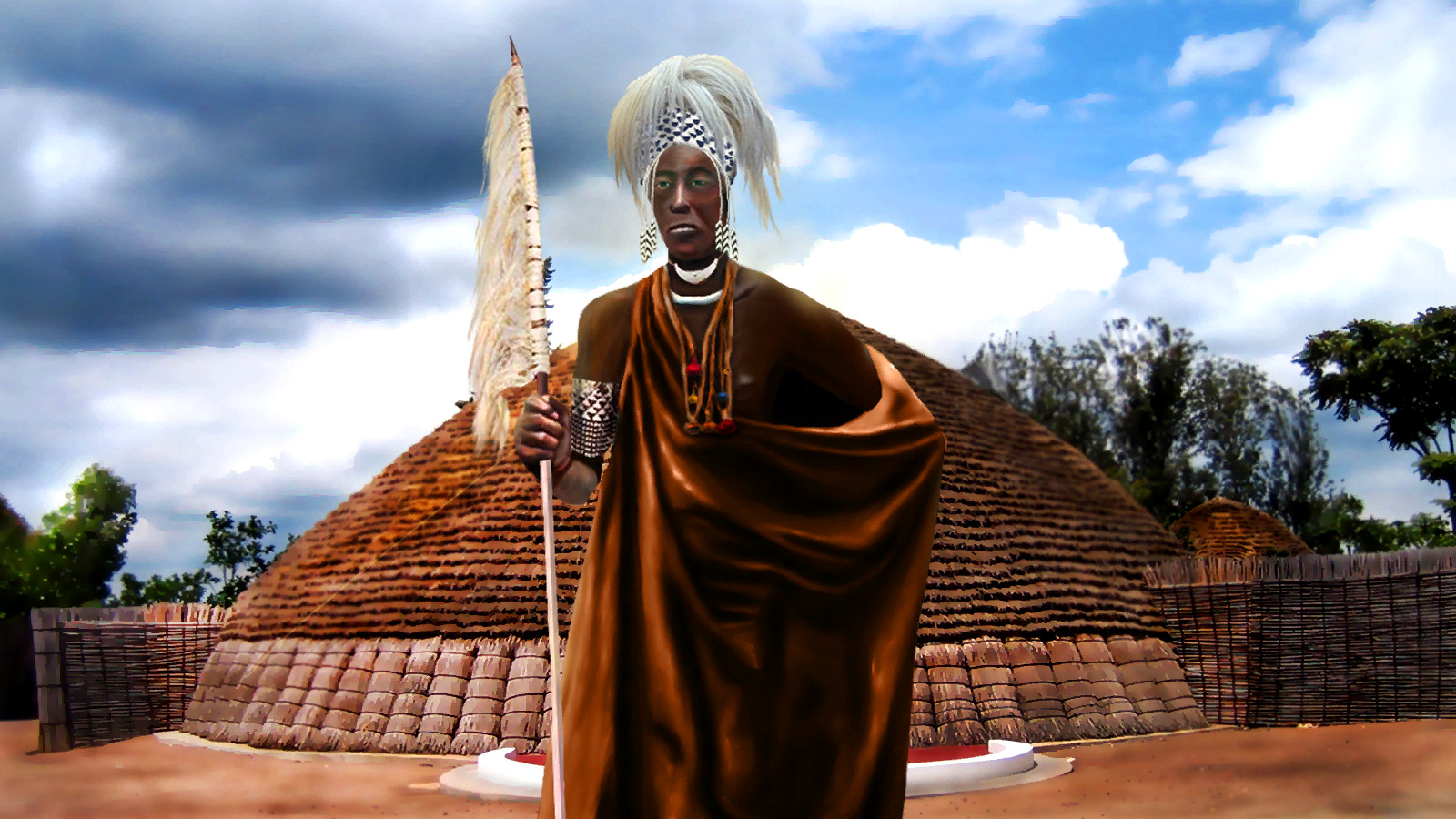
The kingdom’s historical memory is organised around three successive dynasties, each of which plays a distinct role in the kingdom’s founding narrative. The Batembuzi — the first dynasty — are remembered in oral tradition as semi-divine beings, the earliest inhabitants and rulers of the land, who eventually departed into the spirit world. The Chwezi — the second dynasty — are the legendary rulers associated with the great earthworks of south-western Uganda, remembered as extraordinarily gifted, physically beautiful, and supernaturally powerful beings who appeared and then vanished as mysteriously as they had come. The Babito — the third and current dynasty — are historical rulers, traceable through verifiable genealogical records, who established themselves as the ruling house of Bunyoro-Kitara following the departure of the Chwezi.
The Babito dynasty traces its origins to Rukidi Mpuga, a figure from the Luo-speaking peoples of the north who, according to oral tradition, was invited or compelled to take the throne of Bunyoro-Kitara following the disappearance of the Chwezi. The establishment of the Babito dynasty marks the beginning of the historical period in Bunyoro-Kitara’s story — the period for which genealogies, oral histories, and eventually written records provide a connected narrative of royal succession.
The Empire at Its Height
At its greatest extent, between approximately the 14th and 17th centuries, the Bunyoro-Kitara Kingdom was the most powerful state in the entire Great Lakes region. Its territory encompassed large parts of present-day Uganda, northwestern Tanzania, and eastern Democratic Republic of Congo — a vast domain governed from the royal capital through a system of appointed chiefs, royal representatives, and tributary relationships with subordinate rulers.
The kingdom’s power rested on several foundations. Its control of the fertile agricultural lands of the western Uganda plateau provided the food surplus necessary to support a royal court, a professional military, and a specialised artisan class. Its access to the rich fishing grounds of Lake Albert and Lake Victoria provided both nutrition and trade commodities. Its control of key salt deposits — particularly the famous salt lakes at Kibiro on the shores of Lake Albert — gave it an irreplaceable economic asset in a region where salt was among the most valuable of all trade goods. And its long tradition of iron-smelting produced weapons and tools that gave its military and agricultural sectors significant advantages.
The royal court of Bunyoro-Kitara was, at its height, a sophisticated and cosmopolitan institution. The Omukama presided over a elaborate ceremonial life that expressed, through ritual, music, dance, and the display of royal regalia, the sacred authority of the kingship and its connections to the Chwezi ancestors. The royal drums — the Mujaguzo — were among the most sacred objects in the kingdom, their sounding marking the heartbeat of royal power and their capture by an enemy representing the ultimate defeat of a king.
The Rise of Buganda and the Beginning of Decline
The seeds of Bunyoro-Kitara’s eventual decline were sown in the rise of the Buganda Kingdom to its southeast. Buganda — originally a small tributary state of Bunyoro-Kitara — began its dramatic expansion in the 17th and 18th centuries under a succession of ambitious and capable Kabakas. As Buganda grew in power and sophistication, it began to challenge Bunyoro-Kitara’s regional dominance, raiding its territories, absorbing its client states, and progressively wresting control of the trade routes and fertile lands that had been the foundation of Bunyoro-Kitara’s imperial power.
By the 19th century, Bunyoro-Kitara had lost considerable territory to Buganda, particularly the rich counties of Kooki, Buddu, and the area around the northern shore of Lake Victoria. This loss of territory and tributary revenue weakened the kingdom significantly and created a bitter rivalry between Bunyoro and Buganda that would have profound implications for the British colonial period.
Kabalega: The Lion of Bunyoro
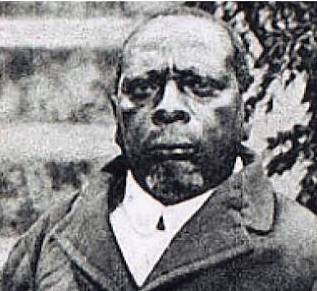 Into this context of declining power and external pressure stepped one of the most remarkable figures in the history of East African resistance to colonialism — Omukama Kabalega, who ruled Bunyoro-Kitara from 1869 to 1899. Kabalega was a leader of extraordinary energy, intelligence, and military capacity who set about reversing the decline of his kingdom with remarkable determination and success.
Upon assuming the throne — after a fierce succession struggle that he won through a combination of military force and political skill — Kabalega immediately set about rebuilding Bunyoro-Kitara’s military and administrative capacity. His most significant innovation was the creation of the Abarusura — a standing, professional army organised along modern lines, equipped with firearms obtained through trade, and trained to a standard far exceeding the traditional levies that had previously constituted Bunyoro’s military force.
With the Abarusura, Kabalega recovered significant territories previously lost to Buganda, reasserted Bunyoro-Kitara’s dominance over the regions around Lake Albert and the salt lakes at Kibiro, and established himself as the most formidable military leader in the Great Lakes region. His achievements were so impressive that when the British arrived in the region in the early 1890s, they found in Kabalega not a weakened and pliable client ruler but a powerful, confident, and deeply determined adversary.
Kabalega and the War of Resistance
The British Arrival and the Path to War
The British arrival in the Great Lakes region in the early 1890s — in the form of the Imperial British East Africa Company and its agent Frederick Lugard, followed by the formal declaration of the Uganda Protectorate in 1894 — brought Bunyoro-Kitara into direct conflict with the most powerful imperial force of the age. The British, pursuing their strategic and commercial interests in the region, found their ambitions directly threatened by Kabalega’s strength and independence, and they made the conquest of Bunyoro-Kitara a priority of their early Ugandan administration.
The British were aided in their campaign against Kabalega by the Baganda — the people of the neighbouring Buganda Kingdom, who saw in British support an opportunity to complete their long-running territorial expansion at Bunyoro’s expense. Buganda armies fought alongside British forces in the campaign against Kabalega, a collaboration that had devastating consequences for Bunyoro-Kitara and that left a legacy of bitterness between the two peoples that persisted for generations.
The Long Guerrilla War
What followed the initial British military campaigns against Bunyoro-Kitara was one of the longest and most determined armed resistances to British colonialism in the history of East Africa. Kabalega, refusing to accept defeat or submission, withdrew from his capital and conducted a prolonged guerrilla campaign against the British and their Buganda allies for nearly a decade — from the early 1890s until his final capture in 1899.
The campaign was fought across the difficult terrain of western Uganda — the forests, swamps, and river valleys of the Albertine region — with Kabalega and the remnants of the Abarusura using their knowledge of the landscape to evade, harass, and inflict casualties on a better-equipped but less mobile enemy. The British found Kabalega an extraordinarily elusive and resilient opponent, and the campaign required far more time and resources than they had anticipated.
Throughout this period, Kabalega maintained the dignity and ceremonial protocols of his kingship even while conducting a guerrilla war. He carried with him the royal drums and the sacred objects of the Bunyoro-Kitara Kingdom, maintaining the symbolic and spiritual continuity of the monarchy even as its physical territory was progressively occupied. This insistence on maintaining the forms of kingship in the face of military defeat was not mere stubbornness but a profound political statement — a declaration that the Bunyoro-Kitara Kingdom existed in its institutions and its spirit, not merely in the territory it controlled.
Capture, Exile, and the End of Armed Resistance
On 9th April 1899, Kabalega was finally captured by British forces in Lango territory, to which he had retreated in the later stages of his resistance. He was wounded in the fighting that preceded his capture — losing several fingers to a gunshot wound — and was taken prisoner along with Kabaka Mwanga II of Buganda, his former rival who had himself been engaged in resistance against the British.
The irony of this joint capture — the two great rulers of the rival kingdoms of Bunyoro-Kitara and Buganda, taken prisoner together by the colonial power whose advance had been facilitated in part by their mutual antagonism — was not lost on contemporary observers. Both men were exiled to the Seychelles, where they spent the remainder of their years. Kabalega died in exile in 1923, having been permitted to return to Uganda in his final year, but dying before he could reach his homeland.
Kabalega’s capture did not end Bunyoro-Kitara’s resistance — armed opposition to British rule continued for several more years — but it marked the effective end of organised military resistance and the beginning of the colonial period in Bunyoro-Kitara’s history. The kingdom was significantly reduced in territory, with the so-called “Lost Counties” — the areas of greatest fertility and strategic value — assigned to Buganda as a reward for its collaboration with the British.
The Mparo Tombs: Architecture, Ritual, and Sacred Space
The Location and Setting
The Mparo Tombs are situated on a prominent hill in Hoima District, the administrative and cultural heartland of the Bunyoro-Kitara Kingdom. The site commands views across the surrounding countryside that are simultaneously beautiful and symbolically significant — the elevation of the burial site above the surrounding land reflecting the elevated status of the kings who rest within it and the kingdom’s historical claim to dominance over the wider region.
The name Mparo itself carries historical and emotional resonance for the people of Bunyoro-Kitara. It is associated with the royal palace complex that Kabalega established in this area during the period of his reign, and its selection as the royal burial ground reflects both the practical geography of the region and the desire to maintain continuity with the landscape that the greatest of the Babito kings had known and ruled.
The Tomb Structures
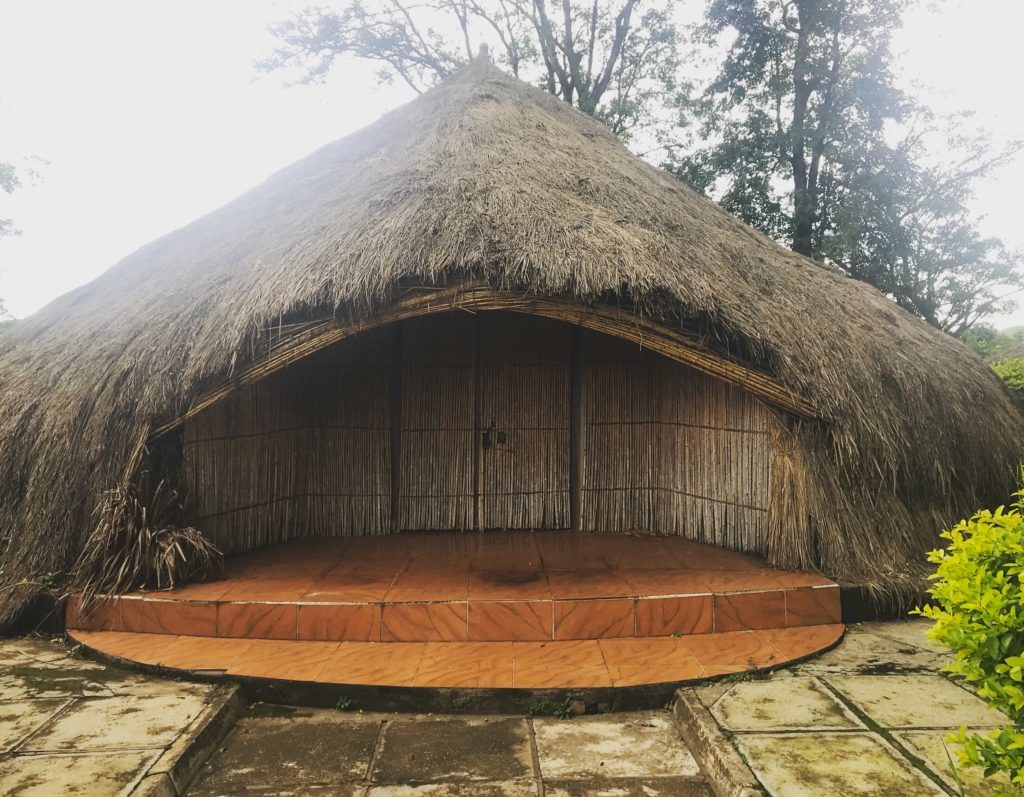
The Mparo Tombs consist of a series of traditional structures built in the architectural tradition of the Bunyoro-Kitara Kingdom — a tradition that, while distinct from the more widely documented Buganda architectural style, shares with it the use of natural materials, circular forms, and thatched roofing that are characteristic of Great Lakes royal architecture.
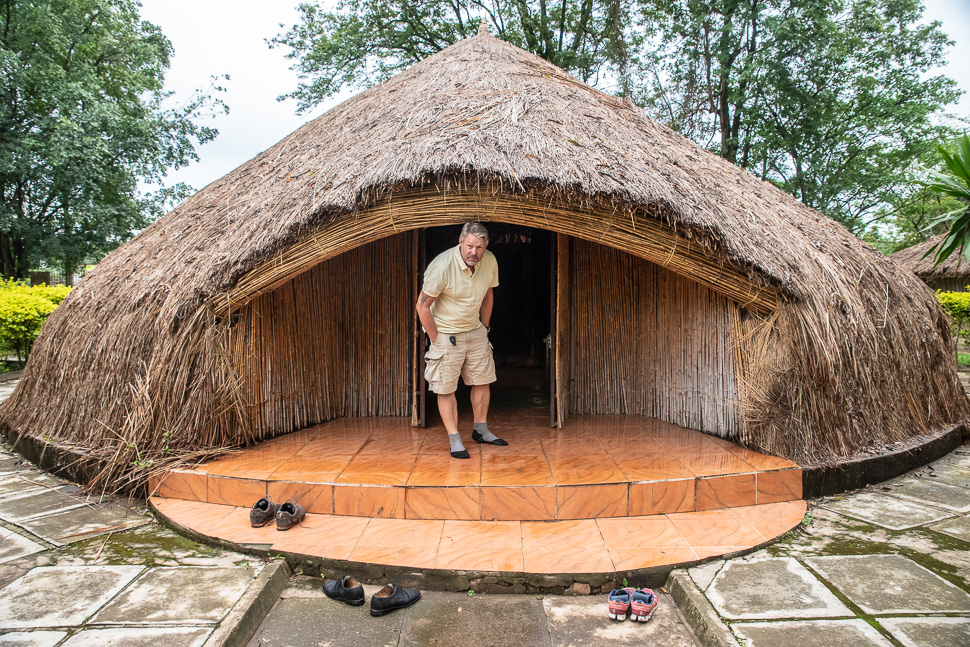
The principal tomb house is a large, circular thatched structure whose construction and maintenance are governed by strict cultural protocols, with specific clans holding hereditary responsibilities for different aspects of the building’s care. The interior of the tomb house is divided, as in the Kasubi Tombs of the Buganda Kingdom, between a public reception area where visitors may be received and an inner sanctum where the royal remains lie — separated from the outer space by screens of bark cloth and royal textiles that maintain the sacred privacy of the royal dead.
The royal regalia associated with the buried kings — drums, spears, shields, royal stools, and personal objects — are maintained within the tomb complex, their preservation being both a practical act of conservation and a spiritual act of maintaining the connection between the royal ancestors and the living kingdom. The drums, in particular, are objects of the highest sacred significance in Bunyoro-Kitara tradition, and their presence within the tomb complex ensures the continuing spiritual potency of the royal burial site.
The Guardians of the Tombs
Like the Kasubi Tombs of Buganda, the Mparo Tombs are maintained by a community of hereditary guardians whose families have been associated with the care of the royal burial site across generations. These guardians — drawn from specific clans with traditional connections to the Bunyoro-Kitara royal house — live within or near the tomb complex and carry out both the practical tasks of maintenance and the ritual obligations of regular ceremony and ancestral propitiation.
The role of the guardians is not merely caretaking in the physical sense but spiritual custodianship — the maintenance of a living relationship between the royal ancestors who rest at Mparo and the living kingdom they once ruled. This relationship is expressed through regular ceremonies, through the observance of specific taboos and protocols within the tomb complex, and through the role of the guardians as intermediaries between those who come to the tombs seeking connection with the royal ancestors and the ancestors themselves.
Royal Ceremonies at Mparo Tombs
The Mparo Tombs are the site of regular royal ceremonies that maintain the connection between the living Bunyoro-Kitara Kingdom and its ancestral foundations. The most significant of these ceremonies are associated with the installation of a new Omukama — the investiture rituals that mark the transition of royal authority from one generation to the next involve visits to the royal tombs, offerings to the royal ancestors, and the symbolic transfer of legitimacy from the buried kings to their living successor.
Annual commemorative ceremonies at the tombs draw members of the Bunyoro-Kitara royal family, clan leaders, and community members from across the kingdom in acts of collective remembrance and ancestral honour. These ceremonies are occasions for the performance of royal music — including the playing of the sacred royal drums — the recitation of royal praise poetry, and the sharing of food and drink in the presence of the ancestors.
The Kings Who Rest at Mparo Tombs
Omukama Kabalega (c. 1853–1923)
By far the most celebrated of the royal figures associated with Mparo is Omukama Kabalega himself — the great warrior king whose resistance to British colonialism has made him one of the most revered figures in Ugandan history. Kabalega’s status as a symbol of African resistance and dignity has only grown with the passage of time. In the post-independence period, as Uganda and the wider African world have sought historical figures who embodied resistance to colonial subjugation, Kabalega has emerged as one of the most powerful and inspiring examples available.
Kabalega’s repatriation from the Seychelles — he died in Jinja shortly after his return to Uganda, never reaching his homeland — and the eventual interment of his remains at Mparo represent a symbolic completion of his story: the return of the exile king to the earth of his kingdom, the restoration of the warrior to the rest he was denied in life. For the people of Bunyoro-Kitara, Kabalega’s tomb at Mparo is a place of immense emotional and political significance — a site of pride, of grief, and of an enduring sense that his legacy demands continuing honour.
Omukama Tito Winyi IV (1896–1971)
Omukama Tito Winyi IV — whose full throne name was Tito Gafabusa Winyi IV — was the Omukama of Bunyoro-Kitara from 1924 until 1967, when the Ugandan kingdoms were abolished by Milton Obote’s government. His reign spanned the final decades of the colonial period and the years immediately following Ugandan independence — a period of extraordinary change and challenge for all of Uganda’s traditional kingdoms.
Tito Winyi IV was a figure of considerable dignity and diplomatic skill who navigated the complex political landscape of the colonial and early independence periods with care, maintaining the cultural institutions and ceremonial life of the Bunyoro-Kitara Kingdom while engaging constructively with the colonial administration and later with the independent Ugandan government. His long reign and his commitment to the preservation of Bunyoro-Kitara’s traditions earned him great respect both within the kingdom and in the wider Ugandan political community.
His burial at Mparo connects him to the line of his royal predecessors and ensures that the tomb complex serves as a monument not only to the resistance era of Kabalega but to the full sweep of Bunyoro-Kitara’s more recent royal history.
Subsequent Royal Burials
The Mparo Tombs have continued to receive the remains of subsequent members of the Bunyoro-Kitara royal family, maintaining their role as the sacred burial ground of the kingdom’s royal line. The continuity of the burial site across generations of royal succession — from the resistance era of Kabalega through the colonial period and into the post-independence decades — gives the complex a layered historical significance that deepens with every passing generation.
The Lost Counties: A Historical Wound and Its Healing
The Dispossession of Bunyoro-Kitara
No account of the Mparo Tombs and the Bunyoro-Kitara Kingdom would be complete without addressing one of the most painful episodes in the kingdom’s colonial history — the loss of the “Lost Counties.” As noted earlier, the British rewarded Buganda’s collaboration in the campaign against Kabalega by assigning to the Buganda Kingdom a substantial portion of Bunyoro-Kitara’s most fertile and historically significant territory — the counties of Buyaga and Bugangaizi, among others.
This dispossession was a profound wound in the consciousness of the Bunyoro-Kitara people, and the campaign for the return of the Lost Counties became the defining political issue for the kingdom throughout the colonial period and into the independence era. The Banyoro communities living in the Lost Counties found themselves under Buganda administration, subject to Buganda chiefs, and effectively cut off from their own kingdom and cultural institutions. The injustice of this situation was widely recognised even within the colonial administration, which had created it.
The 1964 Referendum and Partial Restoration
Following Uganda’s independence in 1962, the question of the Lost Counties was addressed through a referendum held in 1964, in which the residents of Buyaga and Bugangaizi voted overwhelmingly to return to Bunyoro-Kitara. The referendum result was a moment of enormous celebration and vindication for the Bunyoro-Kitara Kingdom — a democratic reversal of a colonial injustice that had endured for more than six decades.
The return of the Lost Counties is commemorated as one of the defining moments of post-colonial justice in Uganda, and it remains a source of immense pride and relief in Bunyoro-Kitara collective memory. At the Mparo Tombs, this history is part of the living context within which the royal burial site is understood and honoured — the ancestors who rest at Mparo presided over a kingdom that suffered dispossession and survived to see partial restoration.
The Visitor Experience
Getting to Mparo Tombs
The Mparo Tombs are located in Hoima District in western Uganda, approximately 230 kilometres west of Kampala. The journey by road takes approximately four to five hours from the capital, passing through Mubende and Fort Portal junction before reaching Hoima town. The road to Hoima is of generally good quality for most of its length, and the journey passes through some of Uganda’s most beautiful countryside — the rolling hills and fertile valleys of central and western Uganda at their most lush and inviting.
From Hoima town, the Mparo Tombs are located a short distance away and are accessible by private car or local transport. Hoima itself is a pleasant, rapidly developing town that serves as the administrative centre of Hoima District and the commercial hub of the oil-producing region of western Uganda. The recent discovery of significant oil reserves in the Albertine Rift has brought considerable investment and development activity to Hoima, making it a more comfortable base for visitors than it was a decade ago.
The Visit Itself
Visiting the Mparo Tombs is an experience of quiet power and profound historical resonance. The site is maintained by the Bunyoro-Kitara Kingdom and is open to visitors, though the intimacy and relative undiscovered quality of the site — compared to the more heavily visited Kasubi Tombs in Kampala — means that visitors are likely to experience a more personal and unhurried encounter with the place and its guardians.
Guided tours of the complex are led by the tomb’s guardians or by knowledgeable local guides, who bring the history of Kabalega, the Bunyoro-Kitara Kingdom, and the specific significance of the individual tomb structures to life with a richness and personal connection that reflects the living relationship between the guides and the heritage they are sharing. The experience of standing before Kabalega’s tomb — of being in the physical presence of the remains of one of Africa’s greatest resistance leaders — is one that visitors consistently describe as deeply moving.
The royal regalia displayed within the complex, the atmosphere of the thatched tomb structures, the sounds of the surrounding countryside, and the knowledge of the extraordinary history that has unfolded on and around this hill combine to create an experience that engages the intellect, the emotions, and the moral imagination simultaneously.
Cultural Protocols
Visitors to the Mparo Tombs are expected to observe the cultural protocols appropriate to a sacred royal site. These include dressing modestly and respectfully, removing shoes before entering the tomb structures, speaking quietly and behaving with appropriate reverence, following the guidance of the guardian or guide regarding which areas may be entered and photographed, and approaching the site with the awareness that it is an active place of spiritual significance and royal honour, not merely a historical monument.
These protocols are gladly observed by virtually all visitors once their significance is explained, and the experience of following them — of consciously marking the transition into sacred space — deepens the quality of the visit significantly.
Best Time to Visit
The best time to visit the Mparo Tombs is during Uganda’s dry seasons — December to February and June to August — when roads are most reliable and the weather most comfortable for travel in western Uganda. The landscape around Hoima is particularly beautiful in the weeks following the rainy seasons, when the hills are brilliantly green and the air is clear, making the views from the tomb site especially spectacular.
Combining Mparo with Other Western Uganda Attractions
The Mparo Tombs sit within a region of extraordinary natural and cultural richness that rewards extended exploration. The Hoima District and surrounding western Uganda offer Murchison Falls National Park — one of Uganda’s greatest wildlife destinations, home to enormous concentrations of hippos, Nile crocodiles, elephants, buffaloes, and Uganda’s famous tree-climbing lions, as well as the most powerful waterfall on the Nile; the Kibiro Salt Lakes on the shores of Lake Albert, one of the oldest continuously operating salt production sites in East Africa and a place of enormous historical significance for the Bunyoro-Kitara Kingdom; the Albertine Rift and Lake Albert itself, a landscape of stunning beauty and extraordinary biodiversity; Budongo Forest Reserve, one of Uganda’s finest chimpanzee habitats and one of the largest and most important mahogany forests in East Africa; and the Ziwa Rhino Sanctuary, Uganda’s only wild rhinoceros population and a remarkable conservation success story, located on the road between Kampala and Hoima.
A well-planned multi-day itinerary combining the Mparo Tombs with Murchison Falls, Budongo Forest, Kibiro, and Lake Albert would constitute one of the finest heritage and wildlife journeys available anywhere in East Africa.
Conservation and Heritage Preservation
The Status of the Site
The Mparo Tombs are managed by the Bunyoro-Kitara Kingdom as part of its cultural heritage infrastructure. The site has benefited from the general revival of Uganda’s traditional kingdoms following their restoration in 1993 under President Museveni’s government — a restoration that reversed the abolition imposed by Milton Obote in 1967 and returned to the kingdoms their cultural institutions and their capacity to manage their own heritage.
The revival of the Bunyoro-Kitara Kingdom has been accompanied by renewed attention to the maintenance and development of the kingdom’s cultural sites, including the Mparo Tombs. Restoration work on the tomb structures, improved visitor facilities, and enhanced interpretation of the site’s significance have all been undertaken in recent years, reflecting the kingdom’s commitment to making its heritage accessible and meaningful to a new generation of Ugandans and international visitors.
The Broader Challenge of Heritage Preservation in Western Uganda
The Mparo Tombs exist within a broader landscape of heritage sites across western Uganda that face varying degrees of conservation challenge. The relatively limited tourism infrastructure in the region compared to more heavily visited areas of Uganda, the financial constraints of the cultural institutions responsible for site management, and the rapid pace of development driven by the oil economy all create pressures that require careful management.
The growing recognition of western Uganda’s extraordinary cultural and natural heritage — including the Mparo Tombs, the Kibiro salt lakes, the Bunyoro-Kitara palace sites, and the archaeological sites of the Albertine Rift — as a potential driver of heritage tourism offers both an opportunity and a responsibility: the opportunity to generate the resources needed for sustained conservation, and the responsibility to ensure that tourism development enhances rather than degrades the heritage it depends upon.
Conclusion: The Undefeated King and His Enduring Kingdom
Kabalega died in exile, his body broken by decades of war and imprisonment, his kingdom diminished by colonial dispossession, his people scattered and suffering. By the conventional measures of historical success — territorial control, political power, institutional continuity — his story could be read as a defeat. It is not.
The Bunyoro-Kitara Kingdom survived. Its royal institutions, its cultural traditions, its language, its oral histories, its music, and its profound sense of identity survived the colonial period, survived the abolition of kingdoms, survived the turbulence of post-independence Uganda, and emerged into the 21st century with a vitality and self-confidence that would have filled Kabalega’s heart with joy. The Lost Counties were returned. The kingdom was restored. The tombs at Mparo stand, and the drums still sound.
To visit the Mparo Tombs is to encounter the full weight and dignity of this history — to stand in the presence of a king whose resistance to injustice has become one of the enduring moral touchstones of African history, and of a kingdom whose survival against formidable odds is one of the most inspiring stories the continent has to tell. It is a visit that leaves no one unchanged. It is a pilgrimage to the heart of a living history that speaks, with compelling urgency, to the present.
✦ Visit the Mparo Tombs with Uganda Safari Bookings
Ready to journey into the heart of the Bunyoro-Kitara Kingdom and stand in the presence of one of Africa’s greatest historical legacies? Uganda Safari Bookings specialises in crafting extraordinary, expertly guided journeys to the Mparo Tombs and the full breadth of western Uganda’s magnificent cultural and natural heritage.
We offer tailor-made cultural and historical tours of the Bunyoro-Kitara heartland, combining the Mparo Tombs with the Kibiro Salt Lakes, the Bunyoro-Kitara royal palace, and the rich oral history traditions of the region, comprehensive multi-day western Uganda safari packages linking the Mparo Tombs with Murchison Falls National Park, Budongo Forest chimpanzee tracking, Ziwa Rhino Sanctuary, and the spectacular shores of Lake Albert, specialist heritage and history tours for scholars, students, and serious travellers with a deep interest in African pre-colonial and resistance history, and fully bespoke private itineraries combining western Uganda’s cultural sites with the gorillas of Bwindi, the Rwenzori Mountains, and the wildlife of Queen Elizabeth National Park.
Our expert, locally based team has an intimate knowledge of western Uganda’s history, landscape, and communities. We are passionate about connecting visitors with the extraordinary depth and richness of the Bunyoro-Kitara story — one of the greatest and most inspiring stories in the history of this remarkable continent.
📧 Email: info@ugandasafaribookings.com 📞 Call / WhatsApp: +256-700135510


More Articles
Fort Lugard
Sezibwa Falls
Ndere Cultural Center- Traditional Music, Dance & Drama