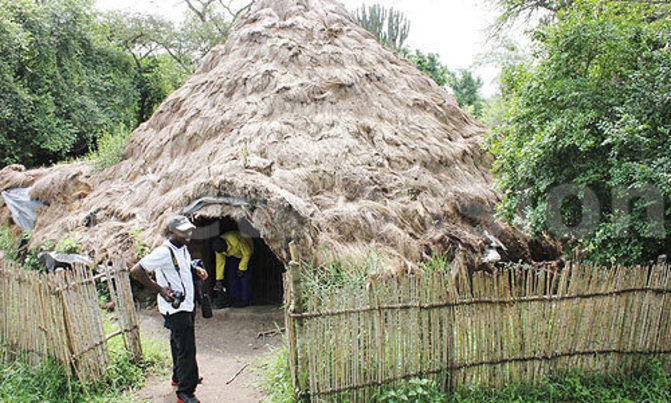
Deep in the savannah heartland of south-central Uganda, where the rolling grasslands of Ssembabule District stretch towards the horizon and the Katonga River winds its unhurried course through ancient floodplains, lie the remains of one of the most extraordinary and enigmatic monuments in all of sub-Saharan Africa. Bigo bya Mugenyi — meaning literally “the fortification of the stranger” in Luganda — is a vast complex of earthwork ditches, embankments, and enclosures that sprawls across an area of approximately 450 acres, making it the largest ancient earthwork ever recorded in sub-Saharan Africa.
Built at some point between the 13th and 15th centuries, Bigo bya Mugenyi represents the physical remnant of a civilisation whose identity, origins, and ultimate fate remain among the most debated questions in East African archaeology and oral history. The sheer scale of the earthworks — with ditches stretching for over ten kilometres, some of them cut several metres deep through solid rock — speaks of a society with remarkable organisational capacity, significant surplus resources, and sophisticated engineering knowledge. Yet the people who built Bigo left behind no written records, and their story has been reconstructed from a combination of archaeological evidence, oral traditions, and comparative historical analysis.
For students of African history, archaeologists, and travellers with a passion for the deep past, Bigo bya Mugenyi offers an experience of rare and haunting power. To walk the lines of these ancient ditches, to stand at the edge of a rock-cut trench that has endured for perhaps seven centuries, and to contemplate the civilisation that created it is to encounter African history at its most profound and most mysterious. This is a site that raises more questions than it answers — and therein lies much of its extraordinary fascination.
Historical Background: The Landscape of Ancient South-Western Uganda
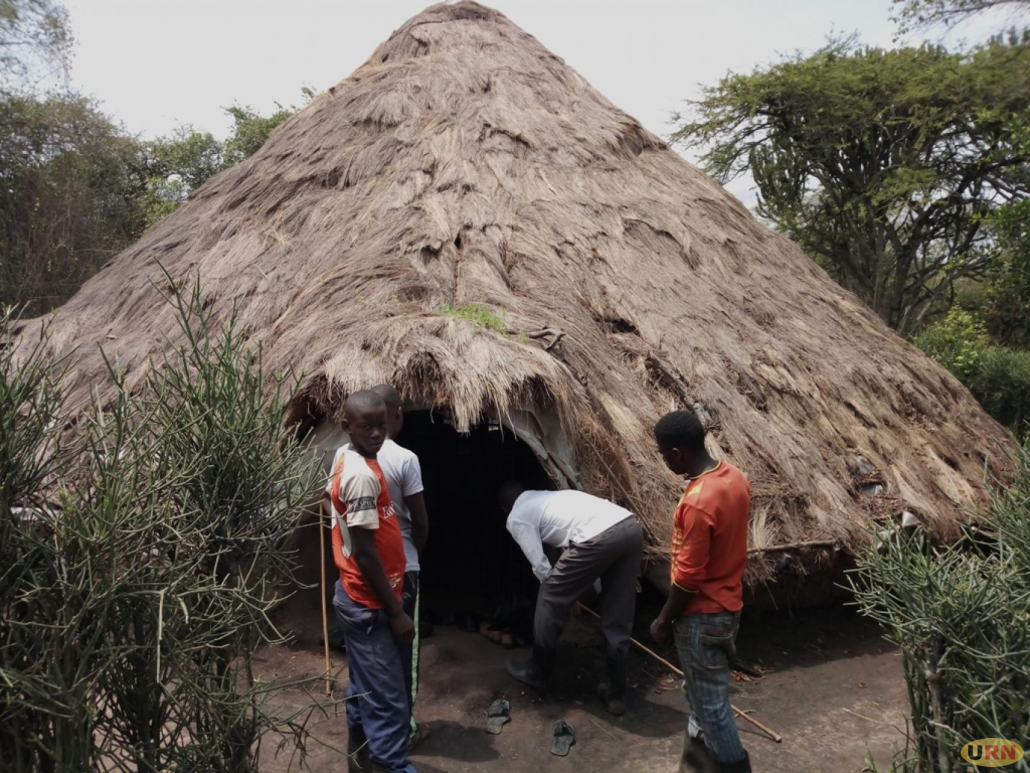
The Great Lakes Region and Its Ancient Kingdoms
To understand Bigo bya Mugenyi, one must first understand the broader historical landscape of the Great Lakes region of East Africa — one of the most historically rich and complex regions on the African continent. The area encompassing present-day Uganda, Rwanda, Burundi, and the eastern Democratic Republic of Congo was, from at least the first millennium AD, home to a succession of sophisticated societies that developed complex political structures, distinctive cattle-keeping cultures, and remarkable traditions of craftsmanship and trade.
By the second millennium AD, the region was characterised by the presence of several powerful kingdoms and proto-kingdoms — political formations built around royal courts, cattle wealth, and the control of fertile agricultural land and trade routes. The most famous of these include the Kingdom of Buganda, the Kingdom of Bunyoro-Kitara, the Kingdom of Ankole, and the Kingdom of Toro. But before these kingdoms, or running parallel to their early development, there existed what oral traditions describe as the Chwezi Empire — and it is with the Chwezi that the story of Bigo bya Mugenyi is inextricably linked.
The Chwezi: Myth, History, and the Problem of Evidence
The Chwezi — also known as the Bachwezi or Bacwezi — occupy a uniquely complex position in the historical and cultural imagination of the Great Lakes region. In the oral traditions of numerous peoples across Uganda, Rwanda, and Tanzania, the Chwezi are remembered as a semi-divine dynasty of extraordinarily gifted rulers who presided over a great empire for a period, performed miraculous feats, and then vanished as suddenly and mysteriously as they had appeared.
In Bunyoro tradition, the Chwezi are the second dynasty of the legendary Kitara Empire, preceded by the semi-mythical Batembuzi and succeeded by the historical Babito dynasty that gave rise to the Bunyoro-Kitara Kingdom. In Ankole tradition, the Chwezi are remembered as superhuman beings associated with cattle, beauty, and supernatural power. Across the region, the Chwezi are venerated as spirit ancestors, with active spirit possession cults devoted to individual Chwezi figures still practised in parts of Uganda and Tanzania today.
The historical reality behind these traditions is fiercely debated. Some scholars argue that the Chwezi were a real historical dynasty — possibly a pastoralist ruling class of uncertain origin — who established a loose empire across the inter-lacustrine region and then collapsed or dispersed, leaving behind their earthworks and their legends. Others argue that the Chwezi are primarily mythological figures whose historical kernel, if any, is irrecoverable. The archaeological evidence at Bigo and other sites associated with the Chwezi provides tantalising but ultimately inconclusive evidence for the historical position.
Bigo and the Chwezi Connection
In the oral traditions of Bunyoro and the surrounding region, Bigo bya Mugenyi is unambiguously identified as a Chwezi site — specifically as one of the royal capitals or administrative centres of the Chwezi Empire. The name “bya Mugenyi” — “of the stranger” — is itself interpreted in some traditions as a reference to the Chwezi, who are remembered as having come from elsewhere, as beings who did not quite belong to the ordinary world.
Several specific Chwezi figures are associated with Bigo in oral tradition. Wamara, the last and most tragic of the Chwezi kings, is said to have held court at or near Bigo. The site is also associated with Ndahura, another important Chwezi figure. These oral associations have been taken seriously by historians as evidence that the earthworks at Bigo were indeed constructed and used by the political formation that oral tradition remembers as the Chwezi, even if the precise nature of that formation remains unclear.
The Earthworks: Scale, Design, and Engineering Achievement

The Physical Layout of Bigo
The earthworks at Bigo bya Mugenyi are, by any measure, an extraordinary feat of human engineering. The complex covers an area of approximately 450 acres — roughly 180 hectares — and consists of a series of interconnected ditches, embankments, and enclosures arranged in a pattern that suggests deliberate planning and sophisticated spatial organisation.
The outermost ditch system extends for more than ten kilometres in total length, encircling a vast area of grassland and making use of the natural topography of the Katonga River valley to reinforce the defensive perimeter. In places, these outer ditches are relatively shallow, taking advantage of natural drainage features. In others, they are cut dramatically deep — in some sections reaching depths of three to four metres and widths of several metres — through what is, in places, solid rock. The labour required to excavate these ditches using only stone, bone, and wooden tools represents an investment of human effort on a scale that compels deep admiration.
Within the outer enclosure, a series of inner enclosures of progressively greater elaboration define what appears to have been a hierarchically organised settlement. The innermost enclosures — presumably associated with royal or ritual functions — show the most careful construction, with more precisely cut ditches and more carefully shaped embankments. This nested series of enclosures, each more restricted than the last, mirrors the spatial organisation seen at other royal centres in the region, including the Kasubi Tombs in Kampala, and reflects a consistent pattern of hierarchical space-making in Ugandan royal architecture.
The River Ditches: A Remarkable Engineering Feature
One of the most remarkable features of the Bigo earthworks is the extension of the ditch system into and across the Katonga River itself. Archaeological surveys have identified sections of ditch that run directly into the river, suggesting that the builders deliberately incorporated the watercourse into their defensive and enclosure system. This integration of a natural river into an artificial earthwork system is an engineering achievement that speaks to sophisticated planning and considerable technical knowledge.
The Katonga River section of the earthworks has attracted particular scholarly attention because it suggests that the enclosure system was designed not merely as a defensive perimeter but possibly also as a mechanism for controlling the movement of cattle — the primary source of wealth and political power in the pastoral societies of the Great Lakes region. The ability to control access to the river, and therefore to water and grazing, would have given the occupants of Bigo enormous political and economic leverage over the surrounding population.
Comparison with Other Earthwork Sites
Bigo bya Mugenyi does not stand alone. A cluster of related earthwork sites in south-western Uganda and north-western Tanzania are associated, in varying degrees, with the Chwezi tradition and with the same broad period of construction. These include Mubende Hill, a prominent hilltop site in central Uganda associated with the Chwezi figure Ndahura and still an active spirit shrine; Munsa, another earthwork complex in western Uganda; Kibengo, a smaller but well-preserved earthwork site; and Ntusi, a large settlement mound in south-western Uganda that has yielded significant archaeological material including pottery, iron tools, and evidence of intensive cattle-keeping.
Together, these sites form an archaeological complex that testifies to a period of remarkable political and social development in the region — a period that oral traditions remember as the age of the Chwezi and that archaeology is only beginning to understand in its full complexity.
Archaeological Research: What the Evidence Tells Us
Early Archaeological Investigations
The first systematic archaeological investigation of Bigo bya Mugenyi was conducted by the British archaeologist E.C. Lanning in the 1950s, at a time when formal archaeology in East Africa was still in its infancy. Lanning’s surveys established the basic dimensions of the site and produced the first detailed maps of the earthwork system. His work demonstrated the extraordinary scale of the complex and drew the attention of the international scholarly community to its significance.
Subsequent investigations in the 1960s and 1970s, most notably by the archaeologist Peter Shinnie and later by Merrick Posnansky — one of the founding figures of East African archaeology — built on Lanning’s foundation. Posnansky’s work at Bigo and the related site of Ntusi was particularly significant, producing radiocarbon dates that placed the occupation of these sites in the period roughly between AD 1200 and 1500, with some evidence of earlier and later activity.
The Radiocarbon Dating Evidence
The radiocarbon dates obtained from Bigo and the associated site of Ntusi are among the most important pieces of evidence in the debate about the historical Chwezi. Dates clustering around the 13th to 15th centuries AD align broadly with the period when oral traditions place the Chwezi Empire, lending some support to the historicity of the tradition. However, the dates also raise complications: they suggest that Bigo was constructed and occupied over a relatively extended period rather than being the creation of a single dynastic moment, which complicates simple equations between the archaeological site and specific oral tradition figures.
The material culture recovered at Bigo — including pottery of the distinctive Entebbe ware tradition, iron tools and slag indicating metalworking, and abundant evidence of cattle-keeping in the form of dung deposits and bone remains — paints a picture of a prosperous, cattle-rich society with sophisticated craft traditions and extensive regional trade connections. This material evidence is consistent with the oral tradition picture of the Chwezi as a powerful pastoralist elite, though it does not resolve questions about their origins or ultimate fate.
Unresolved Questions and Ongoing Debates
Despite decades of archaeological research, fundamental questions about Bigo bya Mugenyi remain unresolved. Who precisely built it? The oral tradition answer — the Chwezi — is accepted by many scholars as broadly plausible but not definitively proven. What was its primary function? The combination of defensive ditches, cattle enclosures, and apparent royal precincts suggests multiple functions that evolved over time. Why was it abandoned? The oral traditions speak of the sudden departure or disappearance of the Chwezi, but the archaeological evidence has not yet provided a clear explanation for the site’s apparent abandonment.
These unresolved questions are not a weakness of the site’s historical significance — they are, in many ways, the source of its fascination. Bigo bya Mugenyi is a site that invites interpretation, that rewards sustained attention, and that refuses the comfortable closure of easy answers. It is, in this sense, a truly great historical site — one that continues to provoke and challenge those who study it.
Cultural and Spiritual Significance
The Living Legacy of the Chwezi
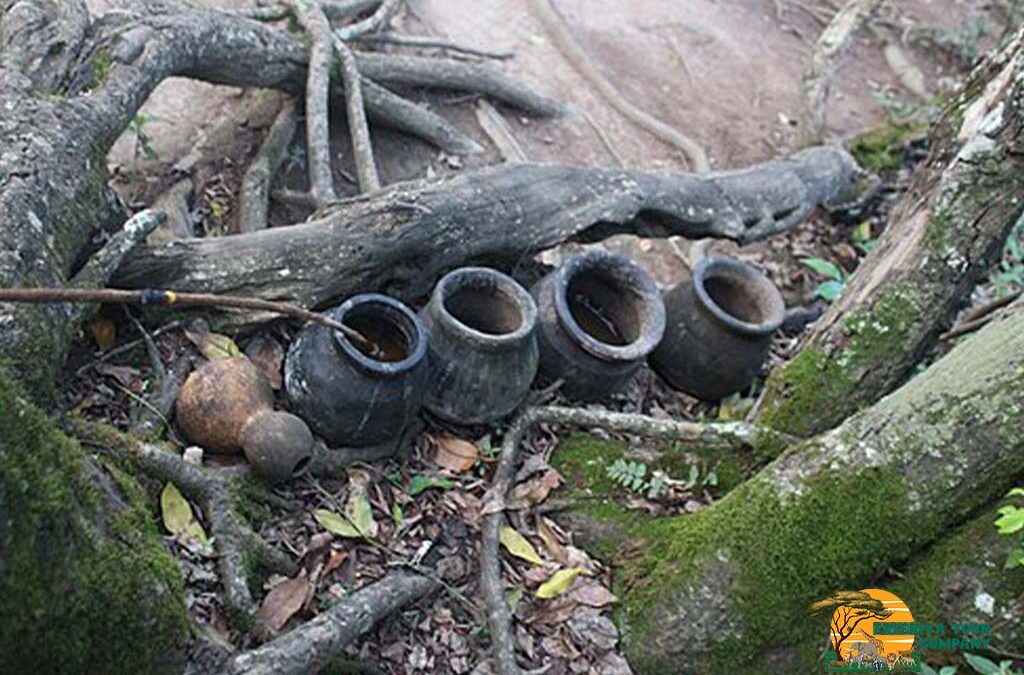
The Chwezi are not merely historical figures consigned to the remote past. Across Uganda, Tanzania, and the broader Great Lakes region, Chwezi spirit possession cults remain active and significant forces in local religious life. The Cwezi kubandwa cult, practised in various forms across the region, involves the veneration of specific Chwezi spirits through possession rituals, offerings, and sacred groves maintained by hereditary priests and priestesses.
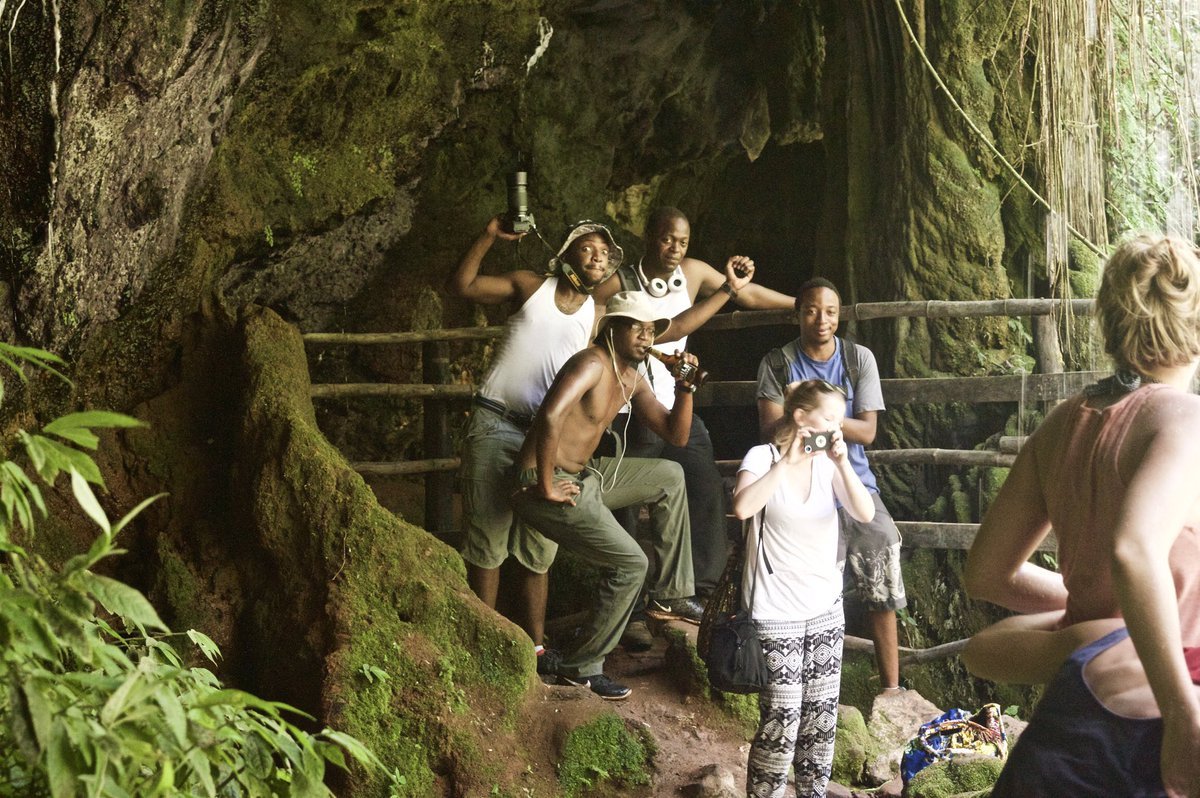
At Bigo itself and at the associated hilltop site of Mubende, the Chwezi connection is maintained through active spiritual practices. Mubende Hill, associated with the Chwezi figure Ndahura and his mother Nakayima, is one of the most important traditional spiritual sites in Uganda, visited by supplicants seeking healing, fertility, and guidance. The massive tamarind tree at the summit of Mubende — believed to be the dwelling place of Nakayima’s spirit — is one of the most venerated natural objects in Ugandan traditional religion.
This living spiritual dimension means that sites associated with the Chwezi, including Bigo, are not merely archaeological monuments but active sacred landscapes embedded in the contemporary spiritual lives of communities across the region. Visitors should approach these sites with the awareness and respect appropriate to places that remain sacred to local peoples.
Identity and the Chwezi in Contemporary Uganda
The question of the Chwezi and their legacy is not merely an academic one. In the contemporary politics of identity and heritage in Uganda, the Chwezi are claimed by multiple ethnic and regional communities as ancestors, as symbols of cultural prestige, and as evidence of pre-colonial civilisational achievement. Bunyoro, Ankole, Toro, and other kingdoms each have their own relationship to the Chwezi tradition, and these relationships carry contemporary political weight.
For Ugandans more broadly, Bigo bya Mugenyi and the Chwezi earthworks represent powerful evidence that the peoples of this region built sophisticated, large-scale political formations long before the arrival of European colonisers — evidence that directly challenges the colonial-era mythology of African primitiveness and the absence of complex pre-colonial African civilisation.
The Visitor Experience
Getting to Bigo bya Mugenyi
Bigo bya Mugenyi is located in Ssembabule District in south-central Uganda, approximately 230 kilometres southwest of Kampala. The journey by road takes roughly four to five hours from the capital, passing through the towns of Masaka and Lyantonde before reaching the site via local roads. A sturdy vehicle with reasonable ground clearance is recommended, particularly during the rainy seasons when local roads can become challenging.
The relative remoteness of Bigo bya Mugenyi is both a challenge and a gift. Unlike many heritage sites that have been transformed by heavy tourist infrastructure, Bigo retains the atmosphere of an undiscovered place — a quality that makes the experience of visiting it genuinely extraordinary. You are unlikely to encounter large crowds here. You are very likely to feel as though you are among the first people in a very long time to stand attentively in the presence of these ancient earthworks.
What to See and Experience
A visit to Bigo bya Mugenyi should include walking the line of the main outer ditch, following the earthwork system as it curves across the landscape, and pausing to appreciate the extraordinary scale of the excavation. Standing at the edge of a section where the ditch has been cut several metres deep through rock, and reflecting on the thousands of hours of human labour that each metre of progress must have required, is one of the most powerful experiential moments the site offers.
The inner enclosures reward careful exploration, as the variation in ditch depth and embankment construction between the outer and inner systems tells a story about the hierarchical organisation of the settlement and the differential investment made in different parts of the complex. The section where the ditch system meets the Katonga River is particularly striking — the point where human engineering and natural geography were deliberately integrated.
The broader landscape of the site is also deeply atmospheric. The open savannah grasslands, the distant hills, the occasional acacia trees, and the sense of vast, unhurried space create a setting that allows the imagination to work freely — to populate the ancient enclosures with the cattle, the courtiers, and the ceremonies of a civilisation that flourished here many centuries ago.
Visiting with a Knowledgeable Guide
Given the remoteness of Bigo bya Mugenyi and the complexity of its historical and cultural significance, visiting with a knowledgeable guide is strongly recommended. A good guide will not only navigate the physical landscape of the site — which can be disorienting in its scale — but will also bring alive the oral traditions, the archaeological debates, and the cultural significance that transform the earthworks from a collection of impressive ditches into a window onto a lost world.
Local guides with expertise in the history and oral traditions of south-western Uganda can provide insights that no written guidebook can replicate, drawing on living traditions of knowledge about the Chwezi and their legacy that have been transmitted through generations of storytellers, spirit mediums, and community historians.
Best Time to Visit
The best time to visit Bigo bya Mugenyi is during Uganda’s dry seasons — from December to February and from June to August — when the roads are most passable and the grasslands are easiest to walk. During the rainy seasons, the site becomes lush and green, which has its own beauty, but the roads can be difficult and the dense vegetation can make it harder to trace the earthwork system.
Early morning visits are particularly rewarding, as the low angle of the morning light throws the ditches and embankments into sharp relief, making the earthwork system dramatically more visible than it appears in the flat light of midday.
Combining Bigo with Other Western Uganda Attractions
Bigo bya Mugenyi lies within a broader landscape of historical and natural attractions that make the south-western Uganda region a rich destination for extended exploration. Within reasonable driving distance are Lake Mburo National Park, Uganda’s most accessible savannah park and home to zebra, hippos, and impalas; the Ssezibwa Falls and Mubende Hill, both significant Chwezi-associated spiritual sites; the historic Kingdom of Ankole and the Igongo Cultural Centre near Mbarara, which offers an excellent introduction to the cultures of south-western Uganda; and the road south towards Kabale and the stunning landscape of Uganda’s “Little Switzerland.”
A well-planned multi-day itinerary can combine Bigo bya Mugenyi with Lake Mburo and the cultural sites of Ankole, creating an extraordinary journey through both the deep human history and the natural splendour of south-western Uganda.
Conservation and the Future of Bigo bya Mugenyi
Current Conservation Status
Bigo bya Mugenyi is a gazetted national monument under the management of the Uganda Museum and Monuments Department. However, like many of Uganda’s most significant archaeological sites, it has historically received limited conservation resources and infrastructure investment. The site lacks the visitor facilities — interpretation centres, marked trails, on-site guides — that would help visitors navigate and understand its significance.
The earthworks themselves face ongoing pressures from agricultural encroachment, vegetation growth, and the general processes of erosion and degradation that affect all earthen monuments over time. Sections of the ditch system have been damaged or partially infilled by farming activities, and without sustained conservation intervention, further degradation is inevitable.
The Case for Greater Investment
The case for greater conservation investment at Bigo bya Mugenyi is compelling. As the largest ancient earthwork in sub-Saharan Africa, the site has the potential to become one of the flagship heritage tourism destinations in East Africa — a site that attracts scholars, heritage tourists, and culturally curious travellers from around the world. Realising this potential will require investment in interpretation, access, accommodation, and guide training, as well as sustained archaeological research to better understand and document the site’s significance.
Advocacy by Uganda’s heritage community, support from international organisations such as UNESCO and the African World Heritage Fund, and growing domestic tourism interest all point towards a more hopeful future for Bigo bya Mugenyi. The site deserves the attention and resources that its extraordinary historical significance demands.
Conclusion: Africa’s Greatest Unanswered Question
Bigo bya Mugenyi is a site of silences as much as a site of evidence. The people who excavated these extraordinary ditches, who herded their cattle within these vast enclosures, who organised their society with sufficient complexity and surplus to undertake engineering works of this scale — they left no inscriptions, no illuminated manuscripts, no monumental statuary. What they left is the earth itself, shaped by their hands into forms that have endured for seven centuries.
In those earthworks, shaped by long-vanished hands and guarded by oral traditions that stretch across the centuries, lies one of Africa’s greatest historical mysteries — and one of its most compelling invitations to look again, look deeper, and resist the temptation to believe that the history of this continent is any less rich, any less complex, or any less worthy of wonder than the history of any other place on earth.
To visit Bigo bya Mugenyi is to accept that invitation. It is to stand at the edge of the known and look out into the vast, fascinating, largely uncharted territory of Africa’s deep past. Few experiences in Uganda — or anywhere — are more humbling, more intellectually stimulating, or more quietly magnificent.
✦ Explore Bigo bya Mugenyi with Uganda Safari Bookings
Ready to journey into the heart of Uganda’s ancient past? Uganda Safari Bookings specialises in crafting exceptional, expertly guided visits to Bigo bya Mugenyi and the full sweep of Uganda’s remarkable historical and natural heritage — including sites that most visitors to Uganda never discover.
We offer tailor-made cultural and historical tours, multi-day western Uganda itineraries combining Bigo with Lake Mburo National Park and the Ankole cultural heartland, comprehensive Uganda safari packages linking historical sites with gorilla trekking, chimpanzee tracking, and the great national parks, and specialist archaeology and heritage tours for scholars, students, and serious history enthusiasts.
Our expert, locally-based team knows Uganda’s history, landscapes, and communities intimately. We are passionate about connecting visitors with the depth and wonder of this extraordinary country — including its least-visited and most rewarding hidden treasures. Contact us now by emailing to info@ugandasafaribookings.com 📞 Call / WhatsApp: +256-700135510


More Articles
Fort Lugard
Sezibwa Falls
Ndere Cultural Center- Traditional Music, Dance & Drama