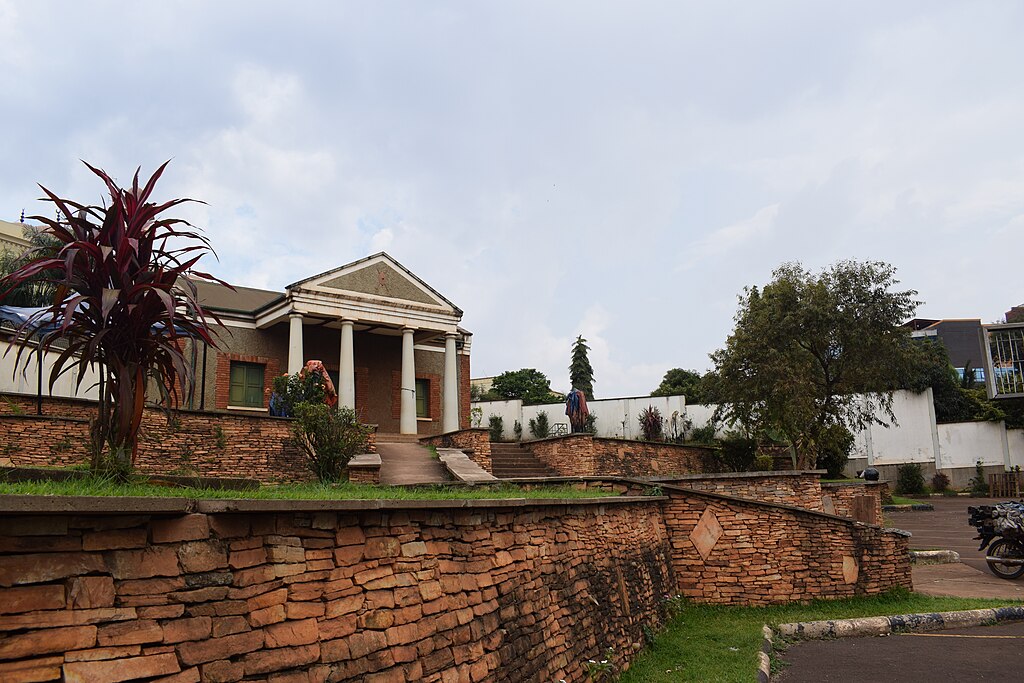
Perched on a commanding hilltop on Bugala Island in the Sese Islands archipelago of Lake Victoria, Fort Lugard stands as one of Uganda’s most evocative and historically layered colonial-era monuments. Built at the close of the nineteenth century during the scramble for Africa, the fort carries within its weathered stone walls a story of empire, ambition, conflict, and the dramatic reshaping of East Africa that would define the century to come.
The Man Behind the Fort
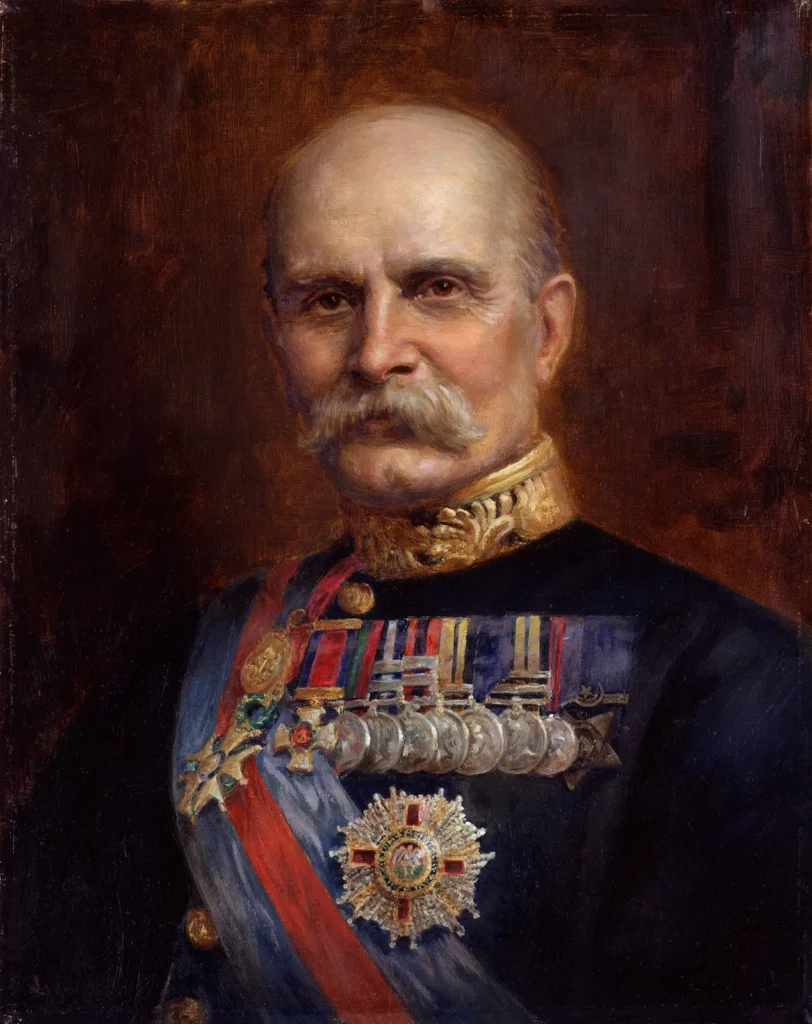 To understand Fort Lugard, one must first understand the man whose name it bears. Frederick Lugard was a British soldier and colonial administrator who arrived in East Africa in the early 1890s on behalf of the Imperial British East Africa Company. He was tasked with extending British influence deep into the interior of the continent, navigating the complex political landscape of the Buganda Kingdom, rival European powers, and the volatile religious factions — Catholic, Protestant, and Muslim — that were tearing Buganda apart at the time.
Lugard was a figure of enormous historical consequence. He would later become one of the principal architects of indirect rule — the British colonial philosophy of governing African territories through existing local structures rather than direct administration. His time in Uganda, and the fort that bears his name, represent an early and defining chapter in that story. He went on to serve as Governor of Nigeria and Hong Kong, and was eventually elevated to the House of Lords as Lord Lugard of Abinger. But his footprint in Uganda remains, quite literally, written in stone.
The Building of the Fort
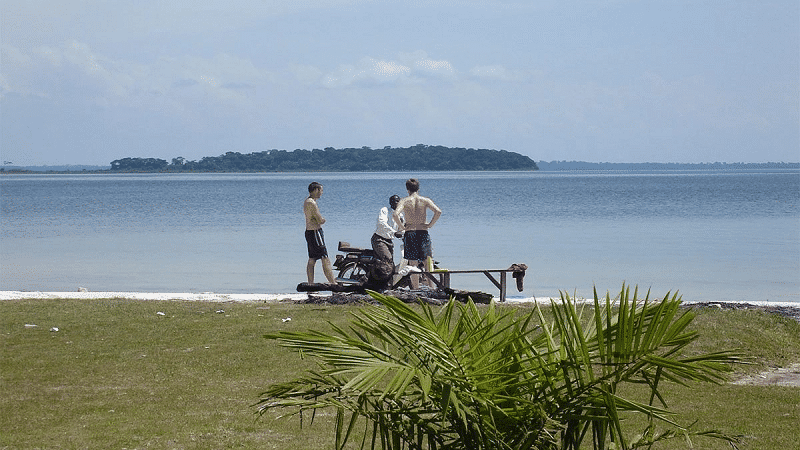
Fort Lugard was constructed around 1893 on Bugala Island, the largest of the Sese Islands. Its elevated position was not accidental. Sitting high on a hill with sweeping views over Lake Victoria, the fort offered both a strategic vantage point and a visible symbol of British authority over the lake’s waters and the surrounding territories. Lake Victoria in the 1890s was not merely a body of water — it was a highway of trade, power, and influence, and controlling it meant controlling much of the region.
The fort was built using local materials and labour, its thick stone walls designed to withstand attack and the elements alike. It served as a military outpost and administrative base during a period of extraordinary turbulence, when the future shape of Uganda — and indeed much of East Africa — was still being contested and negotiated.
A Moment Frozen in History
What makes Fort Lugard particularly compelling as a historic site is that it captures a very specific and pivotal moment in time. The 1890s in Buganda were years of extraordinary upheaval. The kingdom was convulsed by religious wars between Catholic and Protestant factions, both backed by competing European powers — France and Britain respectively. Arab traders and Muslim converts added yet another layer of complexity. Into this volatile environment stepped Lugard, attempting to impose order and British dominance over a situation that resisted any simple resolution.
The fort was both a military installation and a political statement. Its construction on the Sese Islands placed Britain firmly astride one of the great lakes of Central Africa at a moment when the entire continent was being partitioned by European powers with little regard for the peoples who had inhabited it for centuries. Standing at Fort Lugard today, that history is inescapable and deeply instructive.
The Ssese Islands Setting
Fort Lugard does not exist in isolation. It sits within one of Uganda’s most beautiful and least crowded natural environments. The Ssese Islands comprise 84 islands scattered across the northwestern corner of Lake Victoria, many of them heavily forested, fringed with sandy beaches, and inhabited by fishing communities who have lived on the lake for generations.
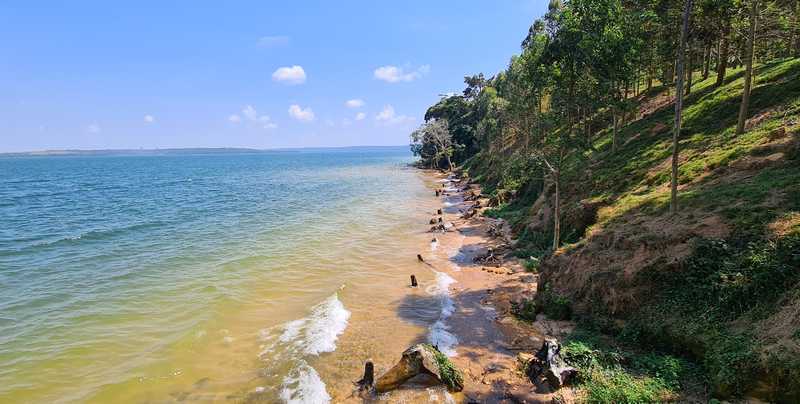
Bugala Island itself is a destination worth spending time in. The slow pace of island life, the wooden fishing boats setting out at dawn, the forest trails alive with birdsong, and the shimmer of Lake Victoria stretching endlessly in every direction combine to create an atmosphere entirely unlike anything on the Ugandan mainland. Visiting Fort Lugard means arriving by ferry across open lake water — a journey that itself feels like stepping into another time.
The islands support significant birdlife, including the African fish eagle, pied kingfisher, grey-backed camaroptera, and numerous species of weavers and sunbirds. Shoebill storks have been recorded in the swampy inlets of nearby islands, drawing dedicated birdwatchers from across the world. The forests harbour primates, monitor lizards, and a wealth of smaller wildlife, making the natural setting of Fort Lugard as compelling as the history.
Walking the Fort Today
Visiting Fort Lugard today is an experience that rewards the curious and the reflective traveller in equal measure. The stone structure, weathered by over a century of tropical heat and rain, retains a powerful physical presence. Local guides offer detailed accounts of the fort’s construction, its role in the events of the 1890s, and the broader story of British colonialism in Uganda. The views from the hilltop over Lake Victoria are extraordinary — on clear days, the water stretches to the horizon in every direction, giving a vivid sense of why this location was chosen.
The fort is not a heavily commercialised tourist attraction, which in many ways adds to its appeal. It has the quality of a place discovered rather than packaged — a genuine historic site embedded in a living landscape, where the history and the natural environment inform and deepen each other.
Why Fort Lugard Matters
Uganda’s history did not begin with colonialism, but colonialism irrevocably shaped what Uganda became. Fort Lugard is one of the most tangible surviving physical expressions of that colonial encounter in the entire country. It stands not as something to celebrate uncritically, but as something to understand — a place where the forces that formed modern Uganda can be seen, touched, and contemplated.
For travellers who want their Uganda experience to go beyond the national parks and engage with the full complexity of this country’s story, Fort Lugard is an essential destination. Pair it with the natural splendour of the Ssese Islands and a crossing of Lake Victoria, and you have one of the most distinctive and memorable travel experiences in all of East Africa.
Ready to step into Uganda’s history at Fort Lugard? Uganda Safari Bookings offers expertly crafted itineraries that bring Uganda’s most compelling historic, cultural, and natural sites together in one unforgettable journey. Whether you want a dedicated trip to the Ssese Islands to explore Fort Lugard, or you would like to weave it into a broader Uganda safari covering the gorillas of Bwindi, the falls of Murchison, and the wildlife of Queen Elizabeth National Park, their experienced team will design a trip tailored entirely to you.
Contact Uganda Safari Bookings today and begin planning the Uganda adventure that tells the whole story. You can email to info@ugandasafaribookings.com or call/chat with us via +256-700135510.



More Articles
Sezibwa Falls
Ndere Cultural Center- Traditional Music, Dance & Drama
Mparo Tombs- Bunyoro-Kitara Kingdom Royal Scared Mausoleum