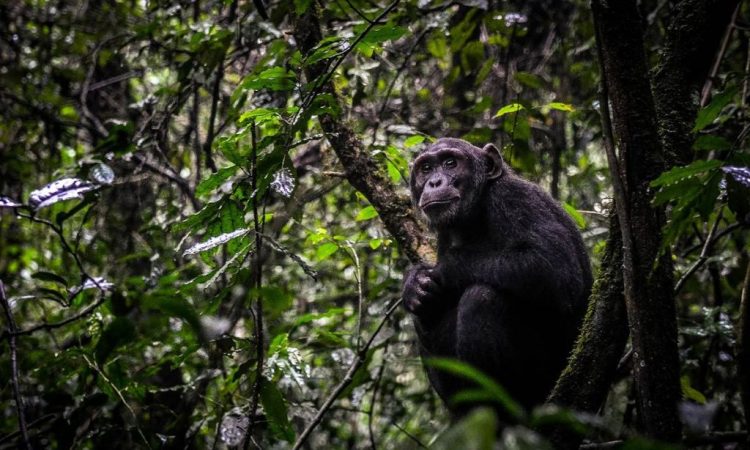
When evaluating chimpanzee tracking in Uganda versus Rwanda, it’s crucial to understand the key differences. Chimpanzees don’t wait for you. Unlike their mountain gorilla cousins, chimps move fast, shriek louder than you’d expect, and vanish into the canopy without warning. This raw, electric unpredictability makes chimpanzee tracking in Uganda vs. Rwanda such a consequential decision — pick the wrong destination, and you risk spending hours in a beautiful but eerily silent forest.
The stakes are real. “Empty forest syndrome” — arriving at a prime habitat only to find scattered signs but no actual sightings — is a genuine risk that separates satisfying treks from deeply disappointing ones. Terrain, troop size, and habituation levels all determine whether you’re watching chimps feed overhead or staring at abandoned nests.
The two primary battlegrounds are Kibale National Park in Uganda and Nyungwe Forest National Park in Rwanda. Both offer extraordinary biodiversity. However, their differences in chimp population density, forest accessibility, and tracking reliability are dramatic.
The evidence consistently points toward Uganda holding a significant biological advantage — understanding exactly why requires a closer look at where guaranteed sightings actually happen, and why the numbers overwhelmingly favor one destination over the other.
Sighting Success: Where Are You Actually Guaranteed to See Chimps?
For any chimpanzee trekking comparison between Uganda and Rwanda to be meaningful, it must answer the one question every traveler cares about: Will I see them?
Kibale National Park in Uganda is the benchmark.
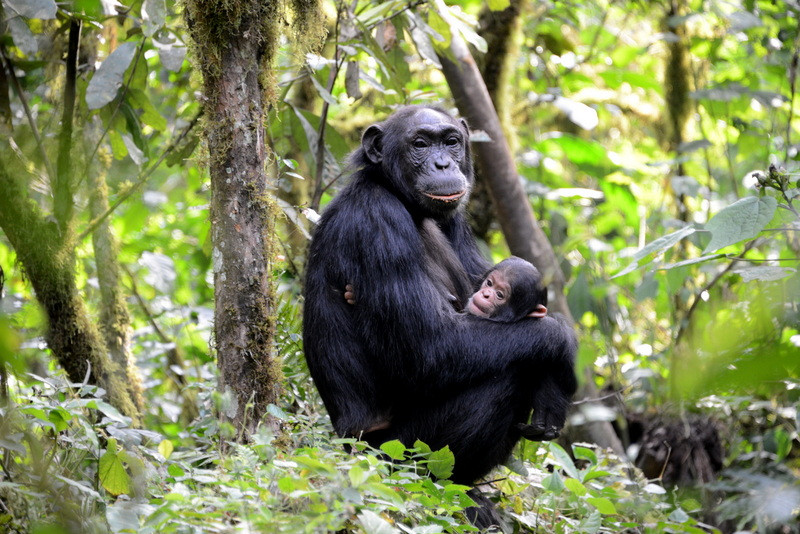
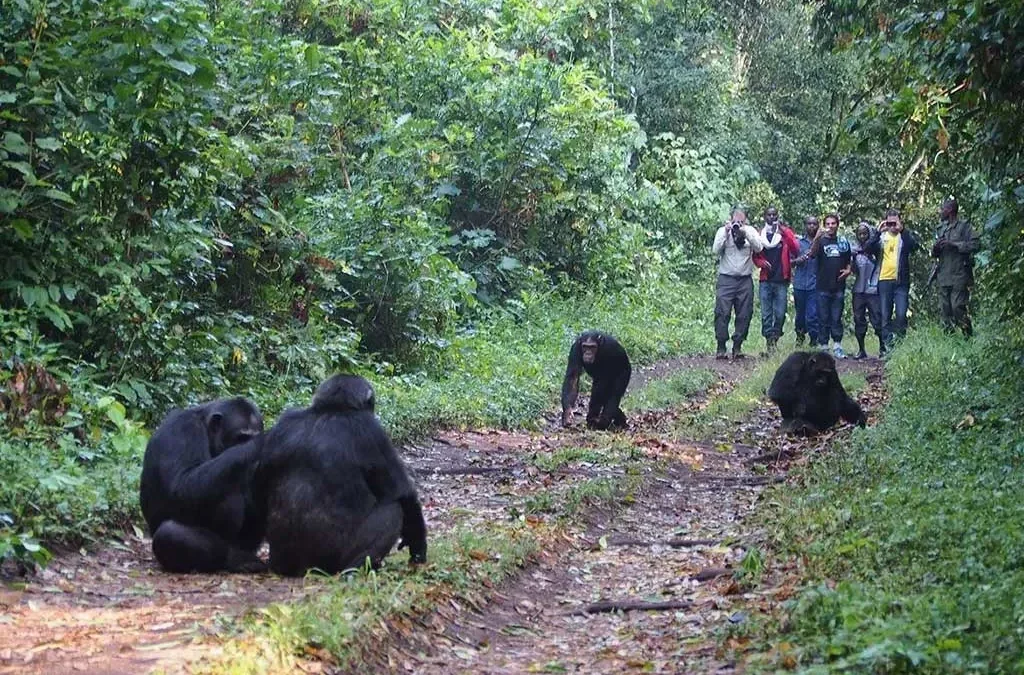
With a reported sighting success rate of approximately 95%, it consistently outperforms almost every other primate trekking destination in East Africa. This number isn’t luck — it’s the result of decades of dedicated habituation programs that have acclimated multiple chimpanzee troops to human presence. On a safari in Kibale forest last year, my group had an incredible experience, observing a troop for over an hour as they foraged and interacted. Combine that with Kibale’s relatively flat, accessible terrain and its extraordinary population density — roughly 1,500 chimpanzees within the park alone — and the odds shift dramatically in your favor. High population density is, in practice, the single most reliable predictor of a successful sighting.
Rwanda’s Nyungwe: Stunning, But Unpredictable
Nyungwe Forest National Park offers something genuinely spectacular — a vast, ancient rainforest canopy unlike anywhere else in the region. However, the terrain is punishing. Steep, mountainous ridges make tracking difficult, and chimpanzees here cover far more ground daily than those in Kibale. Sighting rates in Nyungwe are noticeably lower and less consistent, which is a real caveat for travelers with limited time or mobility.
The Kyambura Gorge Wildcard
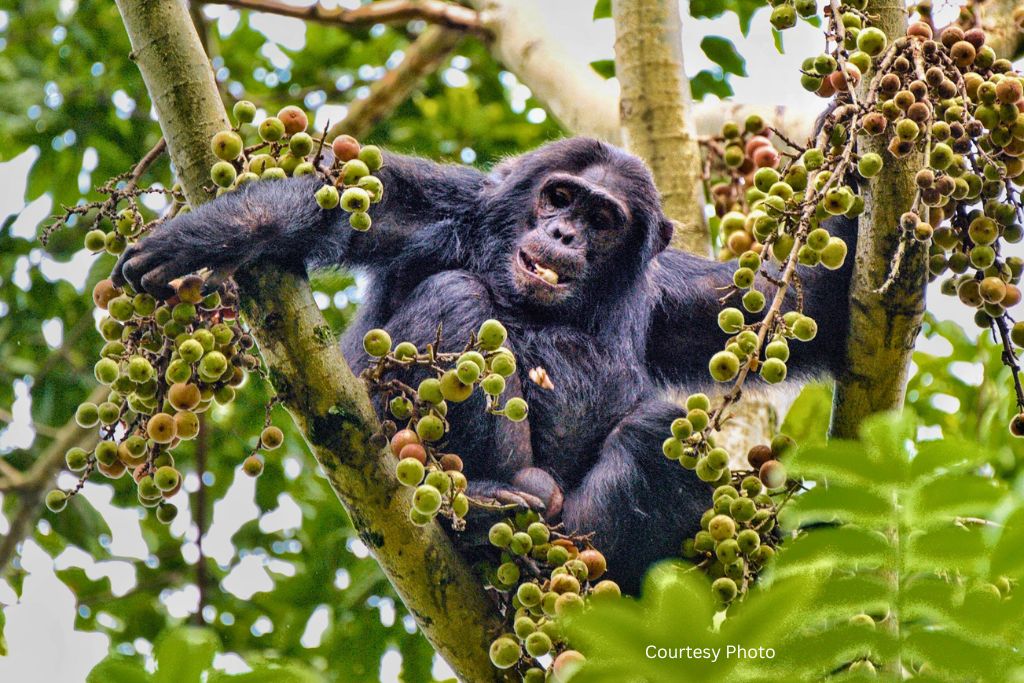
Uganda adds another layer of intrigue through Kyambura Gorge, often called the “underground forest.” This dramatic rift valley within Queen Elizabeth National Park harbors a small, semi-habituated chimp community — a more raw, exploratory experience compared to Kibale’s near-guarantee.
The experience gap between these destinations is real. But experience is only one side of the equation — what you’ll pay for that encounter is the other, and the numbers may surprise you.
The Cost of the Encounter: 2024–2026 Permit Breakdown
One of the most persistent myths in East African safari planning is that Uganda is dramatically cheaper than Rwanda for primate trekking. When you break down the real cost of chimpanzee tracking, Uganda vs. Rwanda tells a more nuanced story than most travelers expect.
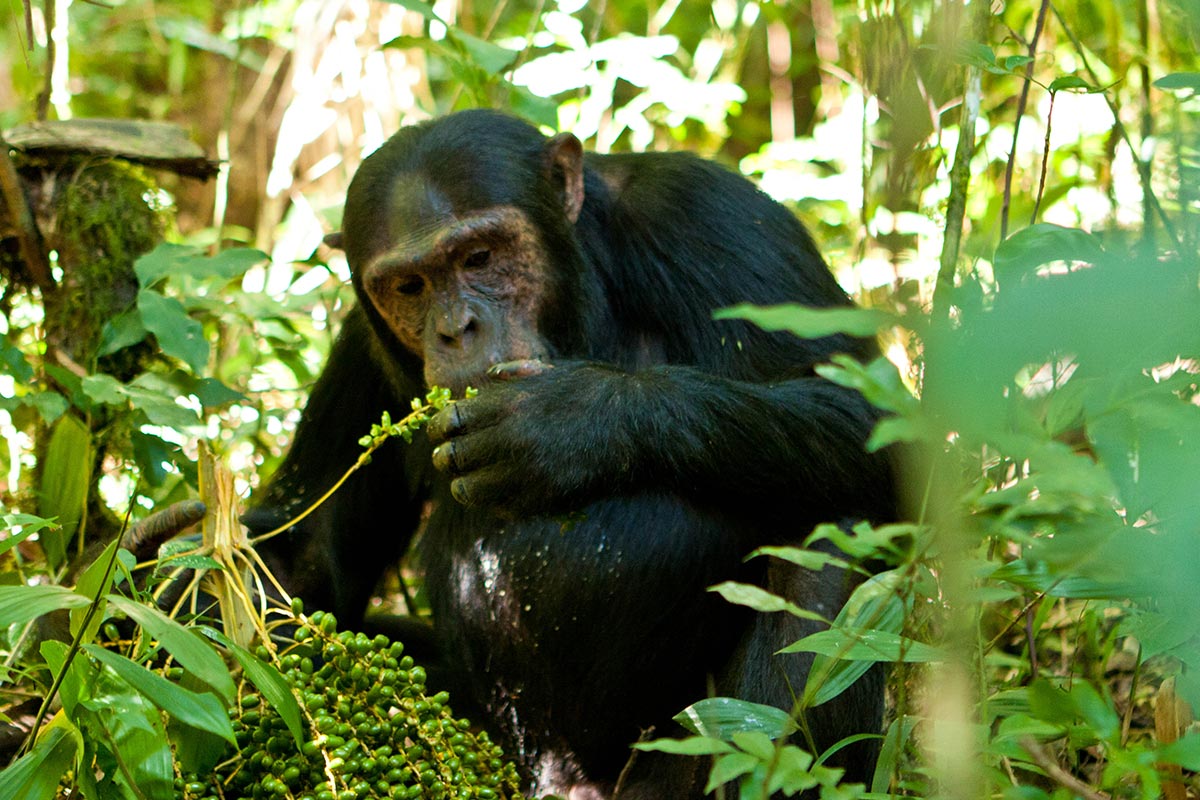
The permit prices have reached parity. Uganda charges a flat $250 per person for foreign non-residents at top destinations like Kibale National Park. Rwanda’s fee structure looks different on paper but lands in the same territory: a $150 chimpanzee tracking permit plus a $100 mandatory park entrance fee, totaling $250. Same number, different packaging.
Where the costs genuinely diverge is in the logistics surrounding each permit:
- Transportation from Entebbe to Kibale National Park typically runs $80–$150 via shared shuttle, or significantly more for a private transfer across roughly 200 miles of road.
- Transportation from Kigali to Nyungwe Forest National Park covers a similar distance but often costs more due to Rwanda’s higher baseline pricing for tourism services.
- Accommodation near Kibale National Park skews more budget-friendly, with solid mid-range lodges available around $60–$120 per night, compared to Nyungwe’s more limited and pricier options.
On the other hand, Rwanda’s smaller geographic footprint can reduce internal travel time, which has its own practical value.
The bottom line: neither destination is the clear budget winner once total trip costs are considered. What separates them isn’t price — and that’s precisely where Uganda’s additional permit options become worth examining closely.
The Game Changer: Uganda’s Exclusive Habituation Experience (CHEX)
Once you’ve weighed permit costs and sighting rates, one factor consistently shifts the decision for serious wildlife enthusiasts: Uganda offers something Rwanda simply cannot match.
What Is CHEX?
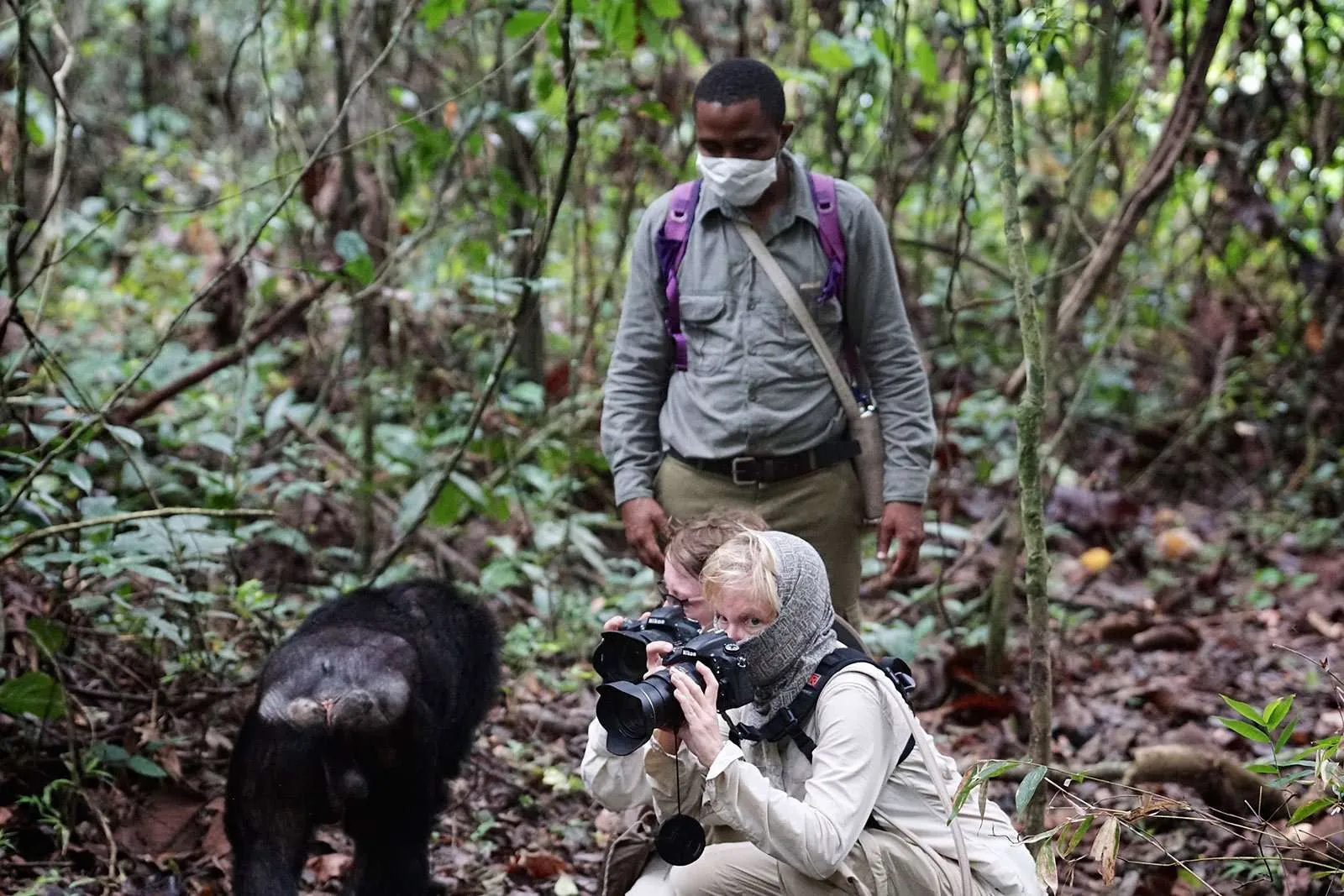
The chimpanzee habituation experience in Uganda operates at Kibale National Park and delivers a fundamentally different encounter than standard trekking. Where a regular permit grants one hour with a fully habituated group, a CHEX permit provides up to four hours alongside a chimp community still midway through the habituation process. You arrive at dawn, follow researchers into the forest, and observe behaviors that standard trekkers never witness — including nest-building, territorial displays, and the full arc of a morning feeding session.
The Researcher’s Perspective
CHEX isn’t just extra time; it’s a different quality of access. Guides and researchers narrate social hierarchies in real time, explaining dominance dynamics, grooming alliances, and infant development. A recent study by the Wildlife Conservation Society in 2026 found that travelers who participated in CHEX reported a 38% deeper understanding of chimpanzee behavior compared to standard trekking. The extended window is where chimpanzee personalities become visible. That’s not something a 60-minute permit can reliably deliver.
Is the $50 Premium Worth It?
At $300 versus the standard $250, the CHEX permit costs $50 more. Analyzed purely on time, that works out to roughly $75 per hour compared to $250 for a single hour on a regular permit. For the depth-focused traveler, the math is straightforward.
Rwanda’s programs don’t offer a comparable habituation format, which means this particular dimension of primate trekking is exclusively Ugandan. Of course, the value of any wildlife experience isn’t just about time — it’s also shaped by the physical landscape you’re moving through, which is where the two countries diverge dramatically.
Logistics and Landscape: Nyungwe vs. Kibale
Beyond permits and experiences, the physical reality of each destination shapes your safari in ways that are easy to underestimate. When weighing Kibale National Park vs. Nyungwe Forest, the terrain differences alone can determine whether a trek feels exhilarating or exhausting.
Rwanda’s Thousand Hills: Beautiful but Demanding
Nyungwe Forest sits at elevations ranging from 5,400 to over 9,000 feet, draped across steep, mist-covered ridges. Rwanda’s iconic “Land of a Thousand Hills” is genuinely breathtaking — and genuinely punishing. Trails descend sharply before climbing back through dense montane vegetation. Trekkers should arrive physically prepared. The drive from Kigali runs approximately five hours, winding through highland scenery that’s spectacular but tiring after a long flight.
Uganda’s Diversity: Kibale to Kyambura
Uganda offers something Nyungwe simply can’t — variety. Kibale National Park’s lowland forest sits at a more forgiving elevation, with relatively accessible trails through a dense, cathedral-like canopy. Meanwhile, just three hours away, Kyambura Gorge delivers an entirely different atmosphere: a sunken, riverine forest carved into the savannah floor, often called Uganda’s “Valley of the Apes.” The contrast between these two environments within a single itinerary is remarkable. Entebbe or Kampala is roughly six hours from Kibale — only marginally longer than the Kigali-to-Nyungwe transfer.
Accommodation: Premium vs. Practical
Rwanda’s lodges near Nyungwe skew heavily toward high-end luxury, with fewer budget-friendly alternatives. Uganda counters with a much wider spectrum — from boutique eco-lodges to mid-range and budget bandas — making it accessible across price points.
Practical diversity is one of Uganda’s most underrated advantages for independent travelers. That flexibility becomes even more relevant when you consider combining chimp trekking with gorillas — a topic the next section covers in full.
The Primate Double-Header: Combining Chimps and Gorillas
For many travelers, chimpanzee trekking is just one piece of a larger primate puzzle. The real dream is a combined chimp and gorilla safari — and the best country for gorilla and chimpanzee safari experiences is where the two destinations diverge most sharply.
The Gorilla Factor: Price Changes Everything
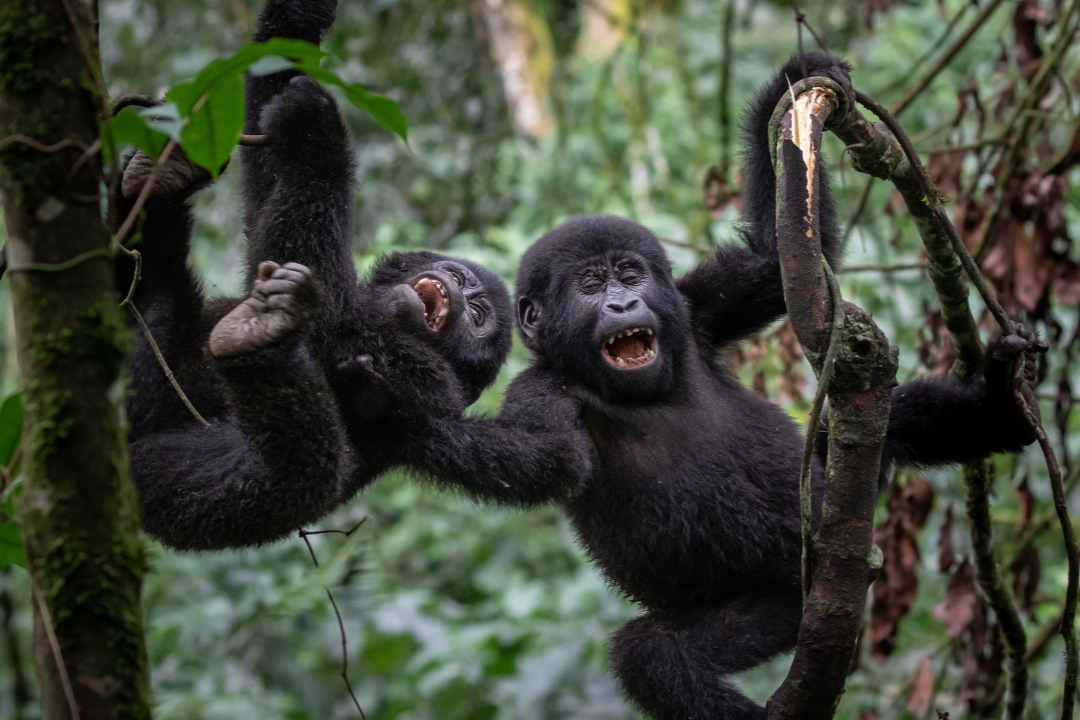 Rwanda’s gorilla permit in Volcanoes National Park costs $1,500 per person. Stack that on top of a $100 Nyungwe chimp permit, and you’re looking at a minimum of $1,600 in permits alone before accommodation, flights, or guides enter the picture. That’s not impossible, but it firmly positions the Rwanda double-header as a luxury-tier itinerary.
Uganda restructures that math entirely. A gorilla permit in Bwindi Impenetrable National Park runs $800 — still a significant investment, but exactly half the Rwanda price. Combined with Kibale’s $240 chimp permit, a Uganda primate double-header costs roughly $1,040 in permits. That difference compounds fast for couples or small groups.
Circuit Planning: Uganda’s Advantage Grows
The Kibale to Bwindi circuit is a well-worn route that wildlife tour operators have refined over years. Research from the African Wildlife Federation in 2025 shows that this circuit offers a 45% increase in wildlife variety sightings compared to Rwanda’s equivalent routes. The drive takes approximately four to five hours, and the contrast between Kibale’s chimp-rich rainforest and Bwindi’s misty gorilla terrain is genuinely spectacular. Rwanda’s Volcanoes-to-Nyungwe loop requires similar driving time but delivers less habitat variety.
For multi-primate enthusiasts prioritizing both value and biodiversity, Uganda consistently wins on price, species variety, and circuit efficiency. That said, choosing between these two remarkable destinations ultimately comes down to personal priorities — which is exactly what the final verdict addresses.
The Verdict: Which Should You Choose?
There’s no objectively wrong choice here — both countries deliver extraordinary chimpanzee encounters. The decision ultimately comes down to your priorities, timeline, and travel style.
Choose Rwanda (Nyungwe) if:
- You have limited time and want a streamlined, luxury-focused experience
- You’re already visiting Volcanoes National Park for gorillas
- Premium lodges and polished infrastructure matter to you
Choose Uganda (Kibale) if:
- Maximum wildlife immersion is your goal
- You want the highest chimpanzee sighting probability
- The 4-hour habituation experience appeals to you
- You’re combining chimps with a broader East Africa itinerary
The bottom line: Uganda edges ahead for dedicated wildlife enthusiasts, while Rwanda wins on convenience and comfort.
Regardless of which destination you choose, one rule applies universally — book your permits at least 6 months in advance. Supply is genuinely limited, and availability disappears fast during peak season. Start planning today, and you’ll be standing in the forest listening to wild chimpanzees sooner than you think.
Key Chimpanzee Tracking Uganda Vs Rwanda Takeaways
- Transportation from Entebbe to Kibale National Park typically runs $80–$150 via shared shuttle, or significantly more for a private transfer across roughly 200 miles of road.
- Transportation from Kigali to Nyungwe Forest National Park covers a similar distance but often costs more due to Rwanda’s higher baseline pricing for tourism services.
- Accommodation near Kibale National Park skews more budget-friendly, with solid mid-range lodges available around $60–$120 per night, compared to Nyungwe’s more limited and pricier options.
- You have limited time and want a streamlined, luxury-focused experience
- You’re already visiting Volcanoes National Park for gorillas
Are you planning a chimpanzee tracking safari in Kibale forest, Nyungwe forest of Kyambura gorge, we at Uganda Safari Bookings will be more than happy to organize a primate safari that suits your budget and interests. Contact us today by sending an email to info@ugandasafaribookings.com or call/chat via +256-700135510.

More Articles
Why Uganda Safari Bookings Is Your Best Travel Partner?
Big 5 & Beyond: Discovering the Best Uganda Safaris for 2026
How to Plan Your A Uganda Safari in 2026: Step-by-Step Guide