Perched on a hill in the Rubaga Division of Kampala, the Kasubi Tombs stand as one of the most profound cultural and spiritual landmarks in all of sub-Saharan Africa. Known officially as the Tombs of Buganda Kings at Kasubi, this magnificent site serves simultaneously as a royal burial ground, an active place of worship, and a living museum of Buganda civilization — a civilization that remains very much alive to this day.
Inscribed on the UNESCO World Heritage list in 2001, the Kasubi Tombs are recognized not only for their outstanding architectural achievement but also for their extraordinary intangible cultural significance. For the Baganda people — the largest ethnic group in Uganda and the heartbeat of the ancient Buganda Kingdom — this site is nothing less than holy ground. It is a place where the past and present are in constant conversation, where ancestors speak to the living, and where Buganda royalty rests in eternal dignity.
Whether you are a history enthusiast, an architecture lover, a spiritual pilgrim, or a curious traveller seeking authentic African culture, the Kasubi Tombs offer an experience unlike any other on the continent.
Historical Background: The Buganda Kingdom and Its Royal Legacy
Origins of the Buganda Kingdom
To understand the Kasubi Tombs, one must first understand the Buganda Kingdom — one of the oldest, most powerful, and best-organised kingdoms in the Great Lakes region of East Africa. The Buganda Kingdom traces its roots to the 14th century, founded in the region now encompassing the northern and western shores of Lake Victoria. At its zenith, the Kingdom controlled large swathes of present-day Uganda and was renowned for its sophisticated administrative system, military prowess, and rich cultural traditions.
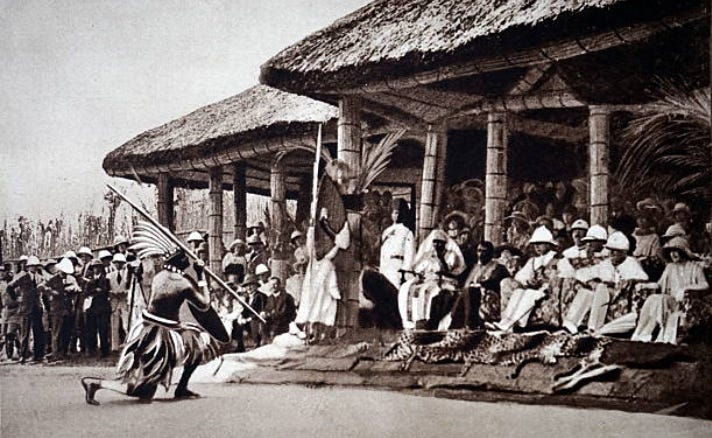
The Kabaka (King) held supreme authority over the Kingdom, governing through a highly organised hierarchy of chiefs and clan leaders. The institution of the Kabakaship was — and continues to be — deeply spiritual in nature. The Kabaka was not merely a political figure but a sacred one, believed to be the earthly representative of the ancestors and the gods.
The Establishment of the Kasubi Tombs
The Kasubi Tombs were established in 1882 when Kabaka Mutesa I, the 35th Kabaka of Buganda, converted his palace on Kasubi Hill into his royal burial site. Mutesa I was a formidable ruler who had successfully navigated the complex political landscape of 19th-century East Africa, maintaining Buganda’s independence in the face of increasing pressure from Arab traders, Egyptian expansionists, and European explorers.
Upon Mutesa I’s death in 1884, he was interred at Kasubi, and the site began its transformation from royal palace to royal mausoleum. Three subsequent Kabakas — Mwanga II (died 1903), Daudi Chwa II (died 1939), and Sir Edward Mutesa II (died 1969) — were also buried here, cementing Kasubi’s status as the definitive royal burial ground of the Buganda Kingdom.
The site today spans approximately 27 hectares and includes not only the main tomb house but also associated royal enclosures, gardens, and residences for the guardians of the tombs.
Architectural Marvel: The Muzibu-Azaala-Mpanga
The Main Tomb Structure
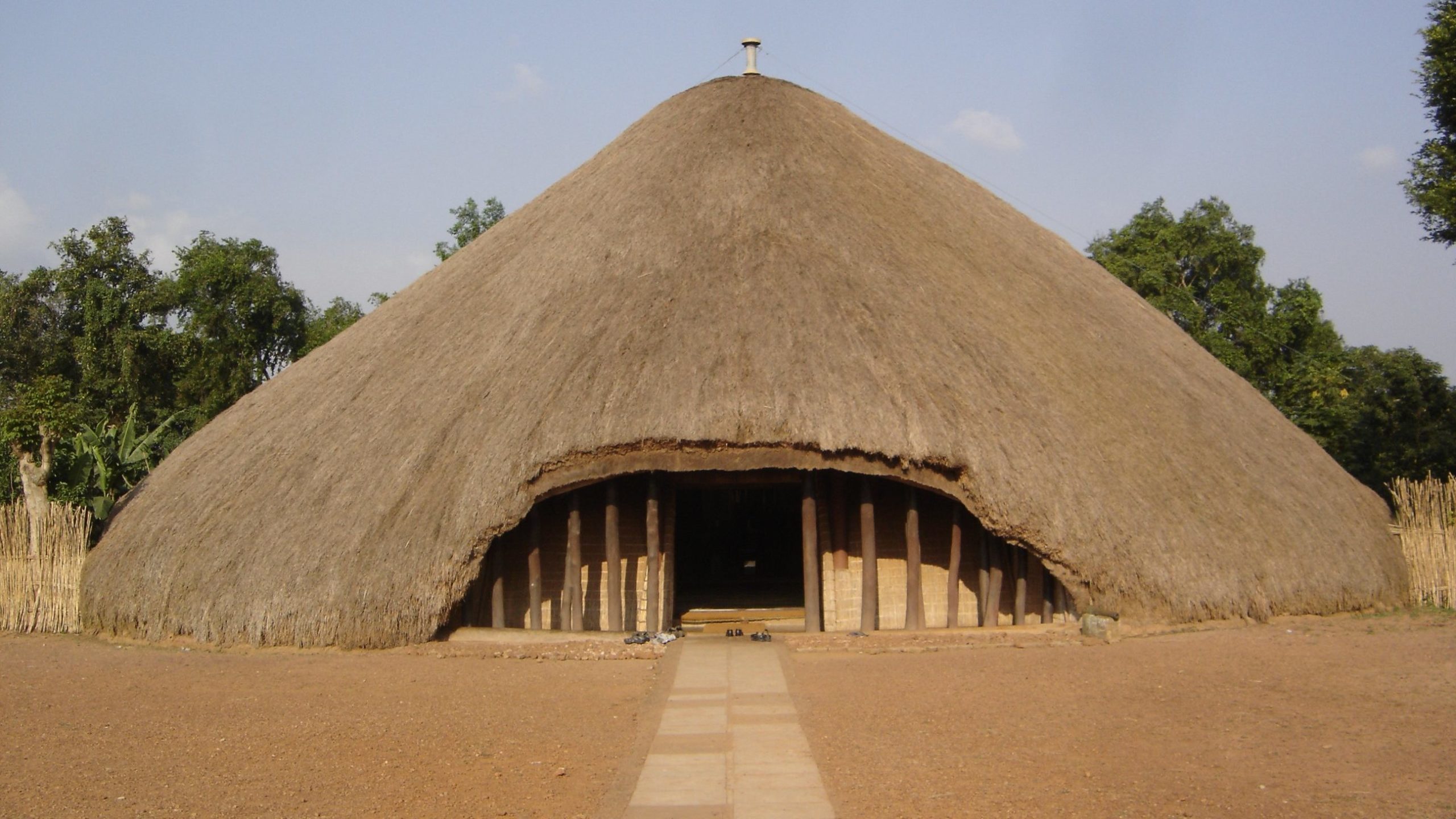
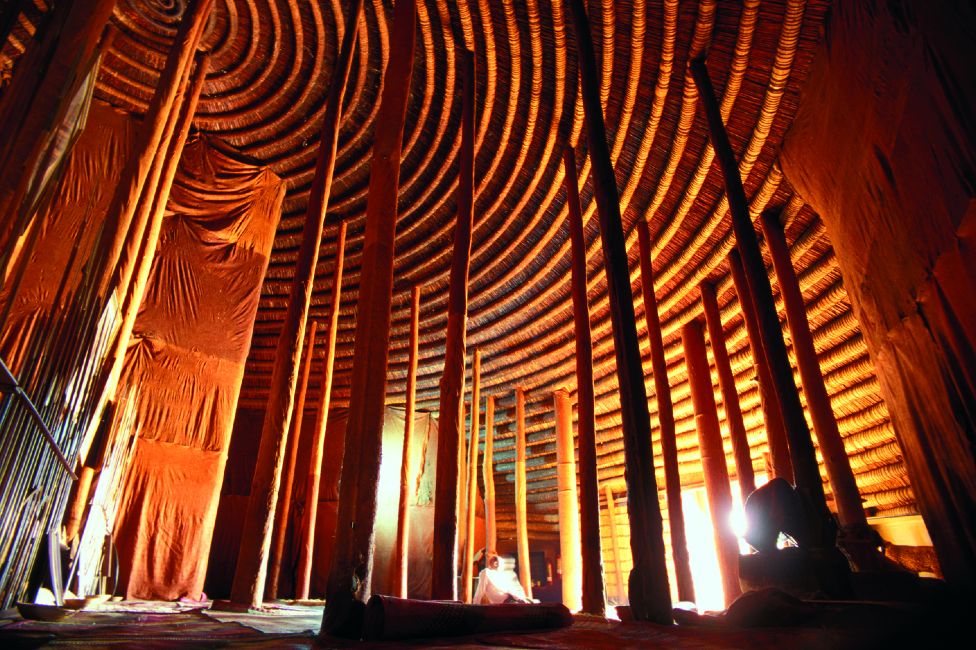
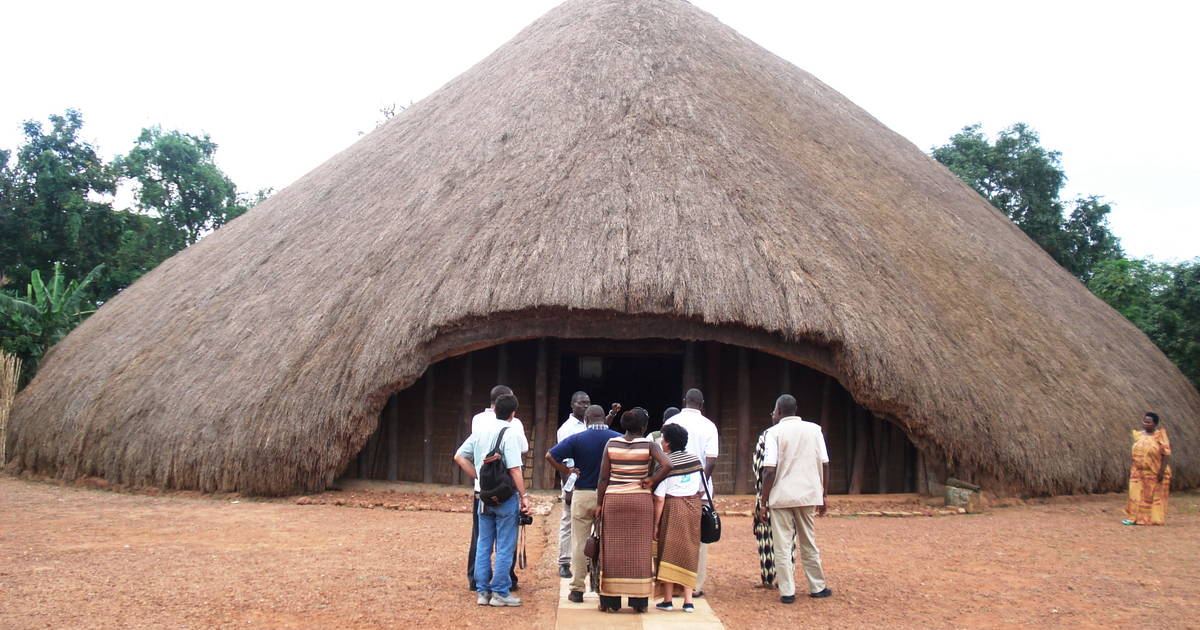
The centrepiece of the Kasubi Tombs is the Muzibu-Azaala-Mpanga — and it is a structure that leaves visitors breathless. This circular building, approximately 31 metres in diameter and rising to a towering thatched dome, represents one of the finest examples of organic architecture in the world. Built entirely from natural materials including bark cloth, reeds, wattle, and thatch, it is considered an outstanding testimony to living architectural traditions maintained and refined over centuries.
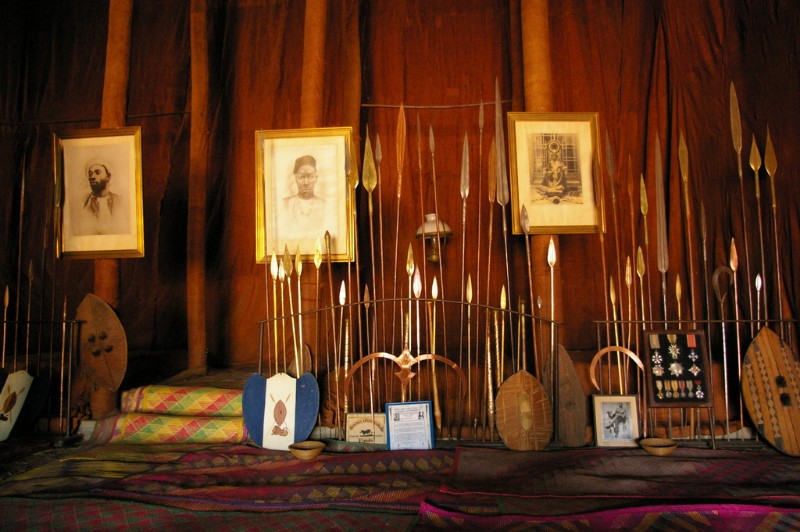
The structure’s massive circular roof, supported by an intricate internal framework of wooden poles, is a feat of traditional engineering that has inspired admiration from architects and anthropologists alike. Inside, the atmosphere is profoundly solemn and sacred. The inner sanctum where the royal tombs are located is screened by a partition of bark cloth, symbolically separating the living from the ancestors. Dozens of royal spears, animal skins, and ceremonial objects hang from the interior walls and ceiling.
Supporting Structures and the Royal Enclosure
Beyond the main tomb house, the complex encompasses the Bujjabukula — the gatehouse through which visitors must pass, a long rectangular building with a distinctive ridged thatched roof that serves as the threshold between the secular world and sacred space. The Ndoga-Obukaba drum house once held the royal drums, powerful symbols of Buganda royal authority, while the Bwanamukasa serves as a ritual house for royal spiritual ceremonies.
The entire complex is enclosed within a fence of woven reeds and bark cloth, with the circular Mutala fence defining the innermost sanctum — a layered system of enclosures that mirrors the hierarchical organisation of Buganda society itself.
The Fire of 2010 and the Rebuilding
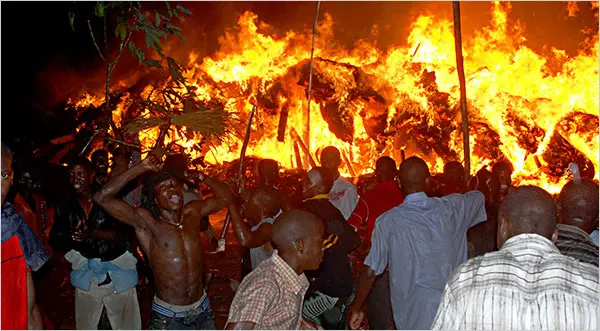
On the night of 16 March 2010, a devastating fire destroyed much of the Muzibu-Azaala-Mpanga structure, causing immense grief throughout Uganda and among Buganda communities worldwide. UNESCO immediately placed the site on its List of World Heritage in Danger.
The subsequent rebuilding effort became a remarkable exercise in cultural resilience. Traditional craftspeople from the relevant clans were mobilised to reconstruct the building using the same materials and techniques employed by their ancestors, with international support from UNESCO, the European Union, and the Japanese government. The site was formally removed from the UNESCO List of World Heritage in Danger in 2023 — a testament to the extraordinary efforts of the Buganda Kingdom and its partners.
Cultural and Spiritual Significance Of Kasubi Tombs
A Living Spiritual Centre
Unlike many heritage sites that function primarily as museums, the Kasubi Tombs are very much alive. The site is actively managed and inhabited by the Nalinya (sister of the Kabaka), by royal wives, and by specially designated clan members whose hereditary duty it is to care for the tombs and intercede with the royal ancestors on behalf of the living.
Regular ceremonies are conducted at the site, including the Okwabya Olumbe (death rites ceremonies), rituals connected to the installation of a new Kabaka, and various agricultural and lunar observances that connect the royal ancestors to the rhythms of the natural world.
The Clan System and Guardianship
The guardianship of the Kasubi Tombs is managed through the intricate Buganda clan system. Different clans hold specific hereditary responsibilities: some maintain the physical structure, others conduct rituals, others supply food offerings to the ancestors. This system ensures that the site is not simply a state heritage property but a community obligation — a responsibility shared across generations and clans.
Bark Cloth — The Sacred Textile of Buganda
One of the most visually striking features of the Kasubi Tombs is the pervasive presence of bark cloth — the traditional textile of the Buganda people, made from the inner bark of the Mutuba fig tree (Ficus natalensis). Its production is itself recognised by UNESCO as an Intangible Cultural Heritage of Humanity.
At the Kasubi Tombs, bark cloth carries profound symbolic significance. It screens the inner tombs from public view, drapes the walls of the tomb house, and creates an atmosphere of hushed reverence. For Baganda visitors, the sight and smell of bark cloth is inextricably connected to memory, identity, and the presence of the ancestors.
The Four Royal Kabakas of Kasubi
Kabaka Mutesa I (c. 1838–1884) was perhaps the most celebrated Kabaka in Buganda history, renowned for his intelligence and diplomatic skill. He welcomed Arab traders, Christian missionaries, and European explorers including John Hanning Speke and Henry Morton Stanley to his court, navigating these relationships with extraordinary astuteness while expanding Buganda’s territory and strengthening its institutions.
Kabaka Mwanga II (c. 1868–1903) ascended the throne in 1884 into a dramatically more hostile environment as the scramble for Africa intensified. He is perhaps best known for ordering the execution of the Uganda Martyrs in 1886. He later led resistance against British colonisation but was ultimately exiled to the Seychelles, where he died in 1903. His remains were repatriated and interred at Kasubi.
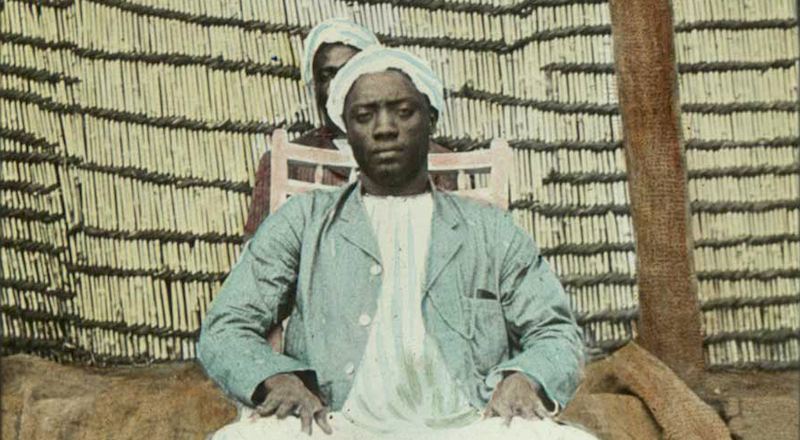
Kabaka Daudi Chwa II (1896–1939) was the youngest ever Kabaka, ascending to the throne at the age of just one year old. Despite the constraints of the colonial era, he was a respected figure who championed Buganda culture and education throughout his reign.
Kabaka Sir Edward Mutesa II (1924–1969) — known affectionately as “King Freddie” — was the last Kabaka before the abolition of the Ugandan kingdoms in 1966. Cambridge-educated and briefly Uganda’s first President after independence, he was later deposed and died in poverty in London in 1969. His remains were repatriated to Uganda in 1971 and interred at Kasubi, completing the quartet of royal ancestors who rest within the Muzibu-Azaala-Mpanga.
Kasubi Tombs Visitor Experience
Getting There
The Kasubi Tombs are located approximately 4 kilometres northwest of Kampala’s city centre in the Rubaga Division, accessible by private car, bodaboda (motorcycle taxi), or matatu (shared minibus taxi). The site is open daily from 8:00 AM to 6:00 PM, with guided tours included in the entrance fee.
Cultural Protocols
Visiting the Kasubi Tombs is an immersive cultural experience that demands respectful engagement. Visitors are expected to remove shoes before entering the main tomb house, dress modestly (wraps are provided at the entrance), speak quietly within the inner enclosures, and follow the guidance of their guide regarding photography. These protocols are not bureaucratic rules but expressions of the living spiritual reality of the site.
Best Time to Visit
The experience is most comfortable during Uganda’s dry seasons — December to February and June to August. Visiting on a weekday morning affords a quieter, more contemplative atmosphere, while weekend visits offer the opportunity to observe the site as a living community space.
Nearby Attractions
The Kasubi Tombs sit within a rich cultural geography that includes the Buganda Parliament and Lubiri Palace, Namirembe and Rubaga Cathedrals, the Uganda Museum, Owino Market — East Africa’s largest open-air market — and the Kabaka’s Lake, a remarkable 19th-century feat of engineering.
UNESCO Recognition and Global Heritage Significance
The inscription of the Kasubi Tombs on the UNESCO World Heritage List in 2001 brought international recognition to what Ugandans had long understood: that this site represents an extraordinary convergence of architectural achievement, living cultural practice, and historical depth. UNESCO’s recognition specifically acknowledges the living traditions associated with the site — the ongoing ceremonies, the clan responsibilities, the spiritual practices, and the unbroken chain of human devotion that has animated this place for more than a century.
The site’s temporary inclusion on the UNESCO List of World Heritage in Danger following the 2010 fire, and its removal from that list in 2023 following successful reconstruction, illustrates both the fragility and the resilience of this extraordinary heritage.
Conclusion: A Place Where History Lives
The Kasubi Tombs are not simply a historical site. They are a threshold — a place where the present steps carefully into the presence of the past, and where the past reaches forward to shape the present. To visit Kasubi is to encounter Buganda not as a museum exhibit but as a living reality, pulsing with the rhythms of ceremony, memory, and ancestral continuity.
A visit to the Kasubi Tombs is one of those rare experiences that stays with you long after you have left — the solemn interior of the great thatched dome, the smell of bark cloth, the hushed voices of the guides speaking of kings and ancestors, the knowledge that somewhere behind that curtain of bark cloth, four Kabakas rest in the dignity of eternity. It is, in every sense of the word, unforgettable.
✦ Plan Your Kasubi Tombs Experience
Ready to step into the living heart of Buganda history? Let Uganda Safari Bookings guide you through one of Africa’s most sacred UNESCO World Heritage Sites. Our expert team offers tailor-made Kampala cultural tours, multi-day Uganda safaris, and bespoke travel packages that combine the Kasubi Tombs with Uganda’s other extraordinary attractions.
📧 Email: info@ugandasafaribookings.com 📞 Call / WhatsApp: +256-700135510
We look forward to helping you discover the Pearl of Africa.


More Articles
Fort Lugard
Sezibwa Falls
Ndere Cultural Center- Traditional Music, Dance & Drama